


Some nights call for Super Mario, not Spider-Man. Whether you grew up blowing into cartridges or just appreciate the chunky charm of pixel art, retro-flavored gear still hits differently in 2026. The picks below span LEGO display builds, emulators that pack 25,000 games into a dongle, the tools you need to crack open a dusty NES, and the modern consoles worth keeping nearby for variety. Each one earned its slot by solving a real problem for someone holding a controller right now.
The Leading Options At A Glance

LEGO Super Mario NES 71374 Building Set

Suncala 1024MB Memory Card for GameCube and Wii

SHARDEN 122-in-1 Precision Screwdriver Set

Raspberry Pi 4 Model B 8GB Single-Board Computer

taessv Gamebit 3.8mm and 4.5mm Security Screwdriver Set
Microsoft Refurbished Xbox Series S 512GB All-Digital

Xbox Series S 512GB All-Digital Gaming Console

Sony PS5 Digital Edition Gaming Console
FYOUNG 3-in-1 Protective Kit for Nintendo 2DS XL
MUSBOY Wireless Retro Console with 25,000+ Games
Meet The Standout Selections
Most retro gear here either plays games or repairs them, but this LEGO NES does neither, and that’s the charm. The 71374 set recreates the original Nintendo Entertainment System in bricks, complete with a retro-style TV, a buildable Super Mario scene, and a controller that clicks into the front. It’s a display object aimed squarely at adults who want their nostalgia on a shelf, not a mod chip.
Compared to the MUSBOY retro console further down the list, this one trades actual playability for hands-on build time. You spend a long evening snapping pieces together, then park it somewhere visible. For collectors with limited shelf space, the finished footprint is compact enough to sit next to a soundbar without crowding the room.
A Few Strong Suits
- Authentic brick-built NES shape with functioning cartridge slot and lock
- Includes a buildable retro TV and Mario scene for a complete vignette
- Finished build looks great on a media console or office shelf
- Strong gifting appeal for the 30-to-50 retro crowd
- No batteries, cables, or firmware to fuss with
Small Caveats
- Build time runs several hours; not a quick afternoon project
- Pieces are small, so a dropped section can roll under furniture fast
- Purely decorative, so it does not replace an actual NES or retro console
Who It Suits Best
Adult collectors and longtime Nintendo fans who want a hands-on, screen-free creative project that ends in a display piece.
Look Elsewhere When
You actually want to play classic games, in which case the MUSBOY Wireless Retro Console with 25,000+ Games is the more useful pick.
The original GameCube memory cards maxed out at 64 blocks, which sounds quaint in 2026, and many of them have died by now. Suncala’s 1024MB third-party card splits storage into eight switchable sections, which sidesteps the per-card save ceiling without forcing you to juggle a stack of tiny plastic rectangles. It’s the kind of upgrade that quietly solves a problem you didn’t realize was annoying.
Pair it with the FYOUNG 3-in-1 Protective Kit for Nintendo 2DS XL if you’re running a multi-console household, since both target the “I keep losing my saves” problem on different hardware. The card works with both GameCube and Wii (Model RVL-001), making it handy for anyone who hops between Cube-era Game Boy Player sessions and virtual console titles on the Wii.
What Makes Sense
- Eight switchable storage sections, with up to 16,344 blocks of save room
- Works with both GameCube and the RVL-001 Wii console
- Single card replaces the old ritual of cycling through tiny 64-block originals
- Useful for Game Boy Player users who log a lot of sessions
Points To Note
- Not every GameCube title reads third-party cards cleanly, so check compatibility for the specific games you play
- Some users find the section-switch button small enough to miss until needed
Made For
GameCube and Wii owners who run out of save room on stock cards and want one slot to rule them all.
Consider Something Else When
You’re hunting a broader retro play setup, in which case the MUSBOY Wireless Retro Console is a better all-in-one option.
Open a Nintendo Switch and you’ll meet a tri-wing screw; crack open a controller and you might find a Torx or a tiny Phillips hiding in plain sight. The SHARDEN 122-in-1 set covers 101 magnetic CR-V bits plus 21 helper tools, so it handles phones, laptops, glasses, and game consoles in a single case. For someone with a stack of aging handhelds, that versatility is the whole pitch.
Versus the taessv Gamebit set further down the list, SHARDEN trades specialization for breadth. If you only ever crack open NES shells, the Gamebit set is leaner. If your weekend might involve a Switch joystick swap and a laptop fan clean, SHARDEN earns its keep by living in one drawer and covering both jobs.
Where It Helps
- 101 CR-V bits cover most consumer electronics fastener types
- Magnetic tips keep tiny screws from vanishing mid-repair
- Includes prying tools and tweezers for full teardown sessions
- One kit replaces several single-purpose drivers
Honest Caveats
- Bit count includes obscure sizes you may never touch
- No gamebit-style bits for original Nintendo and Sega shells
Best Suited To
Anyone who fixes phones, laptops, and modern consoles alike, and wants one organized kit instead of a junk drawer of loose drivers.
Skip It When
You mostly service original NES, SNES, and Sega hardware, where the taessv Gamebit Screwdriver Set is the more focused pick.
The Raspberry Pi 4 is the heart of thousands of homebrew retro consoles, and the 8GB Model B has just enough headroom to run multi-system frontends comfortably. Inside, an ARM Cortex-A72 CPU at 1.5GHz and a 4K-capable GPU push the device well past a hobbyist toy, depending on how you tune the software. You bring the case, the microSD card, the power supply, and the patience.
Compared to the MUSBOY retro console reviewed later, the Pi hands you total control over software and aspect ratios, at the cost of setup time. For shoppers who want a project, that’s the appeal. For shoppers who want a working console in ten minutes, MUSBOY is the friendlier entry point.
What Stands Out
- 8GB RAM handles multi-system emulation and desktop use
- 4K HDMI output works with modern TVs without a fuss
- Community software support is enormous, with frequent updates
- Doubles as a media center or lightweight workstation when not gaming
Trade Offs
- You supply a case, PSU, storage, and operating system separately
- First-time setup can be intimidating without Linux comfort
Right Fit For
Tinkerers who want a customizable emulation box and don’t mind spending an evening on initial configuration.
Where Another Pick Suits Better
You’d rather skip the build entirely, in which case the MUSBOY Wireless Retro Console is ready to go out of the box.
Feature Snapshot
Original Nintendo and Sega consoles use security screws that no standard driver can budge, which is why a real gamebit set matters. This taessv pair includes the 3.8mm and 4.5mm bits most retro restorers reach for, plus ergonomic handles that won’t fight back on stubborn screws. The bit sizes cover NES, SNES, N64, Sega Genesis, and many game cartridge shells.
Stack this kit next to the SHARDEN 122-in-1 reviewed earlier, and you have a full retro workbench. SHARDEN handles modern devices and daily-driver electronics, while taessv is the focused tool for the older stuff. For cartridge cleaning and shell swaps, the gamebit is non-negotiable.
Everyday Wins
- Two exact bit sizes (3.8mm and 4.5mm) cover most retro consoles
- Hardened tool steel tips resist cam-out on old, painted-over screws
- Concave-convex handle texture keeps grip secure on stubborn fasteners
- Also works on game cartridge shells for label swaps and cleaning
Where It Is Less Suited
- Only two bits, so it can’t double as a general electronics driver
- Transparent yellow handle shows scuffs over time
Who Should Grab It
Anyone restoring original Nintendo and Sega hardware, or just wanting to clean a cartridge without risking stripped screws.
Not Your Match When
You mostly fix modern handhelds and laptops, where the SHARDEN 122-in-1 set is the better everyday option.
Feature Card
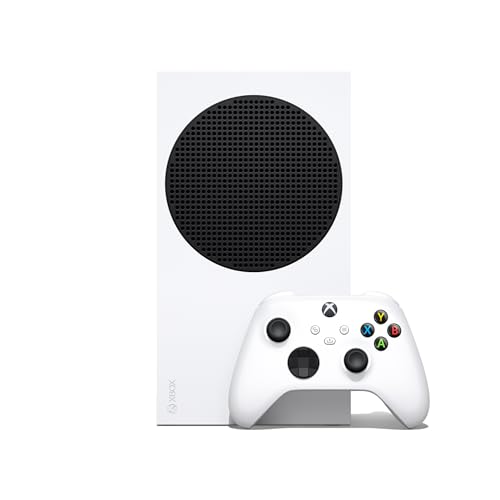
Not everything in a retro-leaning roundup is old gear, and this refurbished Xbox Series S leans into the role of “modern side console” rather than pixel throwback. A custom Zen 2 CPU with 8 cores, a 4 TFLOP RDNA 2 GPU, and 10GB of GDDR6 memory push 1440p gaming with ray tracing support, all in a tiny white shell. For someone whose retro hobby also includes Game Pass, it’s a tidy bridge.
Compared to the new Xbox Series S reviewed next, the refurbished route trims cost and ships with the same wireless controller and HDMI cable. For shoppers who care more about specs than resale, the savings are worth a look. For shoppers who want a fresh-unit experience, the new Series S is the more straightforward option.
Features That Help
- Custom Zen 2 CPU and RDNA 2 GPU deliver smooth 1440p performance
- 512GB NVMe SSD cuts load times versus spinning hard drives
- All-digital design keeps the hardware small and quiet
- Refurbished pricing opens the door for budget-minded shoppers
Small Limitations
- Refurbished condition can include minor cosmetic wear
- 512GB fills up fast with current AAA installs
Perfect Match For
Subscribers who use Game Pass heavily and want a compact, capable secondary console without paying full retail.
A Better Fit Elsewhere
You want a 4K Blu-ray drive or larger SSD out of the box, in which case the PS5 Digital Edition reviewed later is worth comparing.
Quick Technical Notes
The Xbox Series S in its new-unit form keeps the same compact shell as the refurbished option but arrives untouched in the box. You get the same custom 8-core Zen 2 CPU, 4 TFLOP RDNA 2 graphics, and 10GB of GDDR6 memory in a console small enough to slip into a dorm shelf. For minimalist setups, the size-to-power ratio is the headline.
Versus the refurbished Series S reviewed earlier, the choice really comes down to budget and how you feel about a unit that someone else opened first. Both share the same hardware ceiling, so neither will leave you wanting performance. Where it loses ground to the PS5 Digital Edition is 4K output and disc flexibility, since both are absent here.
The Helpful Details
- Compact tower fits nearly anywhere, even tight apartment shelves
- All-digital library pairs well with Game Pass subscription
- SSD-driven architecture keeps navigation snappy
- Quieter operation than larger current-gen alternatives
Practical Considerations
- No disc drive, so used games and movies are off the table
- 512GB can run tight without an expansion plan
Who Will Love This
Apartment dwellers and first-time current-gen shoppers who want small, quiet hardware with a strong digital game library.
Swap It Out When
You want maximum performance headroom, in which case the Sony PS5 Digital Edition is the more ambitious option.
Core Details
The PS5 Digital Edition brings flagship console power to anyone ready to live fully in the digital storefront. The custom AMD Zen 2 CPU runs 8 cores at 3.5GHz, paired with an RDNA 2 graphics engine, 16GB of GDDR6 memory, and an 825GB SSD that reshapes load times. Add 4K output at up to 120Hz, ray tracing, and Tempest 3D Audio, and you have a machine that can do justice to a modern home theater.
For shoppers torn between this and the Xbox Series S, the honest read is that the PS5 Digital is the better hardware, while the Series S is the better small-space value. The PS5’s larger SSD, higher memory bandwidth, and 4K target justify the premium for anyone planning a long-term main console.
Positive Points
- Custom AMD CPU and RDNA 2 GPU push smooth 4K visuals
- 825GB SSD is generous for a current-gen console
- Tempest 3D AudioTech adds spatial depth with compatible headsets
- DualSense controller brings haptics and adaptive triggers to supported games
Worth Bearing In Mind
- Digital-only means no physical game or movie disc support
- Console is physically larger than the Series S, so plan your shelf space
Whose Shelf It Belongs On
Players who want top-tier performance and a large digital library, with a display that can do 4K justice.
Where A Sibling Pick Shines
You need a smaller, cheaper second console, in which case the Xbox Series S covered earlier is the more compact pick.
Key Attributes
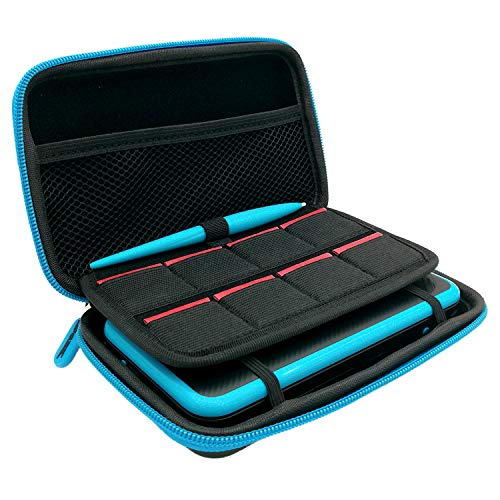
The Nintendo 2DS XL is a fantastic travel handheld, but the hinged design and exposed screens make it fragile in a backpack. FYOUNG’s 3-in-1 kit wraps the system in a hard-shell EVA case, adds a stylus, two screen protectors, and eight built-in game card slots, so the essentials travel together. For commuters and parents packing for road trips, the consolidation alone is worth it.
Compared to the Suncala memory card covered earlier, this kit protects a Nintendo handheld rather than expanding a home console’s storage. Both belong in a multi-system household’s drawer, since they solve different problems. If you already own a 2DS XL and find yourself juggling a soft pouch and a Ziploc of game cards, this is a clean upgrade.
Points In Its Favor
- Hard-shell EVA case absorbs drops and resists scuffs
- Built-in handle makes the kit easy to grab on the way out the door
- Eight game card slots keep cartridges organized in one place
- Two screen protectors and a stylus round out the basics
Some Limits To Know
- Mesh accessory pocket may not fit a stock 2DS XL charger
- Stylus is short, so adults with large hands may want a longer replacement
Built With In Mind
2DS XL owners who travel, commute, or share a household with kids who are hard on handhelds.
Another Choice May Suit
Your retro setup centers on a TV, not a handheld, where the MUSBOY retro console is the better centerpiece.
The MUSBOY retro console is the closest thing on this list to a “just turn it on” retro experience. Inside the deep black shell sit 9 emulators covering multiple classic systems and 25,000+ preloaded games, outputting through a 4K HDMI port to a modern TV. Two 2.4GHz wireless controllers are in the box, so couch co-op is part of the default setup.
Versus the Raspberry Pi 4 covered earlier, MUSBOY trades customization for convenience. You give up tinkering, theme switching, and per-game configuration, but you also skip the steep setup curve. For casual fans and gift-givers, that trade is usually the right one.
Useful Highlights
- 9 emulators cover multiple classic systems in one box
- 4K HDMI output works with modern flat-panel TVs
- Two wireless 2.4GHz controllers included out of the box
- Plug-and-play design suits casual players and gift recipients
Potential Drawbacks
- Curated library may include uneven ROM builds and duplicate entries
- No real game cartridge support, so collectors can’t mix in originals
The Right Fit
Casual retro fans, parents, and gift shoppers who want a low-fuss way to play classic games on a modern TV.
Reach For A Different Pick When
You want original hardware, in which case the LEGO NES set paired with the taessv Gamebit drivers is closer to authentic.
Key Product Details
What To Weigh Before Picking Retro Gear
Retro gear spans very different products, so the right answer depends on what “retro” actually means to you. A collector wants shelf pieces and original cartridges. A tinkerer wants a Raspberry Pi and a gamebit set. A casual fan wants a dongle that turns a TV into an arcade. Sorting out which group you fall into is the first step, since the wrong pick in this category usually means buying the right tool for someone else.
Build quality matters most on the items you touch every day. The MUSBOY retro console’s wireless controllers and the Suncala memory card’s switch button both see heavy use, so material choice and tactile feedback influence long-term satisfaction more than headline specs. For displays and decorative items, the priority shifts to footprint and finish rather than durability.
Compatibility is the hidden pitfall in this category. Third-party GameCube memory cards aren’t universal, Raspberry Pi accessories vary across revisions, and retro console shells use proprietary security screws. Before checking out, confirm the part numbers and connector types match your specific hardware, especially on older consoles where revisions can differ.
Finally, think about storage and longevity. A LEGO build sits on a shelf forever, but a refurbished Xbox deserves a quick check of warranty terms and cosmetic grading. For driver sets, a hard case keeps bits from disappearing into the couch cushions, which matters more than the bit count on paper.
Smart Shopping Moves For Retro Buyers
Common Shopping Slip Ups
The biggest mistake is buying a generic screwdriver kit and assuming it covers retro consoles. NES, SNES, and Sega shells use proprietary 3.8mm and 4.5mm security bits that standard Phillips and Torx sets can’t touch, so a dedicated gamebit driver is the only practical option. Shoppers who skip that step often end up drilling out stripped screws.
Another trap is assuming all “8-bit” or “retro” emulators are legal in your region. The MUSBOY retro console ships with preloaded titles, and the legality of the included library depends on local rules. Research your country’s stance before assuming what’s in the box is fine for your household.
Where The Extra Money Goes
Higher-end picks in this roundup tend to add convenience rather than raw horsepower. The PS5 Digital Edition’s premium over the Series S buys a faster SSD, more memory, and stronger 4K output. The Raspberry Pi 4 8GB’s premium over the 4GB version buys smoother multi-system emulation. In most cases, the upgrade is worth it if you can name the specific workload that benefits, and worth skipping if you can’t.
Frequently Asked Questions
What counts as an 8-bit game console?
An 8-bit console processes data 8 bits at a time. Original examples include the Nintendo Entertainment System and the Sega Master System. Modern “8-bit” picks in this roundup either channel that era visually, like the LEGO NES, or emulate its games on newer hardware, like the MUSBOY retro console.
Are retro emulators legal to own?
The hardware is generally legal, but the legality of preloaded game files depends on local copyright law. Many regions permit emulators but restrict the ROMs themselves, especially for games you don’t already own. Check your local rules before relying on a preloaded library.
Can a Raspberry Pi really replace an old console?
For many players, yes, especially for systems up to the 16-bit era. The Raspberry Pi 4 8GB handles those systems smoothly with the right software. More demanding platforms like N64, Dreamcast, and PlayStation need more tuning and still show occasional slowdowns depending on the title.
Do I need special tools to open old consoles?
Yes, in most cases. Original Nintendo and Sega hardware uses 3.8mm and 4.5mm security screws that standard drivers cannot remove. A dedicated gamebit screwdriver set is the practical answer, while a general precision driver set covers everything else.
Is a refurbished Xbox Series S worth it?
For shoppers who want current-gen performance at a lower cost, yes, assuming the refurbisher has a reasonable return window. Expect some minor cosmetic wear, and double-check the included controller and HDMI cable. Specs match the new model exactly.
Wrap Up
Retro gaming in 2026 is less about a single product and more about building the right setup for how you actually play. Some nights you want a brick-built NES on a shelf. Some nights you want a 4K HDMI stick with 25,000 games. Some nights you want to crack open a dusty cartridge and clean the contacts. Pick the lane that matches your habits, and the rest of the gear follows naturally.


