


Competitive players chase a level of motion clarity that older displays simply cannot deliver, and 540Hz gaming monitors now sit at the top of that conversation. Choosing the right one means weighing panel type, curve radius, resolution, and real-world use alongside the headline refresh rate. The picks below cover the most common setups, from compact desks to ultrawide battle stations, so you can match hardware to the way you actually play.
A Fast Comparison Of The Options

AOC 27″ Curved Gaming Monitor FHD 240Hz VA C27G2Z

KTC 32 inch 240Hz Curved Gaming Monitor H32S17F

Sceptre Curved 24.5-inch Gaming Monitor 240Hz 1080p (C255B-FWT240)

Sceptre 24-inch Curved Gaming Monitor 180Hz (C248B-FWT168)

Sceptre 24.5-inch Gaming Monitor 240Hz 1ms (E255B-FWD240)

Acer Nitro 27″ FHD 280Hz Curved Gaming Monitor XZ270

KTC 32 inch 240Hz Curved 1440P Gaming Monitor H32S25E

KTC 32 Inch Curved 280Hz Gaming Monitor H32C5

KTC 24 Inch Curved 240Hz Gaming Monitor H24S17P
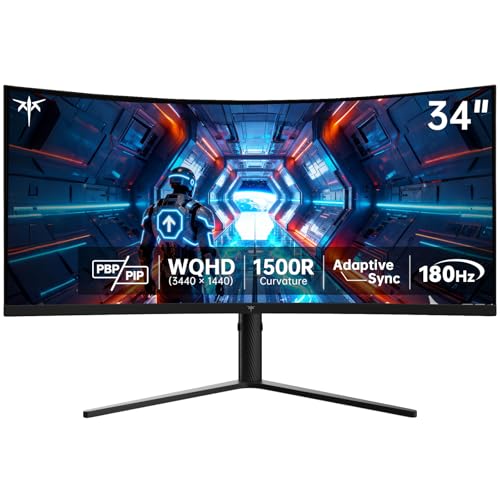
KTC 34 Inch Ultrawide Curved Gaming Monitor H34S5
Inside Each Recommended Option
The AOC C27G2Z is a 27-inch curved VA (vertical alignment) panel built around a 1920×1080 resolution and a 240Hz refresh rate over DisplayPort 1.4. That combination suits a wide range of players who want smooth motion without stepping up to a heavier 1440P or 4K graphics load. The 1500R curve wraps the picture around your field of view, which tends to feel natural at a typical desk distance of about two to three feet.
AMD FreeSync Premium support (a variable refresh rate standard that syncs the monitor to the GPU to cut tearing) keeps frame delivery steady when the action spikes, and a 0.5ms MPRT response time (moving picture response time, a measure of how fast pixels clear during fast motion) helps trailing artifacts stay out of fast pans. Compared to the KTC H32S17F on this list, the AOC delivers the same 240Hz ceiling in a smaller, more desk-friendly format.
Where It Helps
- 1500R curve makes long sessions feel less flat, especially in FPS titles.
- 240Hz refresh over DisplayPort 1.4 keeps fast camera moves clean and fluid.
- VA panel typically delivers strong contrast for darker game scenes.
- FreeSync Premium helps prevent screen tearing when frame rates fluctuate.
- 27-inch size is the sweet spot for most desks without dominating the room.
Points To Note
- 1080P on a 27-inch screen means individual pixels are more visible at close range than on 24-inch panels.
- VA panels can show slight smearing in dark transitions, a commonly reported trait of the technology.
Feature Snapshot
Right Fit For
Competitive players who want a curved, high-refresh display that fits a standard desk and runs lighter on their GPU.
Look Elsewhere When
The Sceptre E255B-FWD240 suits you better if you prefer a flat panel and tighter pixel density for pure esports focus.
The KTC H32S17F stretches the 240Hz experience across a 32-inch curved canvas at 1920×1080. The larger screen gives a more cinematic, room-filling feel that works well for couch-distance gaming or for anyone who wants their peripheral vision filled without using a headset.
That scale comes with a trade-off, though. At 32 inches, 1080P spreads the same pixel count across a wider area, so detail looks softer up close than on a 24-inch or 27-inch screen. For racing, flight sims, and slower-paced RPGs, the trade usually feels worth it. The 1ms response rating helps keep motion clean, and adaptive sync support reduces tearing when the GPU struggles to hold a steady frame rate.
Notable Upsides
- 32-inch curved panel makes single-player and sim games feel more enveloping.
- 240Hz ceiling keeps input feel responsive for fast-paced action.
- Adaptive sync cuts tearing when frame rates swing during heavy scenes.
Worth Noting
- 1080P on a 32-inch screen means you may want to sit further back to avoid visible pixel structure.
- VA-based monitors can show minor dark-scene smearing during very fast pans.
- Large footprint, so measure your desk depth before committing.
Made For
Players with deep desks or media-room setups who want maximum screen real estate without sacrificing the 240Hz feel.
Consider Something Else When
The Acer Nitro XZ270 suits you more if you want a higher 280Hz ceiling in a smaller 27-inch form factor.
Sceptre’s C255B-FWT240 is built for tighter spaces where every inch of desk matters. The 24.5-inch curved panel hits a 240Hz refresh at 1080P, with two DisplayPort inputs and two HDMI ports to keep cable switching simple across a PC and a console. Built-in speakers handle quick audio needs without forcing an extra accessory onto a small desk.
Eye-care features aimed at reducing blue light output pair well with the panel size, since the 24.5-inch format keeps viewing angles close enough that color and contrast stay consistent. For anyone moving from a 60Hz office monitor, the jump to 240Hz here is the kind of upgrade that reshapes how a game feels to control.
Notable Gains
- Compact 24.5-inch curved footprint fits narrow desks and small rooms.
- Two DisplayPort and two HDMI inputs make multi-device setups painless.
- 240Hz ceiling brings noticeable smoothness for shooters and racing games.
- Built-in speakers remove the need for external audio in tight setups.
Trade Offs
- Smaller screen limits immersion in cinematic or open-world titles.
- 1080P resolution may feel limiting for users who also do detailed creative work.
Quick Facts
Whose Setup It Belongs On
Apartment dwellers, dorm-room players, and anyone running a minimalist battlestation with limited desk depth.
Skip It When
The KTC H24S17P fits you better if you want a similar compact curved size with a more aggressive curve for closer viewing.
The Sceptre C248B-FWT168 brings 180Hz-plus refresh into a 24-inch curved package aimed at shoppers building their first gaming PC. The 1080P resolution pairs naturally with the 24-inch size, so pixel structure stays tight without forcing an upscale. AMD FreeSync support handles the basics of frame sync, while a full sRGB color coverage rating (a standard color space used for most web and game content) gives general-purpose work a clean palette.
For casual play, indie titles, and a daily work monitor that doubles as a game screen on evenings, the balance lands well. The catch, depending on your goals, is that 180Hz sits below the 240Hz peak of most picks here, so hardcore competitive players may want more headroom.
Where It Excels
- Curved 24-inch design offers immersive framing at a starter price.
- 100% sRGB coverage supports accurate color for general creative work.
- FreeSync reduces tearing when frame rates wobble during heavier scenes.
- Built-in speakers handle quick calls and casual video without extras.
A Few Limitations
- 180Hz cap is lower than several other picks in this roundup.
- Smaller curve radius may feel subtle to users used to larger screens.
Best Suited To
First-time gaming monitor shoppers and mixed-use setups that split time between work and play.
Reach For A Different Pick When
The Sceptre E255B-FWD240 fits you better if you want 240Hz and a flat panel for tighter competitive play.
The Sceptre E255B-FWD240 takes a different approach from its curved siblings by going flat. A flat 24.5-inch panel gives every part of the image an equal distance from your eyes, which competitive players tend to prefer for tracking moving targets. The 240Hz refresh rate over DisplayPort 1.4 keeps the action smooth, and 100% sRGB coverage handles color-accurate work between matches.
Two DisplayPort and two HDMI inputs make it easy to keep a console plugged in alongside a gaming PC, and FreeSync Premium adds a low-frame-rate compensation feature (LFC, which helps maintain smoothness when frame rates dip below the sync range) to keep play smooth when a heavy scene pulls performance down. Compared to the curved Sceptre C255B-FWT240, this model trades immersion for consistency across the whole field of view.
A Strong Showing
- Flat panel design aids consistent focus across the whole screen for FPS tracking.
- 240Hz refresh rate supports fast-paced competitive titles.
- 100% sRGB keeps color accurate for general work and content tasks.
- Dual DisplayPort and HDMI ports simplify multi-device setups.
Small Caveats
- Lacks the wraparound immersion that curved panels add for sim and RPG games.
- Smaller screen size means less peripheral awareness in open-world titles.
Feature Rundown
Perfect Match For
Esports-leaning players and FPS-focused gamers who want consistent visuals across the entire screen.
A Better Fit Elsewhere
The AOC C27G2Z is the better pick if you want a curved screen that still hits 240Hz at a slightly larger size.
The Acer Nitro XZ270 pushes the refresh ceiling to 280Hz on a 27-inch curved panel at 1920×1080. That extra headroom beyond 240Hz matters most in fast camera turns, where every additional frame can sharpen the edges of moving targets. The 1080P resolution keeps the GPU workload lighter, so reaching those high frame rates feels more realistic on mid-range hardware.
Curved screens of this size work well for a wide range of play styles, from shooters to RPGs. Compared to the KTC H32S17F on this list, the XZ270 keeps the curve but steps the refresh rate higher while shrinking the screen to a more desk-friendly 27 inches.
What Stands Out
- 280Hz refresh ceiling exceeds most 240Hz monitors in this category.
- 27-inch curved format offers immersion without overwhelming smaller desks.
- 1080P keeps GPU demand reasonable, helping newer mid-range cards reach high frame rates.
Honest Caveats
- 1080P on 27 inches is a sharper-pixel-density trade-off compared to 24-inch options.
- Curved format can introduce slight edge distortion in spreadsheet or text-heavy work.
- Commonly reported Acer Nitro monitor stand adjustments are limited; a VESA arm (a standardized mounting pattern on the back of the monitor for third-party arms or stands) is often a worthwhile add-on.
Who Should Grab It
Mid-range PC builders who want a high refresh ceiling without forcing a 1440P or 4K upgrade on their graphics card.
Swap It Out When
The KTC H32C5 is a stronger match if you want a larger 32-inch screen with similar 280Hz capability.
The KTC H32S25E moves the conversation from Full HD up to 2560×1440 (1440P, also called QHD) on a 32-inch curved panel, while still targeting 240Hz. The sharper pixel density is the upgrade that most players notice first. Edges of UI elements, character models, and environment textures all look more defined, especially at a closer viewing distance.
The 1000R curve (a tighter curve radius that wraps further around the viewer) feels more aggressive than the 1500R panels elsewhere on this list, which can make for a more enveloping experience in racing and flight sims. Adaptive sync support and a 1ms MPRT response rating help keep the higher resolution honest during fast motion.
A Few Highlights
- 1440P resolution gives noticeably sharper text and game detail than 1080P.
- 1000R curve creates a strong wraparound effect for sim and RPG genres.
- 240Hz refresh keeps high-resolution gameplay responsive.
- 4000:1 contrast ratio (the difference between the brightest whites and darkest blacks) supports deeper dark-scene performance.
Points To Keep In Mind
- 1440P at 240Hz demands a stronger GPU than the 1080P options in this roundup.
- The 1000R curve is intense, and some viewers find it disorienting for long office tasks.
Who It Suits Best
Players with mid-to-high-end graphics cards who want sharper visuals without stepping all the way up to 4K.
Another Choice May Suit
The Sceptre C255B-FWT240 fits better if you want to keep things simple on a lighter GPU and a smaller desk.
The KTC H32C5 pairs a 32-inch curved display with a native 240Hz refresh rate that can be overclocked to 280Hz. That flexibility means the monitor can match what your GPU delivers without forcing you into a single setting. A 1ms MPRT response time and adaptive sync help keep fast motion and sudden frame drops in check.
Low blue light mode and a tilt-friendly stand round out the package for daily use, while a 3500:1 contrast ratio supports solid dark-scene performance for horror and atmospheric games. Compared to the KTC H32S17F earlier on this list, the H32C5 brings a higher peak refresh, a stronger contrast ratio, and broader HDR-style headroom.
Key Advantages
- Overclockable 280Hz refresh for users who want extra headroom beyond 240Hz.
- 3500:1 contrast supports deeper blacks than many entry-level gaming panels.
- Low blue light mode helps reduce eye strain during longer sessions.
- Tilt and VESA mount support add ergonomic flexibility for various desk setups.
Less Ideal Details
- Reaching 280Hz reliably requires a fairly capable GPU at 1080P.
- No built-in speakers, so external audio is a must-have for some users.
Technical Highlights
Built With In Mind
Hybrid users who split time between competitive play and content viewing, where extra color and contrast help movies look better.
Where A Sibling Pick Shines
The KTC H32S25E suits you more if sharper 1440P detail matters more than the highest refresh number.
The KTC H24S17P is a compact 24-inch curved monitor that aims at a sweet spot for first-time high-refresh buyers. The 1500R curve wraps the picture without making a small screen feel exaggerated, and 1080P on 24 inches keeps pixel density crisp at typical desk distances.
Adaptive sync support helps the monitor stay in step with the GPU during variable frame loads, and a 3000:1 contrast ratio is competitive for the category. The trade-off, depending on your expectations, is that 24 inches is a modest canvas, so cinematic games will not feel as room-filling as on a 32-inch display.
The Helpful Details
- Compact 24-inch curved design fits the smallest desks and dorm rooms.
- 240Hz ceiling keeps competitive play responsive.
- 3000:1 contrast ratio holds its own against similarly priced panels.
- Adaptive sync reduces tearing when frame rates drop during heavy scenes.
Things To Consider
- Smaller screen reduces immersion in open-world and sim titles.
- Lacks built-in speakers, which can matter for minimalist setups.
Who Will Love This
Starter rig builders and budget-conscious competitive players who want high refresh without the size commitment.
Not Your Match When
The KTC H32C5 fits you better if a larger curved screen with higher peak refresh would suit your desk and games.
The KTC H34S5 is the only ultrawide pick in this roundup, and it plays a different game. A 34-inch curved panel at 3440×1440 (UWQHD, an ultrawide version of 1440P with a 21:9 aspect ratio) gives a wider field of view that racing fans, flight sim pilots, and open-world explorers tend to appreciate deeply. The 1500R curve keeps the edges of that wide image within natural viewing range.
The trade is that the refresh rate tops out at 180Hz rather than 240Hz or higher, which competitive FPS players might notice. PIP and PBP (picture-in-picture and picture-by-picture, which let you display two input sources on one screen) modes make it a useful productivity partner too, especially for streamers or anyone running a second source on the side.
Points In Its Favor
- Ultrawide 21:9 panel widens peripheral view for sims and racing titles.
- 3440×1440 resolution offers sharp text and detail for both work and play.
- 1500R curve keeps the wide image within comfortable viewing angles.
- PIP and PBP support allow multi-source workflows for streamers and remote work.
Some Limits To Know
- 180Hz ceiling is lower than the 240Hz-plus options elsewhere on this list.
- Ultrawide format is not supported by every competitive title, with some games rendering with black bars.
- Wide footprint demands a deep desk or strong monitor arm for stable mounting.
Spec Overview
The Right Fit
Sim racers, flight sim fans, and productivity-minded players who want one screen for both immersive gaming and side-by-side work.
Consider Something Else When
The Acer Nitro XZ270 fits better if you want a 280Hz ceiling in a traditional 16:9 format for pure competitive play.
What To Weigh Before Picking A 540Hz Gaming Monitor
Panel Type And Motion Clarity
VA panels typically deliver strong contrast and deep blacks, while IPS panels (in-plane switching) usually offer wider viewing angles and faster pixel response. For 540Hz-class monitors, motion clarity often matters more than contrast, so response time ratings and the difference between MPRT and GtG (gray-to-gray, a different pixel response measurement) deserve a close read. Competitive players tend to lean toward the panel that best reduces visible smearing in fast pans.
Resolution And GPU Load
Higher resolution means sharper detail, but it also demands a stronger GPU to drive 240Hz or higher. 1080P is the most accessible option for mid-range hardware, while 1440P and ultrawide 3440×1440 add detail at the cost of frame rate headroom. Match resolution to what your graphics card can realistically push in the games you play most.
Curve Radius And Desk Setup
A 1500R curve feels comfortable at typical desk distance on most screens, while 1000R is a tighter wrap that works best for very large or deeply curved panels. Flat panels remain a strong fit for esports, where consistent distance to all parts of the screen helps with target tracking. Measure desk depth before committing to a 32-inch or 34-inch display.
Refresh Rate Vs. Real-World Gains
The jump from 60Hz to 144Hz is dramatic, while the jump from 240Hz to 280Hz is more subtle. A higher peak refresh helps most when your GPU can actually deliver frames close to the ceiling. Look for adaptive sync support to keep the experience smooth when frame rates wobble.
Key Takeaways Across These Picks
Pitfalls Shoppers Hit
Many shoppers chase the highest refresh number and overlook resolution, panel type, and desk fit. A 280Hz monitor at 1080P on a 32-inch screen looks softer than a 240Hz panel at 24 inches, and a 1000R curve can feel wrong on a flat productivity workflow. Match the spec to the games and the desk first, then prioritize the refresh ceiling.
Where The Extra Money Goes
Stepping up to a 1440P or ultrawide panel adds detail and immersion, but it costs GPU power and usually a higher price. Premium models tend to bring stronger contrast ratios, better stands, and more reliable adaptive sync implementations. The upgrade pays off most when your hardware can actually feed the higher resolution at high frame rates.
Frequently Asked Questions
What Does 540Hz Actually Mean For Gaming?
A 540Hz monitor refreshes the image 540 times per second, which can make fast motion look smoother and reduce perceived blur during quick camera turns. The practical benefit depends on your GPU and the games you play, since reaching that frame rate requires very capable hardware.
Is A 240Hz Or 280Hz Monitor Good Enough For Competitive Play?
For most players, 240Hz and 280Hz are more than enough for serious competitive play. The jump from 240Hz to 540Hz is smaller in perceived smoothness than the jump from 60Hz to 144Hz, and a strong 240Hz panel often beats a higher-refresh model with weaker response times or sync support.
Do I Need A Curved Monitor For Gaming?
Curved screens help with immersion and reduce eye strain on larger panels, especially in racing, flight sims, and open-world games. Flat panels are still preferred by many competitive FPS players, since every part of the screen sits at an equal viewing distance, which helps with target tracking.
Will A 1080P Monitor Look Pixelated On A 32-Inch Screen?
At 32 inches, 1080P spreads the same pixel count across a larger area, so individual pixels are more visible up close. Sitting a bit further back, around three feet or more, usually hides that pixel structure well. If you sit close, a 1440P panel looks noticeably sharper.
What Cables Do I Need For A High-Refresh Monitor?
Most 240Hz and 280Hz monitors need DisplayPort 1.4 to reach their full refresh rate at higher resolutions. HDMI 2.0 often caps out at 144Hz on many monitors, so check the input spec before assuming an HDMI cable will do the job.
The Takeaway
A 540Hz gaming monitor is a real upgrade, but only when the rest of the build can keep up. Match the panel type, resolution, and curve to the games you play and the desk you sit at, and use this list as a starting point for narrowing the field. The right pick is the one that disappears into your routine and lets the game take the spotlight.


