


Shopping for a new 5060 Gaming PC setup can feel like navigating a maze of specs that look nearly identical on the surface. The good news: whether your priority is raw 1080p frame rates in competitive shooters, a quiet living-room build, or a tiny desk footprint, there’s a config that fits. This guide breaks down ten prebuilt options that pair the RTX 5060 with everything from full towers to palm-sized mini PCs, so you can match the hardware to how you actually play.
A Quick View Of The Lineup

Skytech Gaming PC Azure 3 (Ultra 7, RTX 5060)

Skytech Gaming Chronos Mini (Ultra 7, RTX 5060)

KAMRUI AM21 Mini PC (Ryzen 7 8745HS)

KAMRUI E3B Mini PC (Ryzen 5 7530U)
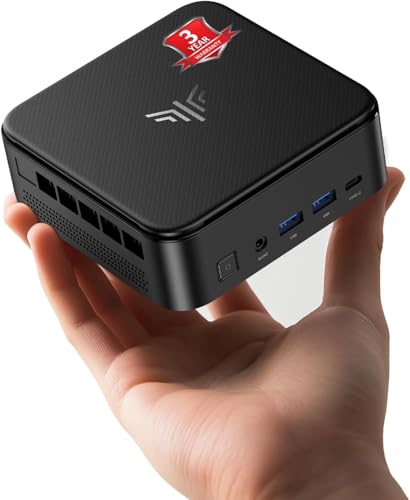
KAMRUI Mini PC (Ryzen 7 7735HS)
KAMRUI Hyper H1 Mini Gaming PC (Ryzen 7 6800H)
KAMRUI E3B 11 Pro (Ryzen V2748)
KAMRUI E3B Mini PC (Ryzen 7 7730U)

GMKtec M7 Ultra Mini PC (Ryzen 7 PRO 6850U)

KAMRUI E3B Mini Gaming PC (Ryzen 7 7730U)
A Breakdown Of The Leading Choices
The Skytech Azure 3 anchors this list as the full-tower option for gamers who want the RTX 5060 to breathe. Inside, an Intel Core Ultra 7 270K running up to 5.4GHz on turbo pairs with 32GB of DDR5-5200 RAM, which is overkill for most esports titles but a real comfort for anyone streaming or running a Discord-heavy background.
Cooling comes from a 360mm AIO liquid cooler, and the 1TB NVMe M.2 SSD gives you fast load times across a sizable library. Wi-Fi 6 keeps wireless lag in check, though for a tower this size you’ll probably want to wire in. Compared with the Chronos Mini in slot two, this build trades the small footprint for serious thermal headroom.
What It Does Well
- Intel Core Ultra 7 270K with 5.4GHz boost handles modern game engines without choking on background apps.
- 32GB of DDR5 RAM means you can keep a browser, voice chat, and game open at once without stutter.
- 360mm AIO liquid cooling keeps boost clocks stable through long sessions.
- 1TB NVMe SSD cuts load screens dramatically versus a traditional hard drive.
- Dedicated RTX 5060 8GB GDDR7 GPU handles 1440p gaming with ray tracing turned on.
- Wi-Fi 6 support gives you flexible placement without sacrificing network speed.
Small Caveats
- Full-tower footprint demands a dedicated spot under or beside your desk.
- Liquid cooling loops can require periodic checks for pump noise over years of use.
Made For
Competitive 1440p players who stream on the side and want headroom for the next few GPU generations.
Skip It When
The Skytech Chronos Mini is a better fit for a studio apartment or shared living-room setup.
The Chronos Mini shrinks the same Skytech formula into a much smaller shell, and somehow still fits a discrete RTX 5060 alongside the Ultra 7 chip. The 32GB of DDR5 here runs a touch faster at 5600MT/s, which helps when the CPU and GPU are sharing tight thermal space.
Realistically, you can tuck this behind a monitor or inside an entertainment center, and the 360mm AIO still keeps thermals manageable. For a small apartment or a clutter-free desk, that matters more than the last few benchmark points. It’s the spiritual sibling to the Azure 3 above, just compressed.
Points In Its Favor
- RTX 5060 in a mini form factor is rare at this price point.
- DDR5-5600 RAM gives a small edge in memory-sensitive games.
- 1TB NVMe boot drive handles a large Steam library.
- 360mm AIO cooling keeps the CPU running at boost for extended sessions.
Trade Offs
- Compact cases can trap heat, so undervolging may be necessary for some workloads.
- Upgrade paths inside a mini case are more limited than the Azure 3 tower.
- Fan noise under load tends to read higher than the full-tower sibling.
Right Fit For
Living-room gamers and anyone craving a clean desk with a real GPU under the hood.
Look Elsewhere When
The Skytech Azure 3 is the stronger pick for users who want easier internal access and longer upgrade flexibility.
The KAMRUI AM21 is a Zen 4 mini PC that leans into productivity as much as casual gaming. Its AMD Ryzen 7 8745HS uses 8 cores and 16 threads, with a 4.9GHz peak that handles spreadsheets, code, and browser tabs without breaking a sweat.
You get 16GB of DDR5 and a 1TB NVMe SSD as a baseline, which covers most people’s working day. The integrated graphics mean this isn’t the box for demanding AAA titles, but for esports and indie games it holds up well. Compared with the smaller KAMRUI E3B models further down, this one delivers a real CPU generation jump.
Bright Spots
- Ryzen 7 8745HS on Zen 4 brings strong single-threaded performance for daily apps.
- 16GB of DDR5 RAM is comfortable for multitasking across office tools.
- 1TB NVMe storage means you rarely need an external drive.
Worth Noting
- Integrated graphics limit you to light or older games at full detail.
- No dedicated GPU means ray-traced titles will struggle.
- 16GB is plenty today, but heavy creative work may want an upgrade.
Best Suited To
Hybrid workers who play a few rounds of Valorant or Stardew Valley after the workday ends.
Consider Something Else When
The Skytech Azure 3 is the better choice for someone whose top priority is high-refresh modern gaming.
The KAMRUI E3B with the Ryzen 5 7530U is the gentle entry point in this roundup. Six cores and twelve threads running up to 4.5GHz make it a capable home office companion, and the 15W TDP means it sips power compared with full-tower gaming rigs.
The trade-off is integrated Vega graphics, which handle productivity beautifully but won’t push modern games far. With 16GB of LPDDR4X and a 512GB SSD, it’s a solid streamer-and-browsing box. If you mostly want a tidy little PC for the kitchen counter or a dorm desk, this fits the bill.
Why It Works Well
- Low 15W TDP keeps power draw and heat output minimal.
- 16GB of LPDDR4X is well-matched to typical office workloads.
- Compact footprint fits next to a monitor or even behind a TV.
Possible Compromises
- No discrete GPU means demanding games are off the table.
- 512GB storage fills up quickly with modern game installs.
Who It Suits Best
Students, writers, and home-office users who want a quiet, low-power PC for general work.
A Better Fit Elsewhere
The KAMRUI E3B with Ryzen 7 7730U offers more headroom for users who plan to add light gaming later.
Stepping up from the Ryzen 5 model, this KAMRUI Mini PC uses the Ryzen 7 7735HS for a noticeable multi-threaded boost. With 8 cores and 16 threads humming at up to 4.75GHz, it chews through video calls, spreadsheets, and image editing without fan noise spiraling.
The 16GB of LPDDR5 RAM is faster than the LPDDR4X in slot four, which helps when running multiple browser tabs. The 512GB SSD is on the smaller side, so most owners will want an external drive. Compared with the AM21 in slot three, this one trades the newer Zen 4 core for a slightly older but still-capable design.
What Stands Out
- Ryzen 7 7735HS handles multi-threaded workloads with composure.
- 16GB of LPDDR5 RAM offers faster bandwidth for multitasking.
- Compact size makes it ideal for clutter-free desks.
Honest Caveats
- 512GB of internal storage may feel tight for game collections.
- Integrated graphics limit AAA gaming at high settings.
Who Will Love This
Knowledge workers and content creators who want a compact PC with real CPU muscle.
Reach For A Different Pick When
The GMKtec M7 Ultra is worth a look if you need 32GB of DDR5 and stronger integrated graphics.
The Hyper H1 earns its name by cramming 32GB of LPDDR5 RAM and a 1TB NVMe SSD into a tiny chassis. The Ryzen 7 6800H inside is a few generations old now, but its Radeon 680M integrated graphics are still surprisingly capable for esports and older AAA titles.
For streamers who want a desktop that disappears behind a monitor, this is a tidy solution. 32GB of RAM is rare in this size class, and that alone lifts it above most mini PC competitors. The trade-off is the older CPU core, which lags behind the 7735HS in slot five on raw single-thread work.
Where It Helps
- 32GB of LPDDR5 RAM is generous for a mini PC at this tier.
- 1TB NVMe SSD keeps your game library local without external drives.
- Radeon 680M iGPU handles esports and indie titles at solid frame rates.
Things To Consider
- Older CPU generation means slightly less future-proofing.
- No dedicated GPU limits the heaviest gaming titles.
The Right Fit
Light gamers and content creators who want big specs in a small box.
Swap It Out When
The Skytech Chronos Mini is a smarter pick if you need real ray-traced gaming performance from a dedicated RTX 5060.
The E3B 11 Pro is the multi-monitor specialist of this group, with triple 4K display support through its Radeon Vega 7 integrated graphics. The AMD Ryzen Embedded V2748 delivers 8 cores and 16 threads for digital signage, productivity hubs, or a stock-trading desk.
Dual LAN ports open up router and firewall setups that simpler mini PCs can’t handle. The 16GB of DDR4 and 512GB SSD are modest, but adequate for the kind of office work this build targets. Compared with the Ryzen 7 7735HS in slot five, this leans more toward connectivity than raw CPU speed.
The Value In It
- Triple 4K display output supports serious multi-monitor workflows.
- Dual LAN ports enable advanced networking setups.
- 8-core Ryzen V2748 handles background tasks with stability.
Points To Note
- DDR4 memory is slower than the DDR5 found in the AM21 and Hyper H1.
- 512GB storage fills up fast if you store media locally.
Perfect Match For
Small businesses and home offices running multi-display productivity or signage applications.
Where A Sibling Pick Shines
The KAMRUI Hyper H1 offers stronger integrated graphics for users who also want casual gaming.
Slot eight brings the Ryzen 7 7730U version of the E3B, with 8 cores and 16 threads tuned for efficiency. Windows 11 Pro comes preinstalled, which saves you a setup step if your work needs domain join or BitLocker.
The 4.5GHz boost clock and 16GB of RAM make video calls, browser research, and document editing feel effortless. The integrated graphics won’t win any gaming awards, but the Zen 3+ architecture holds up well for productivity. It’s a near-twin to slot ten’s gaming-focused variant, but with Pro OS extras baked in.
Real Benefits
- Windows 11 Pro is ready for managed work environments from day one.
- Ryzen 7 7730U delivers a 4.5GHz ceiling for responsive daily work.
- 16GB of RAM balances cost and headroom for typical office apps.
Some Limits To Know
- 512GB SSD is on the small side for a working professional with large files.
- Integrated graphics rule out modern AAA gaming.
Built With In Mind
Remote workers and IT-managed home offices that need Windows 11 Pro out of the box.
Another Choice May Suit
The KAMRUI AM21 in slot three is a better match for users who prefer a newer Zen 4 CPU core.
The GMKtec M7 Ultra steps into premium mini PC territory with a Ryzen 7 PRO 6850U, 32GB of DDR5, and a 1TB PCIe SSD. The PRO designation means extra security and management features that enterprise IT departments tend to look for.
Gaming isn’t the headline here, but the Radeon 680M integrated graphics approach GTX 1050 Ti territory in lighter titles, especially with FSR 3.0 support. Compared with the KAMRUI Hyper H1 in slot six, the M7 Ultra swaps the older H-series chip for a more power-efficient U-series processor with the same capable iGPU. You get a quiet desk and a clean cable situation.
The Upside
- 32GB of DDR5 RAM at this size is rare and useful for serious multitasking.
- 1TB PCIe SSD covers most professional and game storage needs.
- Radeon 680M iGPU with FSR 3.0 lifts light gaming frame rates noticeably.
Things To Weigh
- PRO chip features go unused by most home users.
- No discrete GPU means the heaviest games still require compromise.
Whose Shelf It Belongs On
Power users who want premium build quality, strong integrated graphics, and quiet operation in one box.
Not Your Match When
The Skytech Azure 3 is the right call for someone who prioritizes dedicated GPU horsepower over a compact case.
The 7730U-powered E3B closes the list with a gamer-friendly twist: a 1TB SSD rather than the 512GB you find elsewhere in the line. That extra room matters if you’re loading up Counter-Strike 2, League of Legends, and a few indie favorites without juggling installs.
The Ryzen 7 7730U still leans on integrated graphics, so this is an esports-and-indie machine rather than a 1440p beast. For a bedroom setup or a college dorm where space and storage both matter, it’s a tidy little box. It pairs naturally with the Skytech Azure 3 if you want a primary gaming rig and a quiet secondary PC.
Where It Delivers
- 1TB SSD offers more headroom than the 512GB siblings in the E3B family.
- Ryzen 7 7730U reaches 4.5GHz for snappy game-launch behavior.
- Mini chassis makes it easy to take to a friend’s place for LAN nights.
What To Weigh
- No dedicated GPU restricts modern AAA titles to low-medium settings.
- 16GB of RAM is fine for esports, but tight for streaming while playing.
Who Should Grab It
Esports and indie game fans who want extra storage in a portable, low-power package.
A Better Fit Elsewhere
The Skytech Chronos Mini is a stronger match for gamers chasing modern ray-traced visuals on a small case.
Choosing The Right 5060 Gaming PC For Your Setup
Picking a 5060 Gaming PC starts with honest answers about your space and your games. A full tower like the Skytech Azure 3 trades desk real estate for thermal headroom and easier upgrades, while a mini PC like the AM21 or E3B keeps your workspace clean but caps your future expansion. Match the form factor to where the machine will actually live.
The RTX 5060 is the headline GPU on the two Skytech builds, and that discrete card is the real differentiator for anyone playing modern AAA titles with ray tracing on. The remaining eight picks rely on integrated Radeon graphics, which excel at esports, indie games, and productivity. If your library skews toward Fortnite, Valorant, or Stardew Valley, integrated graphics handle that fine. If you crave Cyberpunk at high settings, the dedicated GPU matters.
Pay attention to RAM and storage tiers. 32GB is comfortable for the next several years, while 16GB works today but may feel tight as software grows. SSDs in the 512GB range fill up quickly with modern games, so a 1TB drive is worth seeking out if you skip cloud storage. Wi-Fi 6 support, which most of these include, is now table stakes for wireless setups.
Lastly, think about your upgrade horizon. A full tower can grow into a new GPU, more storage, or extra case fans over time. A mini PC usually caps you at RAM and SSD swaps. Buyers planning to stay put for five years may prefer a tower; shoppers who’ll likely replace the whole system in three years may happily take a mini PC.
Key Considerations Across These Picks
Traps First Timers Fall Into
The most common slip with 5060 Gaming PC shopping is treating integrated graphics and a discrete RTX 5060 as equivalent. They aren’t. Integrated Radeon graphics can run esports and older titles, but ray-traced modern games need that dedicated GPU. Map the choice to your actual game library, not the spec sheet’s longest bullet point.
Another trap is underestimating storage. A 512GB SSD feels spacious on day one, then fills up after two or three large game installs. Plan for a 1TB drive, an external SSD, or a willingness to manage your library carefully.
Where The Extra Money Goes
The price jump from a 16GB mini PC to a 32GB tower with a discrete RTX 5060 funds three real things: a dedicated graphics card with ray tracing and DLSS, more RAM for multitasking, and a larger chassis with better airflow. Those upgrades show up in frame rates, in how many browser tabs you can keep open, and in how cool and quiet the box runs.
The upgrade is worth it for gamers who play modern AAA titles, streamers who run OBS alongside their games, and anyone keeping the PC for four or more years. For light users replacing a laptop, the savings on a smaller build often outweigh the performance gap.
Frequently Asked Questions
Do all these 5060 Gaming PCs include the RTX 5060?
No. Only the Skytech Azure 3 and Skytech Chronos Mini pair an RTX 5060 with the listed CPU. The other eight builds use integrated Radeon graphics, which handle esports and older titles but are not equivalent to a dedicated GPU for modern ray-traced gaming.
How much storage do I really need for gaming?
For a comfortable modern setup, 1TB of SSD is a sensible baseline, since several current AAA titles each consume 50GB or more. The 512GB options in this list work fine with some library management or an external drive.
Are mini PCs good for 5060 Gaming PC duty?
Mini PCs with integrated graphics are great for esports, indie games, and everyday work. For demanding modern games, a mini PC with a dedicated RTX 5060 like the Skytech Chronos Mini is the better match, since thermal limits and GPU power are tighter than a full tower.
Is 16GB of RAM enough in 2026?
For most users running a browser, office tools, and esports games, 16GB is workable today. Power users, streamers, and anyone keeping the machine for several years will feel the upgrade to 32GB sooner rather than later.
Should I worry about liquid cooling maintenance?
A 360mm AIO, like the one in the Skytech Azure 3, generally runs quietly for years. Most owners won’t touch it, though occasional pump-noise checks and keeping the radiators dust-free extend its life.
Bottom Line
A 5060 Gaming PC can take very different shapes depending on how you balance raw power, desk space, and budget. The Skytech Azure 3 and Chronos Mini deliver the dedicated RTX 5060 experience for gamers who want real frame rates, while the KAMRUI and GMKtec mini PCs serve up quiet, compact productivity with light gaming on the side. Match the build to the games you actually play and the room you actually have, and you’ll end up with a setup that feels right from day one.


