


A 4080 Super-equipped gaming PC represents serious money, serious heat output, and serious expectations, and the wrong chassis can make that GPU sweat through every session. This roundup narrows the field to nine builds and compact alternatives worth your time, including the lone traditional tower in the list paired against smaller form-factor machines that punch well above their size. You will find the RTX 4080 Super flagship up front, followed by mini PCs that lean on newer HX-class Intel and Ryzen silicon for gaming-adjacent tasks, light creative work, and living-room setups. Read on for the trade-offs that actually matter before pulling the trigger.
Your Options, Compared

KAMRUI Hyper H2 Mini PC Intel Core i7 14650HX 32GB 1TB

Skytech O11V Gaming PC RTX 4080 Super 16GB
KAMRUI E3B Mini PC AMD Ryzen 7430U 32GB 512GB
KAMRUI Mini PC Ryzen 7 7735HS 16GB 512GB

GMKtec G10 Mini PC Ryzen 5 3500U 16GB 512GB

GMKtec M6 Ultra Mini PC Ryzen 7640HS 32GB DDR5
KAMRUI Hyper H2 Mini PC Intel 14450HX 32GB 1TB

KAMRUI Hyper H2 Mini PC Intel 14450HX 16GB 512GB
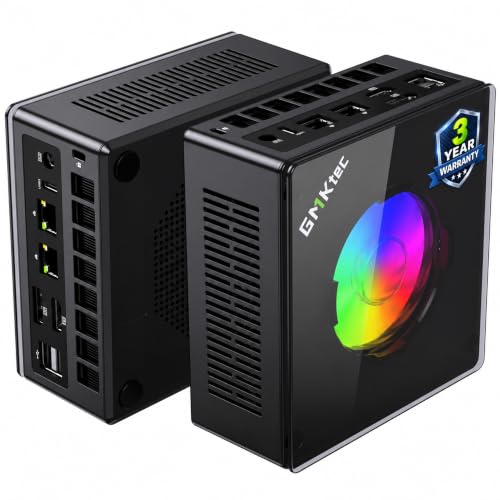
GMKtec K11 Mini PC Ryzen 9 8945HS 32GB 1TB
The Details Behind The Selections
The Hyper H2 takes the 14650HX, a chip you would normally expect inside a chunky gaming laptop, and drops it into a chassis small enough to hide behind a monitor. With 16 cores, 24 threads, and a turbo ceiling near 5.2 GHz, it has the headroom for the kind of multitasking that would choke a typical mini PC, and the 1TB PCIe 4.0 drive leaves breathing room for a sizable Steam library or a project’s worth of raw video.
For anyone running an external GPU enclosure (a box that lets you connect a desktop graphics card over Thunderbolt or Oculink) or driving triple 4K displays, the 32GB of RAM and dense CPU thread count keep productivity smooth while frames render on the external card. Most users will not feel the limits of this machine within the first two or three years of ownership.
The Case For It
- HX-class silicon delivers desktop-tier multi-thread performance in a mini chassis
- 32GB of memory and 1TB PCIe 4.0 storage out of the box, no upgrades required for typical workflows
- Strong fit for creators who already own a separate GPU enclosure or use external storage
Points To Keep In Mind
- No discrete GPU inside the box, so demanding 3D workloads still depend on an external graphics solution
- High TDP means the chassis runs warm under sustained load, and small-form-factor cooling can get audible
Key Specs
Best Suited To
Power users and creators who already plan to pair the unit with an external GPU and want maximum CPU headroom in a compact footprint.
Look Elsewhere When
Streamers and Esports players should look at the Skytech O11V, since it ships with a dedicated RTX 4080 Super right out of the box.
This is the only traditional tower in the roundup, and Skytech makes every component count. The RTX 4080 Super with 16GB of GDDR6X memory (a high-speed VRAM type designed for 4K textures and heavy ray tracing) is the headline, but the supporting cast is just as serious: an Intel i7 14700K, 32GB of DDR5 RAM at 5600 MHz, and a 2TB Gen4 NVMe drive that laughs in the face of long loading screens.
The 1000W Gold-rated PSU (a power supply with at least 90 percent efficiency under typical loads) gives the system plenty of headroom for the 4080 Super’s appetite, and the 360mm ARGB AIO (an all-in-one liquid cooler with a 360mm radiator and addressable RGB lighting) keeps the 14700K in check during marathon sessions. This is a proper enthusiast build for someone who wants the GPU to do the heavy lifting without compromise.
What Earns Its Place
- Dedicated RTX 4080 Super GPU handles 4K, ray tracing, and creative workloads without breaking a sweat
- 32GB DDR5 at 5600 MHz and a 2TB Gen4 SSD mean no immediate storage or memory upgrades are necessary
- 360mm liquid cooler and 1000W Gold PSU leave thermal and power headroom for the long haul
- Mid-tower form factor offers room to add drives, capture cards, or extra fans later on
Trade Offs
- Full tower size rules out living-room or under-desk stealth placements
- High-end components draw meaningful power, so running costs add up over years of daily use
- RGB lighting and a high-RPM pump can be audible in quiet rooms at night
Who It Suits Best
Enthusiast gamers chasing 4K performance and content creators who want a no-compromise desktop with real GPU muscle.
Consider Something Else When
Apartment dwellers and minimalists should consider the GMKtec K11, which delivers strong CPU performance in a fraction of the footprint.
The E3B sits in a different weight class than the i7-based Hyper H2, but the 32GB of memory and 512GB SSD configuration make it a smart secondary PC or a first machine for someone stepping up from a laptop. The Ryzen 5 7430U is a 6-core, 12-thread mobile part, and it sips power at a 28W TDP (thermal design profile, or the maximum sustained heat the chip is rated to produce), which means the unit stays cool and quiet on a desk.
For a home office that runs a browser, Office suite, and the occasional indie game, this is more than enough horsepower. Owners commonly report that the fan barely spins up under typical workloads, which is a real quality-of-life win in a shared space.
Features That Help
- 32GB of RAM is generous for the price and rare in this tier of mini PC
- Low 28W TDP keeps the chassis cool and quiet during everyday use
- Compact form factor fits comfortably behind a monitor or on a bookshelf
Honest Caveats
- Integrated graphics handle casual titles only, so this is not the box for modern AAA gaming
- 512GB of storage fills up fast with game installs and project files
- Mobile-grade CPU falls well short of the HX-class chips in heavier workflows
Made For
Home office users, students, and families looking for a quiet, affordable PC that handles daily tasks without fuss.
Not Your Match When
Gamers should look at the GMKtec M6 Ultra, which pairs DDR5 memory with a Zen 4 chip better suited to 1440p titles.
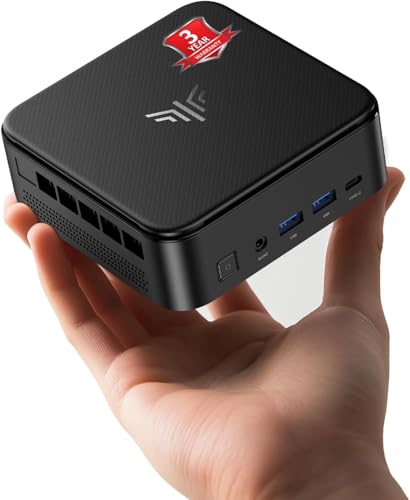
Stepping up from the E3B, this KAMRUI unit brings the Ryzen 7 7735HS, an 8-core, 16-thread chip with boost speeds up to 4.75GHz. The “HS” suffix signals a higher power envelope than the U-series chips, which means the chassis needs better cooling, but you get noticeably more muscle in return. For someone running virtual machines, code editors, or photo workflows, the difference shows up quickly.
16GB of LPDDR5 memory (low-power DDR5 soldered directly to the board, which saves space but cannot be upgraded later) is the main trade-off, since it cannot be expanded after purchase. For most productivity users that ceiling is fine, but heavy multitaskers should weigh the limit before committing.
Strengths Worth Knowing
- Eight cores and 16 threads handle parallel tasks like compilation and rendering with ease
- Zen 3+ architecture strikes a solid balance between power draw and performance
- Compact chassis fits into dorm rooms, reception desks, and home studios
Softer Spots
- Soldered LPDDR5 memory cannot be upgraded later, so the 16GB ceiling is final
- No discrete GPU means gaming is limited to esports and lighter titles
Who Should Grab It
Productivity-focused users and developers who want a small, capable machine for everyday work without paying for a dedicated GPU.
Skip It When
Creative pros juggling massive project files should consider the GMKtec K11, which ships with 32GB of DDR5 and 1TB of storage from the start.
The G10 leans into the productivity corner of the mini PC market. The Ryzen 5 3500U is an older quad-core chip on Zen+ architecture, but in a desktop setting with proper cooling it handles office work and light multitasking without complaint. The 2.5GbE NIC (network interface card supporting 2.5-gigabit wired Ethernet) is a thoughtful touch for offices moving past gigabit speeds, and the triple 4K display support is genuinely useful for stock-trader desk layouts or video-watching side panels.
Where this unit falls short is gaming: the integrated Radeon graphics are built for productivity, not for pushing frame rates in modern titles. For an HTPC (home theater PC) or a front-desk terminal, however, the port selection and display support are a genuine highlight.
A Few Highlights
- Triple 4K display output through HDMI 2.1, DisplayPort, and USB-C is uncommon at this size
- 2.5GbE LAN future-proofs the wired network for faster switches and NAS (network-attached storage) devices
- USB-C with Power Delivery simplifies cable management on a clean desk
Points To Note
- Older Zen+ CPU lags behind the Ryzen 7000-series chips in single-threaded responsiveness
- Integrated graphics are not built for anything beyond casual or older games
Right Fit For
Office managers and home users who want a clean triple-monitor setup without dedicating a tower to the task.
Another Choice May Suit
Users wanting stronger CPU performance for video calls or light editing should consider the KAMRUI Ryzen 7 7735HS instead.
The M6 Ultra is the mini PC that gets closest to a real gaming box without crossing into tower territory. The Ryzen 5 7640HS is a Zen 4 chip, which is two generations ahead of the older G10, and it pairs with 32GB of DDR5 memory and a 512GB SSD. The integrated Radeon 760M graphics are surprisingly capable, pushing smooth frame rates in Esports titles and lighter AAA games at 1080p.
Dual 2.5GbE LAN ports, USB4 (a high-bandwidth connection standard that can carry data, video, and power), and WiFi 6 round out a connectivity list that outclasses most mini PCs. For someone who games on a desk in a small apartment, this box is hard to argue with.
What Works In Its Favor
- Zen 4 architecture delivers strong single-threaded performance for game logic and UI work
- 32GB DDR5 handles modern games and browser-heavy multitasking without hitting a wall
- Dual 2.5GbE LAN ports enable advanced routing and NAS setups
- USB4 support opens the door to future external GPU enclosures
Where It May Fall Short
- Integrated Radeon graphics still trail behind any discrete GPU in AAA titles at 1440p or higher
- 512GB SSD is tight for a multi-game library, so expect to add external storage eventually
Feature Card
Who Will Love This
Esports players and 1080p gamers who want a small, cool-running box on a crowded desk.
A Better Fit Elsewhere
Anyone chasing 4K with ray tracing should look at the Skytech O11V, which pairs an i7 14700K with a proper RTX 4080 Super.
The Win-11 Pro edition of the Hyper H2 trades a few cores of the i7 14650HX for the i5 14450HX, but the value pitch is in the operating system and storage tier. Windows 11 Pro unlocks BitLocker drive encryption (a tool that scrambles the contents of your drive so that only a recovery key can unlock them), Remote Desktop, and Group Policy editing, which are all essentials for IT-managed environments and small business owners.
The 32GB of memory and 1TB PCIe 4.0 drive keep the configuration competitive with the higher-tier i7 model, and the 14450HX’s 10 cores, 16 threads, and 4.8GHz boost handle typical knowledge-worker loads without breaking stride. For offices that need Pro features without the cost of a tower, this is a tidy option.
Advantages To Know
- Windows 11 Pro enables BitLocker, Remote Desktop, and granular policy controls out of the box
- 32GB of RAM and a 1TB SSD match the higher-tier i7 Hyper H2 configuration
- HX-class CPU brings genuine multi-threaded performance to a mini chassis
Possible Compromises
- No discrete GPU means graphical workloads still rely on Intel integrated graphics
- Smaller core count than the 14650HX model can show up in heavy rendering tasks
Perfect Match For
Small business owners and remote workers who need Pro OS features in a compact, capable machine.
Swap It Out When
Users who do not need Pro features should save money with the KAMRUI Hyper H2 in the 16GB configuration.
The 16GB version of the Hyper H2 keeps the 14450HX’s 10-core CPU but trims the memory and storage to a more modest configuration. For shoppers who want HX-class performance without paying for headroom they will not use, this model represents the practical entry point into the KAMRUI Hyper H2 family.
Triple 4K display support, WiFi 6, and Bluetooth 5.2 keep the feature list competitive, and the smaller SSD simply means adding a secondary drive later if storage becomes tight. Owners commonly pair this unit with a NAS or external SSD for media libraries.
Why It Works Well
- 10-core HX-class chip handles demanding productivity apps at a friendlier price
- Triple 4K output through USB-C and HDMI suits traders, editors, and multitaskers
- Compact size makes it easy to mount behind a monitor or tuck into a media cabinet
Worth Bearing In Mind
- 16GB of RAM caps multitasking potential, so heavy browser tab users may want to look at the 32GB variant
- No dedicated GPU limits gaming and 3D work to lighter titles
- 512GB SSD fills quickly with modern game installs
Built With In Mind
Everyday users and home offices who want a faster, smaller alternative to a traditional desktop without overpaying for memory and storage.
Where A Sibling Pick Shines
Anyone planning serious multitasking should consider the 32GB, 1TB version of the same Hyper H2 family for a small price bump.
The K11 is the most ambitious mini PC in this roundup. The Ryzen 9 8945HS is an 8-core, 16-thread flagship mobile chip with a 5.2GHz boost, and 32GB of DDR5 plus a 1TB PCIe 4.0 drive keep the configuration balanced. The standout, however, is the Oculink port, a dedicated external GPU connector that delivers far more bandwidth than USB4, making this a real platform for adding a desktop graphics card later.
Dual 2.5GbE LAN, USB4, and HDMI round out a port selection that feels more workstation than mini PC. For enthusiasts who want a small box today and a serious GPU upgrade path tomorrow, the K11’s expandability sets it apart.
The Value In It
- Flagship Ryzen 9 mobile chip with 8 cores handles anything short of a full workstation workload
- Oculink port delivers a low-overhead connection to an external desktop GPU
- 32GB DDR5 and 1TB SSD match the storage tier of the Skytech tower at a smaller footprint
- Dual 2.5GbE LAN supports routing, NAS duties, and link aggregation (combining two network cables for higher throughput)
Practical Considerations
- An Oculink-connected external GPU still costs extra, so the total platform investment can rival a tower
- High-TDP mobile chip runs warm under sustained load, and chassis fans ramp up under stress
The Right Fit
Enthusiasts planning a future external GPU and small-form-factor builders who want flagship CPU performance today.
Not Your Match When
Gamers who want a turnkey 4K experience today should skip the upgrade path and go straight to the Skytech O11V.
What To Weigh Before Choosing Your Build
The Case For A Real Tower
A mid-tower like the Skytech O11V makes sense when the GPU is the priority. The RTX 4080 Super needs space, airflow, and a 1000W PSU to stretch its legs, and towers handle all three without compromise. Mini PCs simply cannot match the thermals or the upgradability of a proper desktop when the goal is maximum frame rates at 4K.
The Case For A Mini PC
Mini PCs shine in spaces a tower cannot go. Behind a monitor, inside a media cabinet, or on a reception desk, the small footprint and low fan noise of the KAMRUI and GMKtec units make them easy to live with. For productivity, light creative work, and casual gaming, the right mini PC delivers most of what a tower does at a fraction of the desk real estate.
The External GPU Question
Mini PCs with Oculink or USB4 ports can be paired with an external GPU enclosure, turning a small box into a credible gaming machine. The trade-off is cost: a good enclosure plus a desktop GPU often totals more than a prebuilt tower. Still, for shoppers who value the small footprint now and a future upgrade later, the K11’s Oculink support is genuinely compelling.
Key Considerations Across These Picks
Where Shoppers Go Wrong
The most common mistake in this category is fixating on the GPU model and ignoring the rest of the build. A 4080 Super is wasted on a weak PSU, a slow SSD, or a CPU that bottlenecks the pipeline. Check the supporting cast: power supply wattage, storage generation, and cooling solution all affect long-term satisfaction. Equally, do not buy a mini PC expecting it to game like a tower. Without a discrete GPU, integrated graphics have real limits that no amount of CPU speed can fix.
Where The Extra Money Goes
Higher-tier models buy three things: stronger multi-threaded CPU performance, more memory and storage headroom, and a dedicated GPU. The Skytech O11V commands a premium because it bundles a real RTX 4080 Super with a 1000W PSU and an AIO cooler, parts that a mini PC simply cannot house. Pay more when you want raw gaming power or sustained creative workloads, and save when your day-to-day is browsing, documents, and the occasional game.
Frequently Asked Questions
Do mini PCs need an external GPU for serious gaming?
Most mini PCs rely on integrated graphics, which handle casual and Esports titles fine but struggle with modern AAA games. Units with Oculink or USB4 ports can pair with an external GPU enclosure, though the total cost often rivals a prebuilt tower.
How much RAM is enough for a 4080 Super system?
For gaming and creative work, 32GB has become the comfortable minimum, and 16GB can feel tight when running a game alongside a browser, Discord, and streaming tools. The Skytech O11V ships with 32GB of DDR5, which is the right ballpark.
Is a 1000W PSU necessary for a 4080 Super build?
The RTX 4080 Super draws substantial power, and a Gold-rated 1000W PSU gives the GPU the headroom it needs while leaving room for future upgrades. Lower-wattage PSUs can work in some configurations, but high-end builds benefit from the extra margin.
Can a mini PC replace a full desktop for work?
For productivity, browsing, and video calls, a well-specced mini PC handles the workload comfortably. The limits show up in sustained 3D rendering, AAA gaming, and any task that needs a discrete GPU, where a tower still wins.
How loud are mini PCs under load?
Most units in this roundup stay quiet during everyday work, but the higher-TDP HX-class chips ramp the fans up under sustained load. Owners commonly report that the sound is noticeable but not disruptive, especially compared with a tower’s fans and pump noise.
The Takeaway
Your ideal 4080 Super-Gaming PC depends on where it lives. A tower belongs in a dedicated workspace, while a mini PC slips into a living room or shared desk. The Skytech O11V is the right call when 4K gaming is the priority, and the KAMRUI or GMKtec mini PCs earn their place when the goal is power in a small footprint. Match the chassis to your space, and the GPU choice tends to follow naturally.


