


A 34-inch class display reshapes the desk, not just the picture. Ultrawide panels in this size give you room for a chat window next to your game, a long Premiere timeline without horizontal scrolling, or two full documents side by side without a clunky second monitor eating outlet space. The 34-inch tier covers everything from sharp 3440×1440 workhorses to massive 49-inch super-ultrawides that effectively replace dual-monitor setups. The list below walks through ten strong options, starting with compact 24-inch value picks, moving through mainstream 34-inch ultrawides, and finishing with the big-format curved displays built for serious immersion.
An Overview Of The Picks

KTC 24 Inch FHD 1080P 100Hz Computer Monitor

LG 34" Curved UltraWide QHD IPS Monitor

LG 34" UltraWide WFHD 100Hz Monitor

INNOCN 34" Ultrawide WQHD 180Hz IPS Monitor

INNOCN 49" Curved DQHD 240Hz Ultrawide Monitor
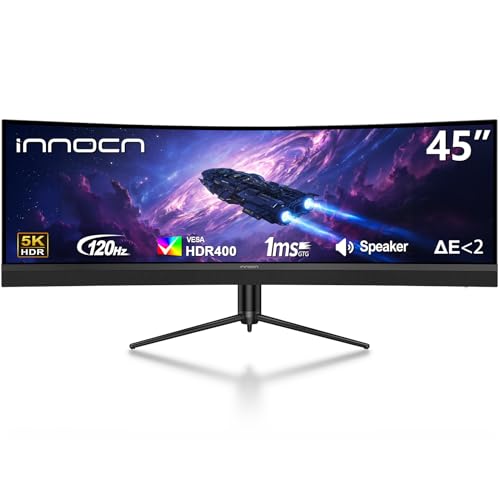
INNOCN 45" 5K2K 120Hz Curved Ultrawide

INNOCN 40" WQHD 144Hz Ultrawide IPS Monitor

INNOCN 49" Curved 144Hz Super Ultrawide

INNOCN 45C1R 5K2K Ultrawide Curved Monitor

INNOCN 40C1R Ultrawide WQHD 144Hz Monitor
The Picks, Examined More Closely
The KTC 24-inch sits a step below true 34-inch ultrawides, but it earns the opening slot because so many desk setups start here. Its 23.8-inch VA panel (a panel type known for deep contrast and strong blacks) runs a 1920×1080 resolution at 100Hz, which is enough smoothness for casual shooters and noticeably cleaner than a 60Hz office screen. For students, dorm rooms, or anyone adding a second display next to a larger primary, the footprint stays modest.
The wide 178° viewing angle helps when a roommate glances over a strategy game, and FreeSync support (a feature that syncs the display refresh to your graphics card to cut tearing) keeps the picture honest when frame rates bounce around. Compared to the LG 34-inch QHD right behind it, this one asks for far less desk depth and far less GPU power to drive, which is the real story.
The Practical Payoff
- 100Hz over a typical 60Hz makes scrolling and gameplay feel smoother without a premium tax.
- VA panel brings deeper contrast than older TN panels (a faster but washed-out older technology), so dark scenes in games read better.
- FreeSync support reduces screen tearing (those visible horizontal rips in fast motion) on compatible AMD and many NVIDIA cards.
- Small footprint suits tight dorm desks, shared bedrooms, and standing-desk converters.
- Plug-and-play setup keeps the install down to a single HDMI cable for most users.
Worth Noting
- 1080p on a 24-inch looks fine, but 34-inch ultrawides in this list stretch the same workload across a much wider canvas.
- No height adjustment in the base, so a separate monitor arm may be worth budgeting for taller users.
Right Fit For
Budget shoppers building a first PC, students furnishing a small dorm, or anyone adding a compact secondary screen to a primary workstation.
Consider Something Else When
Step up to the LG 34-inch Curved UltraWide QHD if your desk has the depth and your games benefit from a wider field of view.
This LG is the heart of the 34-inch class. The 3440×1440 resolution (a sweet spot that gives extra horizontal pixels without demanding a flagship GPU) and curved IPS panel pull double duty for spreadsheet warriors and Apex Legends players, and the 99% sRGB color coverage keeps photo edits honest. HDR10 support (a baseline HDR standard that maps content into a wider brightness range) brings a touch of pop to streaming, even on a non-DisplayHDR-certified panel.
Dynamic Action Sync (LG’s low-latency input mode) and the OnScreen Control software let you split the screen with a couple of clicks, which is genuinely useful on a 34-inch canvas. Compared to the KTC that opened the list, this is the move up in both desk presence and pixel density, and it does not jump to the 49-inch super-ultrawide scale covered later.
The Upside
- 3440×1440 QHD gives sharp text and room for two full windows without scaling headaches.
- IPS panel (known for wide viewing angles and accurate color) holds color when you tilt the screen or share it with a coworker.
- Height, tilt, and pivot adjustments let you dial in posture without a separate arm.
Trade Offs
- No high-refresh headline rate, so competitive FPS players chasing 240Hz should look at the INNOCN 34-inch 180Hz instead.
- Built-in speakers are absent, so plan for headphones or a desktop set.
Best Suited To
Hybrid users who split the day between Office apps and a few rounds of single-player or simulation gaming.
Look Elsewhere When
Pick the INNOCN 34-inch Ultrawide WQHD 180Hz IPS Monitor if competitive shooters are your main event and you want the refresh headroom.
Where the LG QHD model pushes pixel density, this WFHD variant (2560×1080) keeps the ultrawide experience accessible for older laptops and mid-range GPUs. The 21:9 panel still gives you the split-screen real estate that makes ultrawides worth it, and 100Hz keeps motion comfortable during long workdays. DisplayHDR 400 and 99% sRGB coverage lift it above basic office panels.
Reader Mode and a virtually borderless design (bezels so thin they almost disappear) suit shared workspaces, and the VESA mount compatibility (a standard hole pattern on the back for monitor arms) gives flexibility for arm-mounted setups. The honest read is that this is the ultrawide to pick when QHD feels like a stretch, and unlike the LG curved QHD above, it skips the curve to keep cost in check.
Good Reasons To Consider
- WFHD 2560×1080 is friendlier to integrated graphics and older GPUs than QHD.
- 100Hz and FreeSync support keep everyday motion clean without a premium card.
- VESA-compatible mount support makes arm setups simple down the line.
Points To Keep In Mind
- Resolution is lower than the QHD sibling, so fine text in spreadsheets looks less crisp.
- Tilt-only stand means a third-party arm is the only path to height adjustment.
Who It Suits Best
Office-focused shoppers, students, and anyone running an ultrawide off integrated graphics who still wants HDR-class color.
A Better Fit Elsewhere
Choose the LG 34-inch Curved QHD if you can drive 3440×1440 and want the sharper text and curved immersion.
Now the ultrawide gets fast. The 34C1R pairs a 3440×1440 IPS panel with a 180Hz refresh rate, which is a real step up from the 100Hz norm in the LG models above. Adaptive-Sync works with both AMD FreeSync and is G-SYNC compatible (meaning NVIDIA cards can sync to the display to kill tearing and stutter), so the smoothness does not lock you to one graphics brand. PIP/PBP modes (picture-in-picture and picture-by-picture, which show two video sources on one screen) help you keep a stream or second machine visible while gaming.
The ergonomic stand adjusts 130mm in height and tilts negative 5° to 15°, which covers the most common postures. Dual HDMI 2.0 and DisplayPort 1.4 cover modern consoles and PC without adapters, and unlike the LG curved QHD, this model pushes refresh headroom over HDR brightness.
Practical Advantages
- 180Hz refresh rate gives competitive gamers a tangible edge over 60Hz and 100Hz screens.
- Adaptive-Sync with FreeSync and G-SYNC compatibility across both major GPU brands.
- PIP and PBP modes let two sources share the 21:9 canvas without alt-tabbing.
- Height and tilt adjustments ship in the box, so no extra arm is required for most setups.
Soft Spots
- No USB-C input, so laptop users with a single-cable dock habit should look at the INNOCN 40-inch WQHD instead.
- Owners commonly report the OSD (on-screen display menu) takes time to learn, so first-time menu dives feel clunky.
Whose Shelf It Belongs On
Competitive and simulation gamers running mid-to-high-tier GPUs who want 34 inches without giving up refresh rate.
Where Another Pick Suits Better
Pick the INNOCN 45C1R 5K2K if your work involves long Premiere or DaVinci timelines and you want a taller canvas more than a faster refresh.
This is the display that retires a second monitor. The 49-inch curved VA panel delivers a 5120×1440 DQHD resolution (essentially two QHD panels fused into one) at 240Hz, with an 1800R curve (a curvature rating where 1800R means the screen would form a circle 1.8 meters in radius if wrapped fully around) that wraps the action around your seat. The 32:9 aspect ratio is wider than the 21:9 panels earlier in the list, and that extra width is exactly why sim racers, flight sim pilots, and stock traders reach for it.
USB Type-C, DisplayPort, and HDMI ports sit on the back, and the stand tilts, swivels, and adjusts in height. Owners commonly report that gaming at this scale is the closest thing to a wraparound projector without a headset. You may find the 49-inch footprint demands a deep desk, and unlike the INNOCN 34-inch 180Hz IPS above, the 240Hz ceiling here only matters if your GPU can feed it.
What Works In Its Favor
- 240Hz refresh on a DQHD panel covers the rare combination of high resolution and high speed.
- 1800R curve helps the far edges stay in your natural field of view at typical desk depth.
- USB Type-C alongside DisplayPort and HDMI covers modern laptops and desktops with one cable each.
- Replaces a dual-monitor setup and removes the bezel gap down the middle.
Where It Is Less Suited
- 49-inch width needs a desk at least 48 inches deep for comfortable viewing distance, depending on your room.
- Driving 5120×1440 at high frame rates calls for a top-tier GPU, so budget builders should consider the 49-inch 144Hz alternative instead.
Feature Snapshot
Built With In Mind
Sim racing enthusiasts, flight sim pilots, and traders who want a single screen that behaves like a multi-monitor wall.
Swap It Out When
Reach for the INNOCN 49-inch 144Hz Curved WDFHD if the DQHD resolution feels like overkill and you want a lighter GPU load.
The 45-inch form factor is the quieter hero of the 34-inch class conversation, and INNOCN’s 5K2K version makes a strong case for it. The 5120×1440 resolution on a 32:9 panel gives you the same horizontal pixel count as the 49-inch DQHD above but with a tighter R1500 curve, which keeps the geometry a bit more natural for a single viewer. The 120Hz refresh rate is plenty for most editing timelines and casual gaming.
USB-C with 65W power delivery handles most modern laptops over a single cable. PIP and PBP (picture-in-picture and picture-by-picture) make it easy to share the canvas with a work laptop and a personal desktop, and the 32:9 ratio keeps Premiere and DaVinci timelines wide open. Compared to the INNOCN 49-inch 240Hz above, this one trades some screen size and refresh headroom for that USB-C 65W charging convenience.
Why It Works Well
- 5K2K resolution gives timeline-heavy creators the horizontal pixels they need.
- USB-C 65W power delivery covers most 13- to 16-inch laptops with a single cable.
- R1500 curve is gentler than the 1800R on the 49-inch DQHD, depending on desk depth.
- PIP/PBP keeps two sources on screen at once for streamers and remote workers.
Factors To Consider
- 120Hz ceiling trails the 49-inch 240Hz, so competitive gamers may want the faster panel.
- No DisplayHDR 1000-class brightness, so HDR viewing leans on tone mapping (a technique where the display approximates HDR from a standard signal) rather than true highlights.
Perfect Match For
Video editors, music producers, and streamers who want a single ultrawide that doubles as a laptop dock.
Another Choice May Suit
Pick the INNOCN 45C1R if you need 90W of USB-C power delivery for a larger 16-inch laptop, since it offers a higher charging budget.
Stepping back from the super-ultrawide world, the 40-inch WQHD hits a sweet spot that is easy to underestimate. The 3440×1440 resolution on a 21:9 IPS panel offers about 18 percent more viewable area than a 34-inch, and 144Hz with FreeSync Premium covers the casual and mid-competitive crowd. HDR400 and 500 nits of brightness help daytime use in well-lit rooms.
USB-C 90W power delivery is the headline for laptop-first desks, since a single cable carries video, data, and laptop charging at once. PIP and PBP modes share the canvas with a second source, and 95% DCI-P3 color coverage (a wide color gamut that matters for video and photo work) makes it a credible secondary creator panel. Compared to the 45-inch 5K2K above, the 40-inch keeps the desk footprint lower without giving up the IPS color story.
Positive Takeaways
- USB-C 90W power delivery handles larger laptops that the 65W model above cannot fully charge.
- 95% DCI-P3 coverage lifts it above basic sRGB panels for photo and video work.
- 144Hz with FreeSync Premium covers most gaming styles without compromise.
- 500-nit peak brightness keeps the picture readable in bright rooms.
Potential Drawbacks
- 40-inch 21:9 can feel short for coders used to very tall stacks, since vertical pixels match 34-inch models.
- Owners commonly report that the default color profile benefits from a quick manual tune for accurate work.
Who Should Grab It
Hybrid users running a USB-C laptop on a small desk who want more pixels than 34-inch without the 45-inch footprint.
Where A Sibling Pick Shines
Choose the INNOCN 45C1R 5K2K if your workflow needs the wider 32:9 canvas and 90W charging together.
The 49C1G takes the super-ultrawide idea and pulls it back to a more accessible resolution. Its 3840×1080 panel is essentially two 1080p monitors fused into a single 32:9 surface, with 144Hz refresh, an 1800R curve, and 99% sRGB coverage. That pixel count is much friendlier to mid-range GPUs than the 5K2K panels above, so a wider audience can actually run games across the full width.
USB Type-C, DisplayPort, and HDMI ports cover most modern systems, and the height and tilt adjustments ship in the stand. HDR400 and built-in speakers keep the feature list rounded. The honest read is that this is the super-ultrawide for shoppers who want the 32:9 canvas without the GPU tax of the DQHD models earlier in the list.
Noteworthy Benefits
- WDFHD 3840×1080 runs smoothly on mid-tier GPUs where 5K2K would crawl.
- 144Hz refresh over DisplayPort keeps the panel feeling responsive.
- USB Type-C alongside HDMI and DisplayPort covers laptops, desktops, and consoles in one place.
- Built-in speakers help when a desktop set is not in the budget yet.
Small Caveats
- Vertical resolution matches a 1080p display, so text and timelines feel shorter than 1440p-tall panels.
- You may find the 49-inch width demands a deeper desk than a 34-inch ultrawide, depending on your room.
Made For
Shoppers who want a single-cable super-ultrawide for both a work laptop and an evening gaming session without a flagship GPU.
Skip It When
Pick the INNOCN 45-inch 5K2K if your GPU can drive it and you want sharper text and timelines in addition to the wider canvas.
The 45C1R is the polished version of the 45-inch 5K2K idea. It carries the same 5120×1440 resolution, R1500 curve, and HDR400 support as its sibling, but lifts the USB-C power delivery to 90W, which matters for a 16-inch MacBook Pro or a workstation laptop that pulls serious wattage. PIP/PBP, height adjust, and a tilt- and swivel-friendly stand round out the desk-side flexibility.
For most Mac users and laptop-first creators, that 90W single-cable setup is the difference between a clean desk and a tangle of chargers. The trade-off versus the 45-inch 120Hz above is more about charging budget than panel quality, so it depends on your laptop’s appetite.
Useful Touches
- USB-C 90W handles larger laptops that draw more than the 65W standard.
- 5K2K resolution gives video and photo editors the horizontal real estate for wide timelines.
- R1500 curve keeps the geometry comfortable on a typical desk depth.
- PIP and PBP modes support a work laptop and a personal PC side by side.
Honest Caveats
- 120Hz ceiling is not aimed at competitive esports players, so fast-twitch gamers may want the 49-inch 240Hz instead.
- No DisplayHDR 1000-class brightness, so HDR viewing relies on tone mapping for highlights.
Quick Facts
Who Will Love This
MacBook Pro owners and creators who want a single-cable ultrawide that charges the laptop and runs the panel together.
Not Your Match When
Choose the INNOCN 49-inch DQHD 240Hz if competitive frame rates matter more than USB-C charging power in your setup.
The 40C1R closes the list as the most balanced 40-inch option in the roundup. Its ADS (Advanced Super Dimension Switch) panel delivers 3440×1440 WQHD at 144Hz over DisplayPort, with 100Hz over HDMI, plus FreeSync Premium and HDR400. The 95% DCI-P3 color and 500-nit peak brightness make it a credible creator panel, and the 21:9 ratio is comfortable for both work and play.
USB Type-C, HDMI, and tilt, swivel, and height adjustments are all in the box, so the desk setup stays clean. The 40-inch size gives you roughly 18 percent more viewable area than a 34-inch 21:9 panel without the desk-dominating footprint of a 45- or 49-inch super-ultrawide, depending on your room.
A Few Highlights
- 95% DCI-P3 coverage supports color-accurate photo and video work without a calibration dance.
- 144Hz over DisplayPort and FreeSync Premium cover casual and competitive gaming.
- 500-nit peak brightness keeps the panel readable in bright offices and studios.
- Tilt, swivel, and height adjustments ship in the stand, so no extra arm is required.
Possible Compromises
- No USB-C power delivery, so laptop users still need a separate charger, depending on the model.
- Refresh drops to 100Hz over HDMI, so console gamers capped at HDMI will not see the full 144Hz.
The Right Fit
Daily drivers who split time between creative work, spreadsheets, and gaming and want a single panel that handles all three honestly.
Reach For A Different Pick When
Pick the INNOCN 40-inch WQHD USB-C 90W model if a single-cable laptop connection is the priority, since it adds the charging budget this one leaves out.
What To Weigh Before Choosing A 34-Class Ultrawide
The first fork in the road is resolution. A 2560×1080 panel gives you the ultrawide shape with the lightest GPU load, which matters for older graphics cards or integrated laptop graphics. The 3440×1440 tier, which dominates the list above, is the modern sweet spot: sharp text, room for two windows, and a manageable ask for most mid-range GPUs. Anything beyond that, the 5120×1440 5K2K and DQHD super-ultrawides, demands a serious graphics card if you want to game at native resolution.
Refresh rate is the second fork. Casual and sim players do not need much beyond 100Hz, and the difference between 100Hz and 144Hz is subtle. Competitive FPS players will feel the jump to 165Hz, 180Hz, or 240Hz immediately, especially in titles where reaction time matters. Match the panel to the games you actually play rather than chasing the highest number on the box.
Panel type changes the look more than people expect. IPS panels (In-Plane Switching) keep color accurate across wide viewing angles, which helps when you share the screen or tilt it. VA panels (Vertical Alignment) push contrast deeper, so dark scenes in horror games or movies look richer, but viewing angles can shift more if you sit off-center. Curved panels help the far edges of super-ultrawides stay in your field of view, and a tighter curve like R1500 sits more naturally on a shallow desk than an 1800R.
Connectivity decides how clean your desk stays. USB-C with 65W or 90W power delivery turns the monitor into a dock for a modern laptop, carrying video, data, and charging over one cable. If you live in a laptop-first setup, that single-cable life is worth prioritizing. VESA mount compatibility (the standardized screw pattern on the back) is the safety net for anyone who outgrows the included stand.
Key Considerations Across These Picks
Where Shoppers Go Wrong
Chasing the highest resolution on a mid-range GPU leads to low frame rates and a worse experience than a 3440×1440 panel running smoothly. A 4K-class 5K2K display needs a real graphics card to stretch its legs, and ignoring that gap is the most common mistake. Another trap is forgetting desk depth. A 49-inch super-ultrawide on a 24-inch deep desk forces you to sit closer than the panel geometry wants, so measure before you commit. The last soft trap is ignoring the included stand’s adjustability, since tilt-only bases push taller users toward a separate monitor arm they did not budget for.
When Paying More Pays Off
The premium tier in this category buys three things that compound. First, higher refresh rates like 180Hz and 240Hz give competitive players a tangible edge, and the smoothness is something you feel immediately. Second, USB-C power delivery at 90W turns a monitor into a true laptop dock, which simplifies cable management and travel setups. Third, 5K2K and DQHD resolutions give video editors and traders the horizontal real estate that lower panels cannot match. For casual use, the budget tiers are honestly enough, and the upgrade pays off only when your work or play style actually pushes those limits.
Frequently Asked Questions
Is A 34-Inch Ultrawide Better Than A Dual-Monitor Setup?
For most desks, a single 34-inch ultrawide removes the bezel gap in the middle and keeps window management simpler than two 16:9 panels. A super-ultrawide in the 45- to 49-inch class mimics dual-monitor setups without the gap, but it needs more desk depth to feel natural.
Do You Need A New GPU To Run A 3440×1440 Ultrawide?
Most mid-range GPUs from the last few years handle 3440×1440 well at 60Hz to 100Hz, and 144Hz is reachable in many esports titles with a tuned settings menu. Stepping up to 5K2K or 240Hz refresh rates calls for higher-tier hardware, depending on the games you play.
What Is The Difference Between IPS And VA Panels Here?
IPS panels prioritize wide viewing angles and accurate color, which helps creative work and shared viewing. VA panels push deeper contrast and richer blacks, which helps dark game scenes and movies, but they can shift in color when viewed off-center.
Does USB-C Power Delivery Matter For A Gaming Monitor?
It matters most for laptop-first desks, where a single USB-C cable can drive the display, handle data, and charge the laptop at the same time. For desktop-only gaming rigs, USB-C is a convenience rather than a requirement.
How Much Desk Depth Do Super-Ultrawides Need?
A 49-inch super-ultrawide generally wants at least 48 inches of desk depth to sit at a comfortable viewing distance, depending on your eyes. A 45-inch 5K2K with a tighter R1500 curve is a bit more forgiving on shallower desks, though the difference is modest.
Bottom Line
The honest read is that the 34-inch ultrawide tier has matured into a no-regrets upgrade for most desks, and the super-ultrawide class above it is the next move for anyone who splits time between gaming and serious multitasking. Start with how your GPU handles resolution, then choose the screen size and curve that match the depth of the desk you actually own. The right pick is the one that fits your room, your games, and your work without forcing trade-offs you will resent at midnight.


