


A 32 inch curved panel hits a sweet spot for desktop gaming, filling your view without swallowing the whole desk. The OLED and high-refresh VA options on this list trade different punches: some chase absolute speed, others lean into deeper blacks, and a few stretch into ultrawide territory. You spend the next ten minutes reading about ten monitors that cover most of the realistic use cases a serious player might bring to a desk, from 1080p esports runs to QD-OLED 5K2K ultrawide command centers.
The Choices Worth Comparing

KTC 32 inch 240Hz Curved Gaming Monitor 1080P (H32S17F)

KTC 32 Inch Curved Gaming Monitor FHD 165Hz (H32S17C)
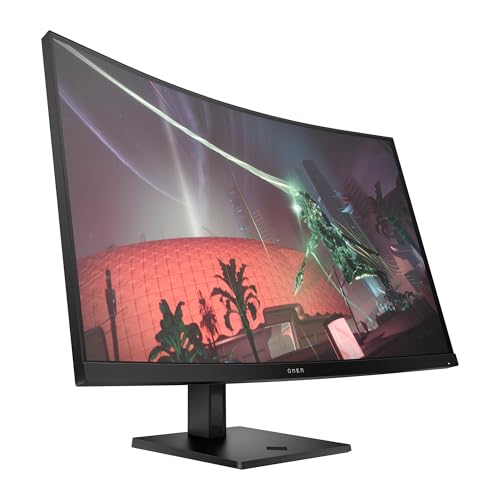
HP OMEN 32c QHD 165Hz Curved Gaming Monitor (2023)

KTC 32 inch 240Hz Curved 1440P Monitor 1000R (H32S25E)

KTC 32 Inch Curved 280Hz Gaming Monitor FHD (H32C5)

KTC 32 Inch Curved QHD 180Hz Gaming Monitor (H32S5)

INNOCN 24.5 inch 1440P 240Hz Fast IPS Monitor (25G2S)

INNOCN 49 inch Curved DQHD 240Hz Ultrawide Monitor

INNOCN 27 inch QD-OLED 2K 280Hz Gaming Monitor (2780s)

INNOCN 49 inch 5K2K 240Hz QD-OLED Curved Monitor (49Q1S)
A Breakdown Of The Leading Choices
Competitive players chasing every frame often start their search at 240Hz, and this KTC H32S17F lands there without the premium tax. The 1500R curve pulls the edges of the screen into your peripheral vision, which helps when a flank attack comes from the side. At 1080p on a 32 inch panel, pixel density is moderate, so the action stays sharp during fast motion rather than dissolving into blur.
Adaptive Sync support reduces screen tearing in the games where frame rates bounce around, and a 1ms response time keeps streaks from ghosting across dark scenes. In our view, this is the kind of monitor that suits a college dorm or a first real gaming PC, where the focus is on speed over pixel-perfect detail.
Where It Helps
- 240Hz refresh rate delivers smooth aim tracking in fast shooters.
- 1ms response keeps motion clean during quick flicks and turns.
- Curved 1500R shape helps long sessions feel less fatiguing on your eyes.
- Adaptive Sync cuts visible tearing when frame rates shift mid-match.
Worth Noting
- 1080p on a 32 inch panel looks softer up close, so you’ll want to sit a bit further back.
- Adjustability is tilt-only, which may push you toward a third-party arm for a perfect height.
Who It Suits Best
Ranking-focused FPS and MOBA players who want high refresh and a curved panel without stretching into premium pricing.
Consider Something Else When
Pixel density matters more than top speed, in which case the HP OMEN 32c QHD 165Hz Curved Gaming Monitor is a stronger match for 1440p open-world titles.
The H32S17C trims back the refresh rate to 165Hz but keeps the same 1500R curve, which makes it a more accessible choice for anyone building a first curved setup. At 1080p, your graphics card does not have to push as hard to feed the panel, so even mid-range GPUs keep frame rates high. You still get the same wraparound effect that helps with detection in shooters.
Adaptive Sync keeps the picture clean when your frame rate drops during busy scenes, and a 1ms response time keeps the basics tight. The honest read is that this monitor is for someone who wants a taste of the curved high-refresh experience without overspending, leaving room in the budget for a better mouse or headset.
Advantages To Know
- 165Hz refresh hits a comfortable middle ground for most GPUs.
- Curved shape helps with multi-hour sessions of ranked play.
- Adaptive Sync reduces tearing without needing premium hardware.
- 1ms response keeps ghosting out of fast scenes.
Trade Offs
- You give up the higher ceiling of 240Hz and 280Hz panels.
- 1080p text and UI elements look looser than on a tighter QHD panel.
Made For
Casual multiplayer players and students on a tighter budget who still want a curved high-refresh monitor for everyday gaming.
Look Elsewhere When
You prefer a sharper QHD picture for the same kind of money, in which case the KTC H32S5 QHD 180Hz Curved Monitor is a smarter move.
Step up to 2560 x 1440, and everything looks crisper, from the small text in your squad chat to the distant lighting in a moody RPG. The HP OMEN 32c rides on a VA panel with 99% sRGB and 90% DCI-P3 color coverage, which means more accurate hues for both games and creative work. The 165Hz refresh rate still feels quick even after you’ve used higher-Hz screens.
AMD FreeSync Premium support pairs smoothly with current Radeon and many GeForce cards, cutting the tearing that 1440p can introduce. You also get a proper ergonomic stand with height and tilt adjustment, so the monitor lives where you need it without a separate arm. For open-world and cinematic games, this one makes a real case against the 1080p KTC options earlier on this list.
Noteworthy Benefits
- 1440p resolution adds visible sharpness in menus, maps, and dialogue text.
- Wide color coverage brings out richer tones in HDR-supported games.
- 165Hz refresh rate and 1ms response keep motion clean in most modern shooters.
- Adjustable stand and tidy cable management make setup straightforward.
Honest Caveats
- Not as fast as 240Hz or 280Hz options, so ranked FPS players may want more Hz.
Feature Snapshot
Best Suited To
Players who want a sharper QHD picture with strong color and a sturdy stand for mixed gaming and work sessions.
Skip It When
You lean heavily into high-frame-rate esports, where the KTC 32 inch 240Hz Curved 1440P Monitor (H32S25E) keeps up better with 240Hz motion.
The H32S25E pushes 240Hz at 1440p, which is the zone where you stop giving up clarity for speed. The 1000R curve is more aggressive than the 1500R panels earlier on the list, so the screen wraps around your field of view more noticeably. That extra wrap helps when you’re driving in a sim or sneaking through a horror corridor.
HDR support adds a bit more pop in supported titles, and Adaptive Sync works with both FreeSync and G-Sync setups, depending on your graphics card. A 4000:1 contrast ratio gives the panel room to show darker scenes without the gray wash some VA screens fall into. If you tend to play one game for hours, the immersion factor here is meaningful.
Everyday Wins
- 1440p at 240Hz combines detail and speed in one panel.
- 1000R curve creates a wraparound feel that pulls you into the game.
- High contrast ratio keeps dark scenes readable instead of milky.
- Adaptive Sync support works with both major GPU brands.
- VESA mountable for arm-based desk setups.
Small Caveats
- 1000R curve can feel too tight in narrow desk spaces.
- You will want a strong GPU to feed 240 frames at 1440p.
Who Will Love This
Immersive single-player and sim players who want QHD clarity and a strong curve without giving up high refresh.
A Better Fit Elsewhere
You want OLED contrast and true blacks, in which case the INNOCN 27 inch QD-OLED 2K 280Hz Gaming Monitor (2780s) is a more cinematic pick.
For players who measure success in milliseconds, 280Hz at 1080p is the kind of ceiling that gives you room to grow. The H32C5 keeps the resolution modest so your GPU can actually push those frame rates in fast-paced shooters, where every extra frame can help you spot a target a beat sooner. The 1500R curve softens the edges of the panel so motion stays visible at the corners of your vision.
Low blue light modes help reduce eye strain during late-night ranked pushes, and Adaptive Sync keeps the picture clean when frame rates spike or dip. Most competitive players will find the 1ms MPRT response time a useful match for fast flicks, especially on rifles where the crosshair is the only thing that matters.
What Stands Out
- 280Hz ceiling gives a real advantage in reflex-based games.
- Low blue light mode helps during long sessions.
- Adaptive Sync keeps frames clean when GPU load shifts.
Points To Note
- 1080p resolution means menus and map details look softer up close.
- Tilt-only stand, so desk height matters more.
Perfect Match For
Esports players running Valorant, CS2, or Apex who care more about frame rates than fine detail.
Another Choice May Suit
You want both speed and resolution, in which case the KTC 32 inch 240Hz Curved 1440P Monitor (H32S25E) is a stronger all-rounder.
The H32S5 sits right between detail and speed, with a 2560 x 1440 panel running up to 185Hz when overclocked. The 1500R curve is familiar from earlier picks and offers a comfortable wrap without feeling extreme, which is helpful if you split time between games, spreadsheets, and a chat window. Resolution gives desktop text room to breathe.
Adaptive Sync works with most modern GPUs, and the 1ms response time keeps streaks from dragging across dark scenes. The 185Hz ceiling is enough for ranked play without forcing you to buy the most expensive graphics card on the market. In most desks, this is the kind of monitor that quietly gets the job done for years.
Useful Strengths
- 1440p resolution makes text and HUD elements easier to read.
- 185Hz top refresh handles most modern shooters with headroom.
- 1500R curve feels comfortable for both work and play.
Practical Considerations
- Not quite the speed of dedicated 240Hz or 280Hz panels.
- Stand adjustments are limited compared to a full ergonomic mount.
Built With In Mind
Players who game and work from the same monitor and want a balance between pixel density and refresh rate.
Where A Sibling Pick Shines
You want stronger HDR and contrast for cinematic titles, in which case the HP OMEN 32c QHD 165Hz Curved Gaming Monitor is a more color-rich alternative.
Not every desk has room for a 32 inch panel, and that’s where a 24.5 inch screen pulls ahead. The INNOCN 25G2S drops the size but keeps the QHD resolution, which means pixel density is actually higher than on the larger 1440p options earlier on the list. Fast IPS technology gives the colors a bit more punch and the viewing angles a wider reach than older VA screens.
You also get HDMI 2.1 and DisplayPort connectivity, so modern consoles and gaming PCs both have a clean path in. FreeSync and G-SYNC compatibility means your favorite GPU brand will handle variable refresh smoothly. This is a sleeper pick for tournament play and shared desks where space is tight.
Benefits That Matter
- Smaller 24.5 inch size fits tighter desk spaces and multi-monitor layouts.
- Higher pixel density at QHD than 32 inch QHD panels.
- HDMI 2.1 works well with current consoles.
- Fast IPS panel offers wide viewing angles for shared viewing.
Less Ideal Details
- You give up the immersive wrap of a 32 inch curved screen.
- Smaller screen means less room for side-by-side windows.
The Right Fit
FPS players with limited desk space who want a tight, sharp image and tournament-friendly size.
Swap It Out When
You want a bigger curved view, in which case the KTC H32S5 QHD 180Hz Curved Monitor offers more screen real estate with similar speed.
An ultrawide changes how games feel, and this 49 inch INNOCN panel basically merges two QHD screens into one continuous surface. The 5120 x 1440 resolution keeps text and game detail sharp from edge to edge, and the 1800R curve matches the natural arc of your field of view. Racing and flight sims in particular feel like you’re sitting inside the cockpit.
You get USB-C, DisplayPort, and HDMI inputs, so a laptop, console, and desktop can all share the same panel for different jobs. The 240Hz refresh rate keeps fast motion clean across the wide surface, which matters more than on a smaller screen where edges are out of your gaze anyway. For anyone who lives in sim games or runs multi-window workflows, this is a different kind of beast.
Why It Works Well
- 49 inch ultrawide replaces a dual-monitor setup on one panel.
- 240Hz refresh keeps motion smooth across the wider field.
- USB-C input simplifies laptop connections for work and play.
- Adjustable stand supports tilt, swivel, and height changes.
- Strong choice for sim racing and flight titles.
Some Limits To Know
- Wide footprint demands a deep desk, ideally 30 inches or more.
- Some older games do not support 32:9 aspect ratios.
Spec Overview
Whose Shelf It Belongs On
Sim racers, flight sim fans, and multitaskers who want one wide panel instead of a two-monitor setup.
Reach For A Different Pick When
You prefer OLED contrast and HDR punch, in which case the INNOCN 49 inch 5K2K 240Hz QD-OLED Curved Monitor (49Q1S) is the premium step up.
QD-OLED technology changes the picture in a way you notice immediately, and the 27 inch INNOCN 2780s brings that upgrade to a familiar QHD resolution. Blacks are truly black because each pixel turns off individually, which means dark games finally show detail in the shadows instead of crushing everything to gray. A 0.03ms response time means motion blur essentially disappears.
The 280Hz refresh rate keeps the experience competitive even at this premium tier, and HDR400 support adds a brighter layer for highlights. A height and pivot adjustable stand helps with long sessions, and built-in speakers cover the basics when you do not want a headset. Compared to the VA panels earlier on the list, the difference is the kind you see in the first five minutes.
Everyday Advantages
- QD-OLED panel delivers perfect blacks and rich color depth.
- 280Hz refresh rate handles competitive and cinematic games.
- 0.03ms response eliminates motion blur almost entirely.
- Adjustable stand supports height, pivot, and tilt.
Points To Keep In Mind
- Smaller 27 inch size means less screen real estate than 32 inch options.
- QD-OLED monitors can show temporary image retention with static HUD elements.
Right Fit For
Single-player HDR enthusiasts who want OLED picture quality and high refresh in a compact 27 inch form factor.
Where Another Pick Suits Better
You want a bigger OLED experience, in which case the INNOCN 49 inch 5K2K 240Hz QD-OLED Curved Monitor (49Q1S) stretches the same tech across an ultrawide canvas.
The 49Q1S is the monitor you buy when you want everything in one panel: 5K2K ultrawide resolution, QD-OLED contrast, and 240Hz refresh all at once. The pixel count is dense enough to handle serious creative work, from timeline editing to color grading, while still feeling responsive in games. The OLED difference shows up most in dimly lit scenes where VA screens tend to wash out.
USB-C input with high power delivery makes laptop docking a single-cable affair, which suits a creator’s workflow. The 0.03ms response time keeps fast motion clean across the full width, and the 32:9 aspect ratio makes sim games feel genuinely different. You will need a deep desk and a strong GPU, but the payoff is real.
Points In Its Favor
- 5K2K ultrawide resolution gives sharp text for both work and play.
- QD-OLED contrast makes dark scenes pop without losing shadow detail.
- 240Hz refresh rate keeps up with demanding competitive titles.
- USB-C input simplifies connections for laptops and docks.
- 0.03ms response time reduces motion blur across the wide field.
Worth Bearing In Mind
- Wide 49 inch footprint demands significant desk space.
- Premium panel technology comes at a higher cost tier than VA options.
Feature Snapshot
Who Should Grab It
Creators who game hard and want one ultrawide OLED panel to cover editing timelines, sim racing, and competitive play.
Not Your Match When
You mainly play 16:9 esports titles, in which case the KTC H32C5 280Hz Curved FHD Monitor is a tighter, faster choice for the format.
Factors To Consider When Choosing 32 Inch Oled Gaming Monitors
Resolution and pixel density. A 32 inch panel is large enough that the gap between 1080p and 1440p becomes visible during everyday use. QHD keeps text readable and HUD elements crisp at normal desk distances, while 1080p is friendlier to mid-range GPUs chasing high frame rates.
Refresh rate versus use case. Esports players chasing ranked goals benefit from 240Hz and beyond, where the difference shows up in how smooth target tracking feels. Story-driven and sim players often get more value from 1440p and strong contrast than from the highest possible refresh.
Panel technology and contrast. VA panels offer high contrast for the price, making dark scenes look deeper. QD-OLED takes that further with pixel-level dimming, which matters in cinematic and horror games where shadow detail changes how a scene reads.
Curvature and desk space. A 1500R curve is comfortable and subtle, while a 1000R curve wraps more aggressively and suits close-up immersion. Ultrawide 32:9 panels need a deep desk and a wide viewing distance to feel right rather than overwhelming.
Connectivity and ergonomics. HDMI 2.1, DisplayPort, and USB-C change how easily a monitor fits into a multi-device setup. Adjustable stands and VESA mount compatibility determine whether the panel sits exactly where you need it on the first day or after a year of changes.
Key Considerations Across These Picks
Where Shoppers Go Wrong
A common slip-up is chasing a high refresh rate while overlooking resolution, leaving a 240Hz panel looking soft at 1080p on a 32 inch surface. The opposite trap is buying a sharp QHD screen and then discovering the GPU cannot push the frame rates to take advantage of the refresh ceiling. Match the panel to the games you actually play, and check that your graphics card can sustain the target frame rate at the resolution you choose.
Where The Extra Money Goes
Premium models on this list pay for panel technology and build rather than just speed. QD-OLED monitors like the INNOCN 2780s and 49Q1S deliver true blacks and richer HDR that VA panels cannot match, and the cost reflects that hardware gap. The upgrade pays off most in cinematic single-player games, photo and video work, and long sim sessions where contrast and color depth change how immersive the experience feels.
Frequently Asked Questions
Is a 32 inch monitor too big for competitive gaming? For most desk setups, 32 inches is a comfortable size that still allows your eyes to track fast motion. Players used to 24 inch screens may need a short adjustment period before peripheral vision settles in.
Do all 32 inch gaming monitors support variable refresh rate? Most modern options on this list support Adaptive Sync, FreeSync, or G-SYNC, but the specific compatibility varies by GPU brand. Check the listing for your graphics card to confirm variable refresh works on your hardware.
How much desk space do I need for a curved 32 inch monitor? A standard 48 inch wide desk fits a 32 inch curved panel comfortably. For ultrawide 49 inch models, a deeper desk of at least 30 inches keeps the curve at a natural viewing distance.
Is QD-OLED worth it over a standard VA panel? QD-OLED delivers true blacks and wider color volume, which matters most for HDR content and cinematic games. VA panels offer strong contrast at a lower cost, which suits competitive play where speed and budget matter more than perfect blacks.
Can a 32 inch monitor replace a dual-monitor setup? A single 32 inch 16:9 monitor works well for one main task, while a 49 inch 32:9 ultrawide effectively replaces two 27 inch QHD panels. The right choice depends on how often you use multiple windows side by side and how much desk depth you have.
Bottom Line
A 32 inch gaming monitor earns its place on the desk by matching your games, your GPU, and your space. The KTC H32S17F and H32C5 are sensible starting points for speed-first players, the HP OMEN 32c and KTC H32S5 are comfortable all-rounders, and the INNOCN 49Q1S or 2780s are the picks for shoppers chasing OLED contrast and ultrawide immersion. Pick the panel that fits the way you already play, and the upgrade will feel right from the first match.


