


A great 32-inch curved display changes how a desk feels, pulling you into the action and making long sessions easier on your eyes. Picking one, though, means balancing screen size, curve radius, resolution, and refresh rate against the games you play and the desk you own. This lineup gathers ten strong options across the curved monitor space, from QHD and ultrawide to super-high-refresh esports panels, so you can match a display to your setup rather than the other way around.
A Snapshot Of The Selections

Z-Edge 32 inch Curved Computer Monitor, 240Hz/180Hz

Z-Edge 27 inch Curved Gaming Monitor, 300Hz/240Hz
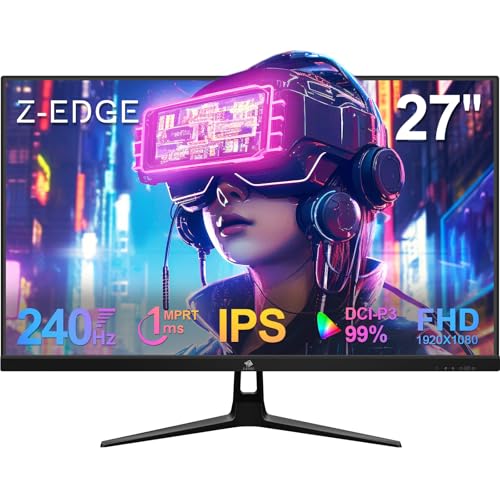
Z-Edge 27 inch IPS Gaming Monitor, 240Hz
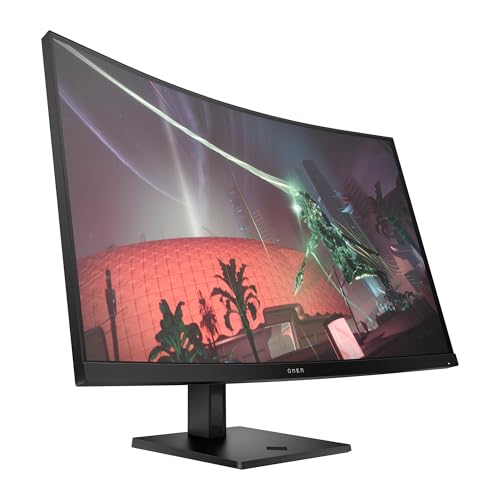
HP OMEN 32c QHD 165Hz Curved Gaming Monitor

LG 32 Inch UltraGear QHD Curved Gaming Monitor, 180Hz

CRUA 34″ WQHD 240Hz Ultrawide Curved Gaming Monitor
CRUA 45″ DQHD 240Hz Ultrawide Curved Gaming Monitor

CRUA 27 Inch QHD 260Hz Curved Gaming Monitor
CRUA 34″ WQHD 165Hz IPS Ultrawide Gaming Monitor
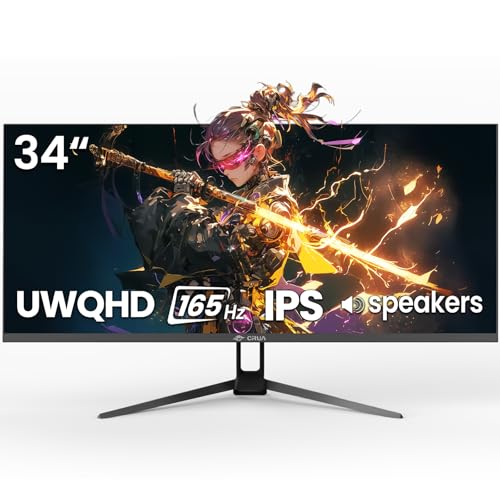
CRUA 34″ UWQHD 165Hz Ultrawide Gaming Monitor
A Breakdown Of The Leading Choices
This Z-Edge panel brings a 32-inch diagonal and 1500R curvature to setups where space is plentiful but funds are tight. The high refresh ceiling (marketed at 240Hz/180Hz) pairs with a 1ms response time, so the display should feel responsive in twitchy shooters even though it sticks to 1080P resolution. You can use that speed across the full panel without the GPU strain that a higher-resolution screen demands.
It makes sense for casual gamers who want big-screen immersion without a premium build. For most bedrooms and shared desks, the wraparound curve does the heavy lifting in single-player games, while esports titles benefit from the rapid refresh. Just note that the 1080P pixel density at 32 inches is looser than what 1440P and 4K screens offer.
A Few Strong Suits
- 240Hz/180Hz ceiling keeps fast motion clean in shooters and racing sims.
- 1ms response time reduces visible smearing in chaotic scenes.
- 1500R curvature matches many viewers’ natural field of view for a more immersive feel.
- Large 32-inch canvas makes split-window work practical for students and remote workers.
Things To Consider
- 1080P resolution spread across 32 inches means text and UI elements look softer than on 1440P alternatives.
- Owners commonly report that the included stand feels basic, so a VESA mount upgrade may come into play later.
Built With In Mind
Casual gamers and students who want a large, curved screen for both play and homework without overspending.
Consider Something Else When
Shoppers who want sharper text and more screen real estate should consider the HP OMEN 32c QHD 165Hz Curved Gaming Monitor, which delivers 2560 x 1440 resolution in the same 32-inch class.
The Z-Edge UG27S aims squarely at competitive players, with a 300Hz/240Hz refresh rating, 1ms response, FreeSync support, and a 1500R curve packed into a 27-inch frame. That smaller footprint makes it easier to fit on a busy battlestation, and the metal stand offers more stability than the typical plastic base. You also get dual DisplayPort and HDMI inputs, so swapping between a console and a gaming PC is straightforward.
This model suits esports-minded gamers who already push high frame rates and want the display to keep up. It handles fast arena shooters and fighting games well, and the 27-inch size keeps every part of the action within easy view. The trade-off is the same 1080P density seen on its 32-inch sibling, so anyone wanting sharper text will need to look elsewhere.
Standout Benefits
- 300Hz refresh ceiling is well above what most casual panels offer.
- FreeSync support reduces screen tearing when frame rates fluctuate.
- Low Blue Light mode helps during late-night ranked sessions.
- Metal stand provides a sturdier base than typical plastic mounts.
Worth Noting
- 1080P at 27 inches is sharp enough for games but reveals pixel structure in productivity apps.
- Color coverage is geared toward gaming, not photo or video work.
The Right Fit
Esports players and FPS enthusiasts who already drive high frame rates and want the snappiest response they can get on a curved screen.
Skip It When
Creative professionals needing strong color accuracy should consider the CRUA 34″ WQHD 165Hz IPS Ultrawide Gaming Monitor, which uses an IPS panel suited to editing tasks.
Stepping up from the brand’s curved VA models, this 27-inch Z-Edge uses an IPS panel to deliver wider viewing angles and more accurate color out of the box. The 240Hz refresh rate and 1ms response time keep gameplay crisp, and FreeSync support minimizes stutter when frame rates dip. For many shoppers, the IPS upgrade is the main reason to choose this panel over the slightly cheaper curved Z-Edge options.
It’s a good match for people who bounce between ranked sessions and color-aware work like light photo editing or streaming. In practice, the IPS panel keeps colors consistent even when you lean back in your chair, and the 240Hz ceiling handles esports titles comfortably. Without a QHD resolution tag, this stays a faster-but-simpler pick compared with the 1440P entries on this list.
The Helpful Details
- IPS panel technology provides wider viewing angles and better color consistency than VA alternatives.
- 240Hz refresh rate paired with 1ms response suits fast-paced competitive play.
- FreeSync compatibility reduces screen tearing in variable frame rate scenarios.
Points To Note
- Resolution is not specified in the listed data, so anyone needing a specific pixel count should confirm on the product page.
- IPS panels can show mild backlight bleed in dark scenes, depending on the unit.
Who It Suits Best
Mid-tier gamers who want IPS color quality for both work and play without stepping up to a 1440P or ultrawide panel.
Look Elsewhere When
Players chasing a tighter 1440P pixel grid should consider the HP OMEN 32c QHD 165Hz Curved Gaming Monitor, which pairs a 2560 x 1440 panel with solid color coverage.
The HP OMEN 32c hits a sweet spot that many shoppers actually want: 32 inches, 2560 x 1440 resolution, 165Hz refresh, and a VA panel rated for 99% sRGB and 90% DCI-P3. AMD FreeSync Premium keeps frame delivery smooth, and a 1ms GtG response with overdrive (a setting that accelerates pixel transitions) keeps motion crisp. The adjustable stand and cable management make it feel like a finished product rather than a raw panel.
This monitor fits people who split their day between spreadsheets and Steam. Colors hold up well for general creative work, and the 1440P resolution gives you noticeably more desktop real estate than the 1080P entries earlier in the list. For pure esports training, the 165Hz ceiling trails the 240Hz+ options, but for mixed-use setups it usually feels like the right balance.
The Value In It
- QHD resolution at 32 inches gives a meaningful sharpness upgrade over 1080P screens.
- 99% sRGB and 90% DCI-P3 coverage supports color-aware work alongside gaming.
- FreeSync Premium helps maintain smooth visuals on both AMD and compatible NVIDIA setups.
- Adjustable stand and cable management keep a desk looking tidy.
Trade Offs
- 165Hz refresh is lower than the 240Hz+ panels, so top-tier esports players may want more headroom.
- VA panel contrast is strong, but viewing angles are narrower than IPS alternatives like the Z-Edge 27 inch IPS Gaming Monitor.
Key Product Details
Who Should Grab It
Hybrid users who game at night and work during the day on a single 32-inch screen.
A Better Fit Elsewhere
Hardcore sim racers wanting ultrawide immersion should consider the CRUA 34″ WQHD 240Hz Ultrawide Curved Gaming Monitor, which offers a wider 21:9 canvas.
The LG UltraGear leans into immersion with a 1000R curve, the tightest wraparound in this lineup, paired with 180Hz, 1ms response, HDR10 support, and a three-side borderless design. That 1000R radius matches the curve of the human eye more closely than 1500R panels, which can make long sessions feel more natural in single-player adventures. The Black Stabilizer setting helps pull detail out of dark scenes, a real plus for horror and atmospheric games.
This screen makes sense for gamers who prioritize atmosphere over pixel-peeping esports. The 1440P-class QHD resolution offers good sharpness, and HDMI plus DisplayPort inputs support a gaming PC and a console side by side. Tilt-only adjustment is one of the more noticeable compromises compared with the HP OMEN’s fully adjustable stand.
Useful Strengths
- 1000R curve delivers one of the most wraparound experiences available in this size class.
- HDR10 support broadens contrast in supported games and movies.
- Black Stabilizer helps reveal detail in dark in-game scenes.
- Three-side borderless design keeps multi-monitor setups looking clean.
Honest Caveats
- Stand offers tilt only, so a VESA arm is a common upgrade for ergonomic setups.
- 180Hz sits between the OMEN’s 165Hz and the 240Hz+ esports panels, which may matter for top-tier competitive players.
Perfect Match For
Single-player and immersive-sim fans who want the strongest possible curve at 32 inches.
Not Your Match When
Competitive players chasing maximum refresh should consider the CRUA 27 Inch QHD 260Hz Curved Gaming Monitor, which prioritizes speed in a smaller package.
The CRUA 34-inch ultrawide changes the shape of your desk, swapping a 16:9 panel for a 21:9 WQHD (3440 x 1440) canvas with a 1500R curve. The 240Hz refresh rate keeps fast motion clean, and FreeSync support handles frame-rate variation. For racing sims, flight games, and wide RPGs, the extra horizontal real estate often feels more transformative than another step up in resolution.
This monitor suits sim enthusiasts, video editors, and anyone who wants timeline or spreadsheet space without stacking two screens. In practice, ultrawide panels need deeper desks so the corners stay within comfortable view, and CRUA’s 1500R curve helps with that. The 240Hz ceiling means it can also serve serious FPS play when you want it to.
The Case For It
- 21:9 WQHD resolution gives noticeable extra width for sims, timelines, and split workflows.
- 240Hz refresh handles fast-paced games without obvious motion blur.
- 1500R curvature keeps the wide panel comfortable to view across its full width.
Points To Keep In Mind
- Ultrawide panels need a deeper desk to sit comfortably at eye level.
- Some older games do not support 21:9, showing black bars on the sides.
Best Suited To
Sim racers, flight-sim fans, and productivity users who want one wide screen instead of a dual-monitor setup.
Another Choice May Suit
Shoppers who want the absolute widest panel available should look at the CRUA 45″ DQHD 240Hz Ultrawide Curved Gaming Monitor, which delivers a 32:9 DQHD experience.
The CRUA 45-inch panel is the heavyweight on this list, offering a DQHD (5120 x 1440) resolution across a 32:9 ultrawide canvas. That is effectively two QHD screens stitched into a single panel with no bezels in the middle, plus a 240Hz refresh and 1500R curve. For trading dashboards, programming, or simply replacing a dual-monitor setup, this format reduces clutter and keeps the workspace visually unified.
This is a panel for shoppers with the desk depth to do it justice. It suits streamers who want chat and game on one screen, multitaskers running multiple windows, and immersive sim fans who want the maximum field of view. Keep in mind that running DQHD at 240Hz demands a serious GPU, and 32:9 support varies in older titles.
What Stands Out
- 32:9 DQHD format replaces a dual-monitor setup with one continuous workspace.
- 240Hz refresh rate keeps motion smooth across the entire ultrawide canvas.
- 1500R curvature helps the wide screen stay comfortable from a normal sitting position.
Some Limits To Know
- A deep desk is required so the corners of the panel remain within easy view.
- Driving 5120 x 1440 at high frame rates calls for a high-end graphics card.
Right Fit For
Power users, traders, and streamers who want the equivalent of two QHD screens without a bezel gap.
Where A Sibling Pick Shines
Players who want a more traditional ultrawide experience should consider the CRUA 34″ WQHD 240Hz Ultrawide Curved Gaming Monitor, which is easier to drive.
The CRUA 27-inch QHD display focuses on speed where it counts. A 260Hz refresh rate (one of the highest in this list), a 1800R VA curve, 120% sRGB color, and built-in speakers make it a flexible daily driver. FreeSync support keeps frame delivery consistent, and the 100 x 100mm VESA mount pattern means it slips onto most monitor arms without fuss.
This is a smart fit for FPS and racing players who want a sharp 1440P-class experience in a compact footprint. The 1800R curve is a bit looser than the 1500R and 1000R alternatives, so immersion is gentler, but the trade-off is more comfortable viewing when you’re not sitting directly centered. The built-in speakers are handy for casual sessions but won’t replace a real speaker setup.
Bright Spots
- 260Hz refresh rate is among the highest in this lineup, suiting fast FPS play.
- 120% sRGB color volume gives game worlds a punchy, saturated look.
- Built-in speakers are convenient for casual use without extra hardware.
- Standard 100 x 100mm VESA mount makes arm or wall mounting straightforward.
Where It Is Less Suited
- Built-in speakers are basic; a dedicated speaker setup is the usual upgrade.
- 1800R curve is gentler than 1500R panels, which some buyers may notice.
Made For
Esports and competitive FPS players who want maximum refresh and QHD-class sharpness in a smaller, desk-friendly screen.
Where Another Pick Suits Better
Buyers who want a bigger curved experience for cinematic games should consider the LG 32 Inch UltraGear QHD Curved Gaming Monitor, which offers a tighter 1000R curve.
This CRUA ultrawide stands out by pairing a 21:9 WQHD IPS panel with 120% sRGB color coverage and a 178-degree viewing angle. The IPS technology (In-Plane Switching, a panel type known for color accuracy and wide viewing angles) means colors stay consistent even when viewed from off-center positions, which is a real advantage on a wide 34-inch screen. You also get FreeSync, low blue light mode, built-in speakers, and a white finish that brightens up a desk setup.
It works well for content creators, streamers, and gamers who split their time between editing timelines and playing games. The 165Hz refresh rate is plenty for most genres, and the white chassis offers a cleaner aesthetic than typical black monitors. Wall-mount support uses a 75 x 75mm pattern, so plan your mount accordingly.
Positive Takeaways
- IPS panel provides wide 178-degree viewing angles and consistent color.
- 120% sRGB color volume supports photo and video work in addition to gaming.
- White finish offers a distinctive look compared with typical black monitors.
- Built-in speakers handle basic audio needs without extra hardware.
Small Caveats
- 165Hz refresh is lower than CRUA’s 240Hz ultrawide options, so esports-focused users may want more speed.
- Wall-mount compatibility is limited to 75 x 75mm patterns, not the more common 100 x 100mm.
Who Will Love This
Creators and streamers who want accurate color in an ultrawide format with a distinctive white aesthetic.
Reach For A Different Pick When
Speed-first buyers should consider the CRUA 34″ WQHD 240Hz Ultrawide Curved Gaming Monitor, which doubles the refresh ceiling.
The final CRUA entry is a familiar formula done well: a 34-inch 21:9 UWQHD (3440 x 1440) IPS panel, 165Hz refresh, FreeSync support, and built-in speakers. IPS technology keeps color and contrast consistent across the wide surface, which is a practical advantage when you’re shifting between windows during a long workday. The ultrawide aspect ratio gives multiple documents room to breathe without stacking a second monitor.
It’s a sensible all-rounder for shoppers who want a reliable curved ultrawide without paying extra for the brand’s higher-refresh models. The combination of IPS clarity, FreeSync smoothness, and 165Hz responsiveness fits both productivity and most gaming genres comfortably. If you mainly play single-player and creative titles, this is often the more measured pick compared with a 240Hz panel.
Everyday Wins
- IPS panel technology keeps colors consistent across the wide 34-inch surface.
- 165Hz refresh rate balances smooth motion with reasonable GPU demands.
- FreeSync support reduces tearing in games with variable frame rates.
- Built-in speakers keep basic audio needs covered without extra desk clutter.
A Few Limitations
- 165Hz trails the 240Hz CRUA ultrawides, so esports-focused players may want more speed.
- Built-in speakers are functional but not a substitute for a dedicated audio setup.
Whose Shelf It Belongs On
General-purpose users who want a dependable curved ultrawide for work, streaming, and casual-to-moderate gaming.
Swap It Out When
Buyers who want the sharpest curve and the most dramatic immersion should consider the LG 32 Inch UltraGear QHD Curved Gaming Monitor with its 1000R wraparound.
What Matters Most Before Choosing A Curved Gaming Monitor
Curve radius shapes how the screen feels. A 1000R panel matches the natural curve of the human eye and pulls you deeper into the action, while 1500R and 1800R options feel a touch looser and more forgiving for long sessions and mixed productivity use. Most shoppers in this category find 1500R to be a comfortable middle ground.
Refresh rate and response time govern how motion looks. A 165Hz panel handles most single-player and multiplayer games well, while 240Hz+ screens make more sense for ranked FPS, fighting games, and racing sims where every frame matters. Response time (measured in milliseconds, often listed as MPRT or GtG) tells you how quickly pixels can change color, and lower numbers reduce smearing in chaotic scenes.
Resolution and panel type drive the visual baseline. QHD (2560 x 1440) at 32 inches is a meaningful sharpness upgrade over 1080P and is easier to drive than 4K. VA panels tend to deliver stronger contrast for cinematic games, while IPS panels offer wider viewing angles and more consistent color for creators. Ultrawide formats (21:9 or 32:9) trade vertical space for horizontal room, which works well for sims, timelines, and split workflows.
Desk depth and ergonomics are easy to overlook. Curved and ultrawide panels benefit from sitting slightly farther back so the corners stay within comfortable view, and a VESA-compatible mount or adjustable stand can transform long-session comfort. Plan for cable management and consider whether your current desk can physically support a wider panel before committing.
Smart Angles For Narrowing Your Search
Where Shoppers Go Wrong
Plenty of shoppers reach for the highest refresh rate they can find without checking whether their graphics card can actually push that many frames. A 260Hz panel driven by a mid-tier GPU often looks identical to a 165Hz screen in real use, so match the panel to your hardware.
Another common slip is ignoring desk depth. Curved and ultrawide panels feel awkward on shallow desks because the corners sit outside a comfortable viewing arc, leading to neck strain that gets blamed on the monitor itself.
Where The Extra Money Goes
Higher-tier models in this category typically spend the budget on panel quality, curve radius, factory color calibration, and sturdier stands. A premium VA panel with stronger contrast or an IPS panel with wider color coverage shows up immediately in both games and everyday work, and a better stand makes daily adjustments effortless.
Paying more also tends to buy better factory tuning out of the box, so the screen looks accurate without hours of on-screen menu tweaking. For most mixed-use shoppers, that combination of build and calibration is where the upgrade money actually lives.
Frequently Asked Questions
What size desk do you need for a 32 inch curved gaming monitor?
A desk at least 28 inches deep lets you sit far enough back to view the corners comfortably. Ultrawide 34-inch and 45-inch panels need even more space, ideally 32 inches or more of depth.
Is a 1500R or 1000R curve better for gaming?
1000R feels more immersive because it matches the natural curve of the human eye, while 1500R is gentler and more comfortable for long sessions and mixed productivity. The right choice depends on whether you prioritize immersion or all-day comfort.
Do you need a 240Hz monitor for competitive gaming?
For ranked competitive play in fast-twitch genres, 240Hz or higher gives a meaningful edge. For most other genres, 144Hz to 165Hz looks smooth and is far easier for mid-tier graphics cards to drive consistently.
Is QHD resolution enough at 32 inches?
QHD (2560 x 1440) at 32 inches delivers a clear sharpness improvement over 1080P and is much easier to drive than 4K. For most mixed gaming and productivity setups, it remains the most balanced choice in this size class.
Are curved monitors harder to mount on a wall?
Curved panels mount the same way as flat ones through standard VESA patterns, though the curve can leave a small gap between the screen and the wall. For most shoppers, a sturdy monitor arm handles both flat and curved panels without issue.
Final Verdict
A 32-inch curved monitor in the QHD 165Hz class is one of the most balanced upgrades a desk can get, and the wider this lineup gets, the more obvious it becomes that the right pick depends on what you actually play. HP OMEN 32c stands out for mixed-use shoppers, the CRUA ultrawides deliver the best immersion, and the high-refresh Z-Edge models reward competitive players. Match the panel to your games, your desk, and your GPU, and the rest tends to fall into place.


