


Competitive gaming has shifted expectations, and 180Hz to 240Hz panels now sit in the sweet spot where motion clarity finally outpaces what most eyes can detect. The right pick depends on your GPU muscle, desk depth, and whether you lean toward esports twitch or cinematic single-player. This roundup walks through ten solid options, from cables to curved widescreens, so you can match a monitor to the way you actually play.
A Fast Comparison Of The Options

URELEGAN VESA Certified 8K DisplayPort 1.4 Cable 10-Pack

Dell Alienware 240Hz Gaming Monitor AW2521HF 24.5″

KTC 27″ QHD 2K 120Hz IPS Monitor H27D9
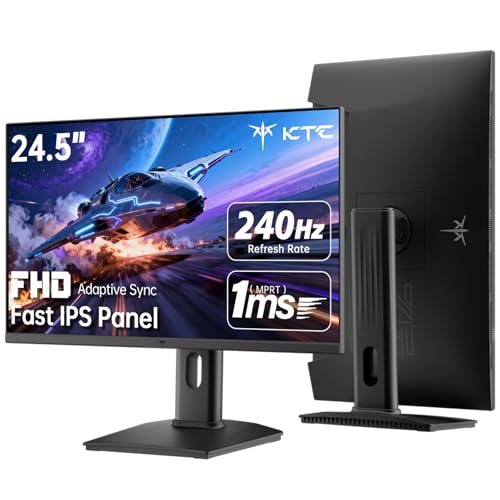
KTC 24.5″ 240Hz Fast IPS Monitor H25T7-3

KTC 32″ 2K 120Hz IPS Monitor H32T13
KTC 27″ QHD 144Hz Monitor H27T27S

KTC 27″ 240Hz FHD Fast IPS Monitor H27F7

KTC 27″ 1440P 200Hz White Monitor H27T6

KTC 24″ QHD 180Hz Fast IPS Monitor H24T7

KTC 25M2 Pro 400Hz Gaming Monitor with Hood
Why These Options Stand Out
Most shoppers don’t think about cables until a new monitor arrives and the included lead is two feet too short. This 10-pack of URELEGAN DisplayPort 1.4 cables solves that annoyance with VESA certification, meaning the spec is independently verified rather than just stamped on the box. For a multi-monitor setup or a streaming rig that keeps growing, having spares on hand saves a midnight run to the electronics store.
Bandwidth tops out at a generous ceiling, and the cables support high-refresh 4K as well as the 240Hz 1080p tier that several later picks in this roundup lean on. You can route one to a desk monitor, stash another by the TV, and keep a backup for the inevitable “I wonder if this cord is bad” troubleshooting session.
Everyday Perks
- VESA certification gives a baseline of trust that the cable actually hits the spec, not just an inflated sticker claim.
- Ten cables cover a triple-monitor setup with spares left for guests, repairs, or a console swap.
- DisplayPort 1.4 carries high-refresh signals cleanly, so 240Hz panels get the bandwidth they ask for.
- Having extras reduces the “where did that cable go” frustration common in busy households.
Points To Note
- Ten cables may be more than a single-screen user needs, so this works best for builders or multi-monitor households.
- DisplayPort remains less universally compatible than HDMI on older TVs and projectors, so check the receiving device first.
Feature Snapshot
Built With In Mind
Multi-monitor enthusiasts and small studios who keep adding screens to a streaming or trading desk.
Skip It When
A single-cable household will be happier with a basic replacement lead, since this pack only pays off across several displays.
The Alienware AW2521HF treats 240Hz as the headline rather than a marketing checkbox. The 24.5-inch Fast IPS panel pushes a 1ms GtG response time, which is the gray-to-gray transition speed that determines how clean a moving target looks in a shooter. For Valorant, CS2, or Apex, the difference between 144Hz and 240Hz is genuinely visible, and the Alienware leans all the way in.
FreeSync Premium and G-SYNC compatibility cover both major GPU camps, so the panel stays tear-free whether you run AMD or NVIDIA. Color coverage hits up to 99% sRGB, which is plenty for games and casual content work, though serious colorists will still want a wider-gamut panel.
Benefits That Matter
- 240Hz at 1080p removes the lingering motion blur that 144Hz panels can still show in fast camera pans.
- Fast IPS keeps colors and viewing angles consistent, so the picture doesn’t wash out when you tilt the screen.
- Both FreeSync Premium and G-SYNC compatibility let the GPU and monitor sync frame delivery without screen tearing.
- A dedicated cooling design at the top, bottom, and rear helps the panel stay cool during long sessions.
Trade Offs
- 1080p resolution on a 24.5-inch screen looks sharp, but it falls short of the pixel density of a 1440p panel for desktop multitasking.
- The Alienware aesthetic and stand footprint take up more desk space than minimalist designs, which matters on smaller surfaces.
Who Should Grab It
Competitive FPS players who already push 200+ frames per second and want a panel that keeps up.
Consider Something Else When
The Alienware is overkill for someone who plays mostly single-player games at 60 frames; the KTC 27 Inch QHD Monitor H27T27S serves that profile with deeper contrast.
Hybrid monitors try to be everything to everyone and usually fail at something. The KTC H27D9 sidesteps that trap by leaning into 1440p clarity with a sensible 120Hz ceiling, which feels just right for a work monitor that doubles as a gaming screen after hours. The IPS panel keeps text crisp and colors accurate enough for spreadsheets and creative drafts alike.
Adaptive-Sync support covers both FreeSync and G-SYNC Compatible setups, so the monitor adapts to your GPU rather than forcing a brand choice. The 123% sRGB color gamut and HDR support add a touch of punch for movies and games, although without a full-array backlight, HDR remains a tasteful nudge rather than a cinematic leap.
The Upside
- 1440p resolution makes side-by-side documents genuinely readable, which 1080p panels struggle to match.
- 120Hz refresh improves everyday scrolling and light gaming without demanding a top-end GPU.
- IPS panel plus wide sRGB coverage keeps photo and video work looking consistent across the screen.
- VESA mount compatibility lets you swap the included stand for an arm or wall mount in a tight setup.
A Few Limitations
- 120Hz tops out below the 240Hz ceiling of dedicated esports panels, so hardcore competitive players may want more speed.
- HDR support is present but limited by edge-lit backlighting, so the effect in dark movies stays subtle.
The Right Fit
Home office users who want one monitor to handle spreadsheets by day and games by night without compromise.
Look Elsewhere When
Esports-only setups need the Dell Alienware 240Hz Gaming Monitor AW2521HF, which trades pixel density for pure speed.
Some gamers want a fast panel without surrendering desk space to a 27-inch display. The KTC H25T7-3 is a 24.5-inch Fast IPS monitor with a 240Hz refresh rate, the same size sweet spot that tournament circuits have gravitated toward for years. HDR400, 1ms MPRT response, and a tilt-pivot-height adjustable stand make it feel more grown-up than the price might suggest.
Connectivity is generous for a compact panel, with two HDMI 2.0 ports, a DisplayPort 1.4 input, and a USB 2.0 port for peripherals or firmware updates. The 100x100mm VESA mount pattern means you can move it off the stand entirely if the desk gets too crowded.
Bright Spots
- 240Hz refresh on a 24.5-inch panel keeps motion sharp in fast shooters without demanding a giant footprint.
- Fast IPS gives wider viewing angles than TN panels, so the picture stays consistent from off-center seats.
- Height, tilt, and pivot adjustments let you dial in posture without buying a separate arm right away.
- HDR400 support offers a small brightness boost for compatible games and movies.
Honest Caveats
- 1080p resolution on a smaller screen still looks fine, but the pixel density is closer to standard HD than to retina-sharp.
- 350cd/m² brightness handles indoor lighting but may feel modest in sun-drenched rooms.
Key Product Details
Best Suited To
Competitive gamers with shallow desks who want tournament-style screen size without giving up ergonomic adjustments.
Where Another Pick Suits Better
For cinematic or productivity work, the KTC 32 Inch 2K 120Hz Monitor H32T13 offers a much larger canvas at the cost of raw speed.
A 32-inch 1440p panel is one of the most comfortable upgrades for someone moving up from a 24-inch 1080p screen. The KTC H32T13 fills that role with a 120Hz IPS panel and HDR support, sized for a desk that can handle the depth. The thin bezels keep the panel looking modern even when sitting next to a window.
For sim racing, flight games, and RPGs, the larger canvas creates a sense of immersion that 27-inch panels can’t quite match. You can fit more spreadsheet columns in view, which makes the H32T13 a quiet productivity workhorse as well.
A Favorable Mix
- 32 inches of 1440p delivers sharp text and breathing room for full-screen games and dense documents.
- IPS panel maintains color accuracy across the wide screen, which matters on a panel this large.
- 120Hz keeps scrolling and motion smooth without taxing mid-range GPUs the way 240Hz can.
- Thin bezels keep the visual focus on the screen rather than the frame around it.
Things To Consider
- At 32 inches, the desk needs at least 28 inches of depth for comfortable viewing distance.
- 120Hz is plenty for most games but trails the 240Hz tier favored in competitive shooters.
Quick Technical Notes
Whose Shelf It Belongs On
Single-player adventurers, sim racers, and home office users who want one panel to handle work and play.
Swap It Out When
Twitch shooters benefit more from the Dell Alienware 240Hz Gaming Monitor AW2521HF, which prioritizes speed over screen size.
Contrast ratio is the spec that most casual shoppers skip, then regret once they load up a dark game or a moody film. The KTC H27T27S leans hard on a 4000:1 native contrast, meaning the deepest blacks sit much further from the brightest whites than on a typical 1000:1 IPS panel. For horror games, space sims, and night driving, the difference shows up in the shadows.
The 144Hz refresh rate, adaptive sync, and 1440p resolution cover the mainstream bases without overspending. It’s the kind of all-rounder that suits someone who wants cinematic depth and smooth motion in the same panel.
The Helpful Details
- 4000:1 native contrast adds visible depth in dark scenes where standard IPS panels can look gray.
- 144Hz at 1440p hits a balanced middle ground for GPUs that can’t push 240 frames at higher resolutions.
- Adaptive sync keeps the image tear-free across a wide range of frame rates.
- The 27-inch size fits standard desks without the depth demands of a 32-inch panel.
Where It May Fall Short
- Color gamut isn’t specified as widely as on some 27-inch peers, so color-critical work may want calibration.
- 144Hz caps below the 240Hz tier, which dedicated esports players still favor.
Feature Card
Made For
Gamers who play atmospheric titles and want richer blacks than a typical IPS monitor delivers.
Reach For A Different Pick When
Speed-first players will get more value from the KTC 25M2 Pro 400Hz Gaming Monitor, which trades contrast for a higher refresh ceiling.
The H27F7 answers a question many builders quietly ask: can you get a 27-inch 240Hz panel without paying flagship prices? The answer appears to be yes. Fast IPS, 1ms MPRT response, and HDR10 support cover the gaming basics, while the adjustable stand means you don’t need to budget for an arm right away.
At 1080p, the pixel density is less dense than a 1440p screen, so on-screen text and UI elements look a bit chunkier. For pure competitive play, that trade-off is often acceptable, and the larger screen size gives you a bit more peripheral awareness in shooters.
Points In Its Favor
- 240Hz on a 27-inch screen balances speed with the larger field of view favored in modern shooters.
- Height, tilt, and pivot adjustments mean the included stand handles ergonomic needs out of the box.
- Fast IPS keeps color reproduction honest, so games don’t look washed out next to higher-tier panels.
- Adaptive Sync support reduces screen tearing across both major GPU brands.
Soft Spots
- 1080p resolution on 27 inches can show pixel structure at typical desk distances, especially in fine text.
- HDR10 support is a software-level feature, so the visible HDR effect is subtle rather than dramatic.
Right Fit For
Gamers with mid-range GPUs who want 240Hz smoothness on a screen larger than the 24-inch tournament standard.
A Better Fit Elsewhere
The KTC 27 Inch 1440P 200Hz White Gaming Monitor H27T6 offers sharper resolution and a similar speed range with a distinctive white finish.
White gaming hardware has gone from niche to mainstream, and the H27T6 fits the trend without skimping on the spec sheet. A 1440p Fast IPS panel hits 200Hz natively and can be pushed to 210Hz through an overclock setting, which is a small but real edge in twitch games. Built-in speakers keep the desk clean, though the audio is best treated as backup rather than main sound.
HDR400 support, full ergonomic adjustments, and adaptive sync complete a panel that aims to feel considered rather than bargain-bin. The white chassis pairs naturally with light wood desks and minimalist setups that have become popular in content creation rooms.
Where It Excels
- 1440p resolution at 200Hz (with 210Hz OC) hits a sweet spot that many modern GPUs can sustain in popular titles.
- White chassis adds a design touch that stands out from the typical black-monitor crowd.
- Full ergonomic stand supports height, tilt, swivel, and pivot for portrait-mode use.
- Built-in speakers keep the desk free of extra gear for casual listening and conference calls.
Practical Considerations
- Built-in speakers are convenient but rarely match dedicated desktop audio for music or cinematic gaming.
- 210Hz overclock is a small uplift, so 240Hz seekers may still lean toward the Alienware or KTC 240Hz picks.
Feature Rundown
Perfect Match For
Aesthetic-focused builders who want a fast, sharp monitor that fits into a clean, light-themed setup.
Not Your Match When
Pure competitive players chasing the maximum frame rate will get more from the KTC 25M2 Pro 400Hz Gaming Monitor’s higher refresh ceiling.
Small monitors tend to settle for 1080p, but the H24T7 bucks that trend with 1440p resolution on a 24-inch screen. The pixel density approaches what a 27-inch 1440p panel offers, just compressed into a more desk-friendly footprint. At 180Hz, the refresh rate lands in the upper tier of what this list covers, and the Fast IPS panel keeps colors consistent from edge to edge.
HDR400 support and a 1ms response time round out a monitor that works well as a primary screen in a compact battlestation or as a sharp secondary display beside a larger panel. For desk setups where every inch counts, the H24T7 punches above its size.
Reasons It Performs
- 1440p on a 24-inch screen gives sharp text and detailed game worlds without a sprawling footprint.
- 180Hz refresh hits a strong middle ground for high-frame-rate gaming without demanding flagship GPU power.
- Fast IPS keeps the picture consistent at angles, which matters when sharing the screen for video or a co-op session.
- HDR400 adds a touch of brightness and color range for compatible content.
Points To Keep In Mind
- A 24-inch monitor is less immersive for open-world and sim games than the 27-inch and 32-inch peers in this list.
- 180Hz is below the 240Hz tier that some competitive players consider the minimum for serious play.
At A Glance
Who Will Love This
Shoppers with shallow desks or small-form-factor cases who still want the sharpness of 1440p and a high refresh rate.
Another Choice May Suit
Gamers who want a larger 1440p canvas with deeper contrast will get more from the KTC 27 Inch QHD Monitor H27T27S.
The KTC 25M2 Pro sits at the extreme edge of the refresh-rate conversation, with a native 360Hz panel that overclocks to 400Hz. A shielding hood ships in the box, which is unusual for consumer monitors and useful in a bright room where reflections can give away enemy positions. Fast IPS, 1ms MPRT, and Adaptive-Sync support keep the technical story tight.
The 24.5-inch 1080p format matches what tournament players favor, and the hood helps you focus on the screen in environments that aren’t perfectly lit. It’s a specialized tool rather than a generalist monitor, and the price tag reflects that.
Positive Points
- 400Hz refresh gives a tangible edge in esports titles where every millisecond counts.
- Shielding hood reduces glare from overhead lighting and bright windows, which matters in shared spaces.
- Fast IPS with 126% sRGB coverage keeps colors honest despite the focus on speed.
- 1ms MPRT response keeps fast-moving targets looking clean in motion-heavy scenes.
Where It Is Less Suited
- 1080p resolution caps the screen’s usefulness for productivity and detailed content work.
- 400Hz benefits are only visible with GPUs capable of pushing frame rates that high in your chosen games.
Who It Suits Best
Competitive esports players and aspiring pros who already push high frame rates and want a tournament-style setup at home.
Where A Sibling Pick Shines
The KTC 27 Inch 1440P 200Hz White Monitor H27T6 covers everyday gaming and creative work with more resolution and a friendlier price.
What Matters Most Before Choosing 180 Hzes To 240 Hz Gaming Monitor
Panel Type And Response Behavior
IPS, VA, and TN panels each handle motion differently. TN panels traditionally had the fastest response, but modern Fast IPS and VA panels have largely closed that gap while keeping better colors and viewing angles. Response time numbers come in two flavors: GtG (gray-to-gray) measures pixel transition speed, while MPRT (Moving Picture Response Time) measures perceived blur. Lower numbers in either mean cleaner motion.
Resolution Versus Refresh Balance
A 1080p panel running at 240Hz asks far less of your graphics card than a 4K panel at the same refresh. Most mid-range GPUs sustain 200+ frames at 1080p in competitive shooters, while the same games may drop below 100 frames at 4K. Match resolution to GPU power, then pick the highest refresh your hardware can actually feed the panel.
Adaptive Sync Coverage
FreeSync and G-SYNC Compatible monitors synchronize the display’s refresh rate with the GPU’s frame output, eliminating tearing without adding the input lag of V-Sync. Most modern panels support both ecosystems, but a few still favor one or the other. Confirming that your specific GPU brand works with the monitor avoids a frustrating return process.
Ergonomics And Desk Fit
A 32-inch 1440p monitor looks inviting on paper but demands desk depth that a small apartment setup may not have. Measure from the wall to your usual eye position and compare it to the panel’s recommended viewing distance. VESA compatibility and a height-adjustable stand also matter if you want to avoid a third-party monitor arm.
Key Considerations Across These Picks
Pitfalls Shoppers Hit
Many first-time gaming monitor buyers focus on a single headline spec, like 240Hz, and overlook whether their graphics card can actually push enough frames to feed it. The result is a panel that runs at 60Hz most of the time because the GPU is the bottleneck. Other common slips include ignoring the stand’s adjustability and later paying for a monitor arm, or choosing 4K at 60Hz and then wondering why games feel sluggish compared to a friend’s 1080p 240Hz setup.
Where The Extra Money Goes
Stepping up to a higher tier usually means faster response, wider color gamut, brighter HDR, and a sturdier stand. The Alienware AW2521HF and KTC 25M2 Pro 400Hz Gaming Monitor earn their position through certified panel speed, validated adaptive sync support, and build details that budget panels skip. For a casual player, those upgrades are nice to have, but a careful mid-range shopper can land close to the experience for less.
Frequently Asked Questions
Is 180Hz noticeably better than 144Hz?
For most eyes, the jump from 144Hz to 180Hz is subtle but real in fast shooters. Above 240Hz, the differences become harder to detect without side-by-side comparison.
Do I need a special cable for 240Hz?
Yes, at 1080p most DisplayPort 1.4 or HDMI 2.0 cables handle 240Hz, but for higher resolutions at high refresh, certified cables like the URELEGAN DisplayPort 1.4 pack help ensure full bandwidth.
Is G-SYNC worth it over FreeSync?
Both reduce tearing and stutter. NVIDIA owners may prefer G-SYNC Compatible panels, while AMD users get the smoothest experience with FreeSync Premium displays, though most modern panels support both.
Can I use a 4K 60Hz TV instead of a gaming monitor?
For couch gaming or casual use, yes. For competitive play, a dedicated monitor’s lower input lag and higher refresh rate make a meaningful difference.
What is the best size for a 180Hz to 240Hz monitor?
A 24 to 27 inch panel suits most desks and keeps motion clarity high. Larger 32-inch screens feel immersive but require more viewing distance to keep the whole picture in focus.
Bottom Line
The right 180Hz to 240Hz monitor depends on whether speed, resolution, or screen size matters most in your setup. Competitive players get the most from the Alienware 240Hz or KTC 25M2 Pro 400Hz, while everyday gamers and home office users will find a comfortable balance in the KTC H27D9 or H32T13. Pick the panel that matches your GPU and your desk, and the rest tends to fall into place.


