


Picking the right PSU feels unglamorous until a cheap unit takes your GPU with it. A solid 1000W unit gives you the headroom for today’s power-hungry cards, the connectors you actually need, and the kind of efficiency that keeps your room from sounding like a wind tunnel during a long session.
How The Shortlist Stacks Up
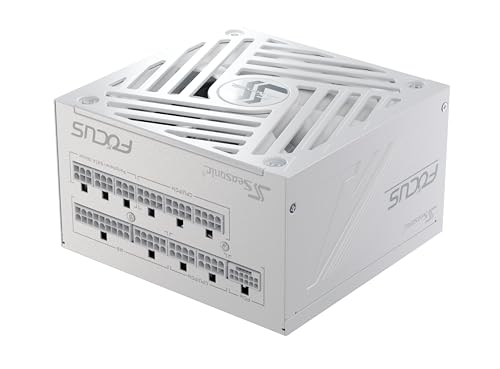
Seasonic Focus GX-1000 1000W Power Supply (White)

Lian Li Edge 1000W Gold PSU (White)

darkFlash PMT ATX 3.1 PSU 750W (White)
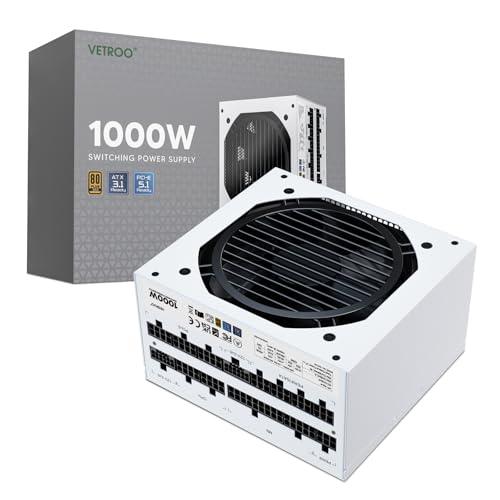
Vetroo 1000W White PSU ATX 3.1
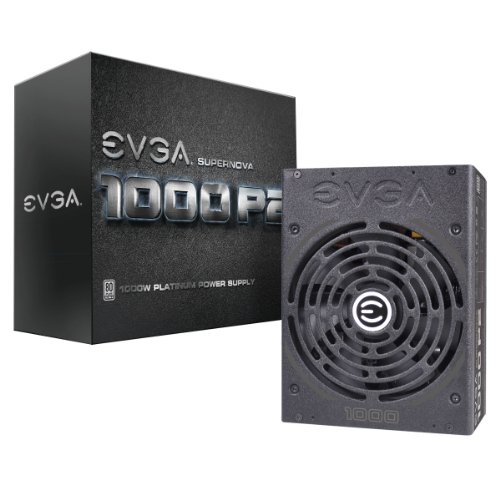
EVGA Supernova 1000 P2 80+ Platinum PSU

darkFlash PMT ATX 3.1 PSU 750W (Black)
darkFlash PMT850 ATX 3.1 PSU 850W

ASUS ROG Strix 1000W Platinum PSU
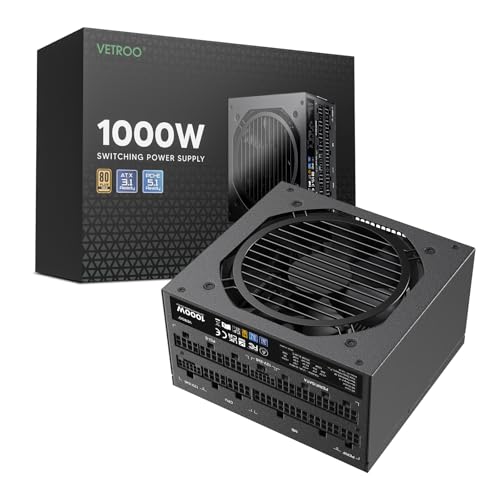
Vetroo 1000W Black PSU ATX 3.1
Taking A Closer Look At The Options
The Seasonic Focus GX-1000 lands at the top because it checks the boxes that matter most for a current-generation gaming rig. ATX 3.1 and PCIe 5.1 readiness (the modern PSU standards that handle brief power spikes from today’s GPUs) mean the included 12V-2×6 connector (a single-cable high-power GPU plug) drops straight into an RTX 5090 or RX 9000 card without adapters.
Gold-rated efficiency from both 80 PLUS and Cybenetics (independent testing labs that certify real-world efficiency) keeps heat and fan noise in check, and Seasonic’s hybrid fan control with a 135mm fluid dynamic bearing fan (a long-life, low-noise fan type) is the kind of detail you only appreciate during a quiet late-night session. For most people building a clean, white-themed mid-tower, this is the safe, steady choice.
The Good Stuff
- Native 12V-2×6 cable removes the adapter clutter behind the GPU.
- Hybrid fan control keeps the unit silent during desktop browsing and light loads.
- 135mm FDB fan typically outlasts sleeve-bearing fans in similar PSUs.
- OptiSink layout (Seasonic’s internal heatsink design) helps the unit run cooler in cramped cases.
Things To Consider
- White finish is a love-it-or-leave-it choice for non-white builds.
- Depth may not clear ultra-compact SFX-style cases (small-form-factor chassis that expect short PSUs); measure first.
Key Specs
Who It Suits Best
Anyone building a clean white-themed ATX tower with a current-generation NVIDIA or AMD flagship GPU.
Consider Something Else When
The Vetroo 1000W Black PSU is a better match for stealth black builds where color coordination matters more than premium fan control.
Lian Li approaches PSU design from a case-builder’s perspective, and the Edge 1000W shows it. The unit is built to disappear into a clean interior, with cabling and form factor (the physical size and shape of the PSU) that suit the brand’s signature showcase cases. It’s the pick for someone who treats the inside of their PC like a piece of furniture.
Underneath the aesthetics, the Edge still delivers 50/40 series GPU support via a 12V-2×6 connector, dual 8-pin to 12VHPWR (the older high-power GPU plug standard) adapters for broader compatibility, and ATX 3.1 compliance for transient handling. You trade a hair of focus-group-tested polish for layout flexibility, and for many builders, that’s a fair deal.
What Works In Its Favor
- Clean aesthetic pairs well with Lian Li’s O11D and similar showcase cases.
- ATX 3.1 compliance with transient resistance (ability to absorb brief power spikes) supports the latest GPUs.
- Modular cabling reduces clutter behind the motherboard tray.
Points To Note
- Fewer noise certifications published than the Seasonic above; quieter operation is less of a guarantee.
- White colorway may clash with darker build themes.
Made For
Showcase builders who prioritize clean cable runs and a matching white aesthetic over absolute fan silence.
Look Elsewhere When
The Seasonic Focus GX-1000 is the quieter pick for late-night gaming where fan noise is a real concern.
The darkFlash PMT lands in the value bracket without giving up the modern standards. ATX 3.1 and PCIe 5.1 compliance means you still get the transient handling that newer GPUs demand, and 100% Japanese 105°C-rated capacitors (high-quality internal components rated for sustained heat) are a pleasant spec to see at this tier.
Power excursion tolerance (the PSU’s ability to handle brief power draws above its rated wattage) up to 200% system and 300% GPU adds a real safety margin during gaming spikes. The trade-off is wattage: 750W is plenty for a mid-range GPU, but a power-hungry flagship build will want more overhead.
Where It Helps
- Two included 12VHPWR cables give flexibility for multi-GPU or adapter-heavy setups.
- Japanese 105°C capacitors tend to age well under sustained gaming loads.
- 80 PLUS Gold efficiency keeps electricity waste modest.
Less-Strong Areas
- 750W ceiling rules out flagship-tier GPU pairings or heavy overclocking.
- Brand recognition lags behind Seasonic and ASUS; long-term resale is weaker.
Quick Facts
Right Fit For
Mid-range builders who want modern connectors and solid capacitors without paying for wattage they won’t use.
A Better Fit Elsewhere
The Seasonic Focus GX-1000 suits high-end builds where extra wattage headroom matters more than upfront savings.
Vetroo’s 1000W white unit targets the first-time builder who wants ATX 3.1 features without a Seasonic-level outlay. Dual PCIe 5.1 connectors (two cables for high-power GPU support) are unusual at this price, and the 80 PLUS Gold rating means you’re not sacrificing efficiency for the savings.
The honest read: you’re getting fewer published certifications and less brand heritage than the premium picks. For a budget mid-range build with one mid-tier GPU, though, this is the kind of unit that gets the job done quietly and lets you spend the difference on a better case or storage.
Everyday Wins
- Dual PCIe 5.1 connectors offer flexibility for future GPU upgrades.
- White finish matches budget-friendly white cases from the same brand.
- Fully modular cabling keeps unused connectors out of the build.
Trade Offs
- Capacitor origin and fan bearing type aren’t published in detail.
- Less mature brand support compared to Seasonic or ASUS.
At A Glance
Best Suited To
First-time builders putting together a white-themed mid-range gaming PC without breaking the budget.
Skip It When
The ASUS ROG Strix 1000W Platinum makes more sense for enthusiasts who want a published noise certification and premium internals.
The EVGA Supernova 1000 P2 is a holdout from the pre-ATX-3.1 era, and it shows in the spec sheet: 80 PLUS Platinum efficiency (around 92% at 115V typical loads), 100% Japanese capacitors, fully modular cabling, and an ECO mode that spins the fan down entirely at low loads. Owners of long-running rigs often cite this exact model as the PSU that just keeps working.
You give up native 12V-2×6 support and modern transient protection, so this is a better fit for builds using GPUs that don’t demand the newest standard. Multi-GPU configurations (older NVIDIA SLI or AMD CrossFire setups, where two or more graphics cards run together) are still within its wheelhouse.
The Practical Payoff
- Platinum efficiency is one tier above most Gold units on this list.
- ECO thermal control means zero fan noise during desktop work and light gaming.
- 100% Japanese capacitors are well-documented for long-term reliability.
- Fully modular design simplifies cable management.
Honest Caveats
- No native 12V-2×6 connector; newer flagship GPUs may need adapters.
- Pre-ATX 3.1 design means less headroom for transient spikes from the latest cards.
Feature Snapshot
Who Will Love This
Builders maintaining or upgrading a multi-GPU system that doesn’t need ATX 3.1 compliance.
Swap It Out When
The Seasonic Focus GX-1000 is the smarter pick for new builds centered on an RTX 5090 or RX 9000 card.
This is the black twin of the darkFlash PMT 750W, identical on the inside but finished to disappear into darker cases. The Japanese 105°C capacitors, 200% power excursion tolerance, and 80 PLUS Gold efficiency carry over from the white version, and the dual 12VHPWR cables remain a standout at this tier.
The 750W ceiling still rules out flagship GPU pairings, but for a single mid-range card in a stealth-themed build, this hits a comfortable balance. If you already own a black case and don’t want a white PSU peeking through the PSU shroud, this exists exactly for that problem.
Positive Takeaways
- Black finish blends into dark cases without drawing attention to the PSU bay.
- Identical component quality to the white sibling, just recolored.
- Solid efficiency keeps heat output reasonable in confined cases.
Worth Noting
- Same 750W ceiling limits future GPU upgrade paths.
- No published Cybenetics noise rating, so silence claims are vendor-side.
Perfect Match For
Stealth-build enthusiasts running a single mid-range GPU who want the PSU to disappear visually.
Reach For A Different Pick When
The Vetroo 1000W Black PSU offers more wattage headroom for similar money if you anticipate a higher-TDP GPU down the line.
The PMT850 leans into small form factor builds with a 150mm depth, shorter than many ATX PSUs that stretch past 160mm. If you’ve measured your case and know longer units won’t clear the front fan mount, this is the darkFlash to reach for.
You still get ATX 3.1 and PCIe 5.1 readiness, a 12VHPWR cable, Japanese 105°C capacitors, and 80 PLUS Gold efficiency. The five-year warranty is a reassuring signal from a brand still building its reputation. For a compact ATX or cube-style build with a single mid-to-upper GPU, the shorter length is the headline win.
Points In Its Favor
- 150mm depth fits small form factor and compact mid-tower cases.
- 850W gives a touch more headroom than the 750W siblings.
- Five-year warranty adds peace of mind for a newer brand.
Small Caveats
- 850W is still tight for flagship-tier GPU pairings.
- No published noise certification, so quiet-operation expectations are vendor claims.
Whose Shelf It Belongs On
Compact-build hobbyists working in cases where every millimeter of PSU depth matters.
Not Your Match When
The Seasonic Focus GX-1000 suits full-size ATX builds where extra wattage and published noise data matter more than depth.
ASUS puts its ROG branding on a 1000W Platinum unit aimed squarely at flagship builders. GaN MOSFETs (gallium nitride transistors that switch power more efficiently than older silicon designs) deliver the kind of efficiency that justifies the Platinum label, and the “GPU-First” voltage stabilizer prioritizes stable power delivery to the graphics card over other rails.
Cybenetics Lambda A+ certification (an independent noise-level rating, with A+ being among the quietest tiers) tells you ASUS is willing to have the unit measured, not just marketed. The 10-year warranty is the longest on this list. For someone building a high-end rig and planning to keep it for half a decade or more, the long coverage matters.
Real-World Strengths
- GaN MOSFETs push efficiency past typical Platinum units.
- GPU-first voltage sensing protects the most expensive component during spikes.
- Lambda A+ noise certification is a published, measured number, not a marketing line.
- 10-year warranty signals ASUS’s confidence in long-term reliability.
Factors To Consider
- Premium pricing puts it well above the mid-tier picks on this list.
- ROG styling is visually loud; not ideal for understated builds.
Feature Snapshot
Who Should Grab It
Enthusiasts building flagship-tier rigs who want verified quiet operation and the longest warranty available.
Another Choice May Suit
The Seasonic Focus GX-1000 is a quieter-value pick for builders who don’t need ROG aesthetics or a 10-year term.
The black 1000W Vetroo mirrors its white sibling on the inside, with 80 PLUS Gold efficiency, ATX 3.1 compliance, and dual PCIe 5.1 connectors for flexible GPU cabling. The black finish is the difference, and for most dark-theme builds, it’s the right call.
You’re not getting the published noise certifications of the ASUS ROG Strix or the fan-control heritage of Seasonic, but the spec sheet covers everything a current-generation gaming build actually needs. For a general-purpose ATX 3.1 build without a specific color or noise priority, this is the easy default.
Reasons It Performs
- 1000W with ATX 3.1 covers most current and next-gen GPU pairings.
- Dual PCIe 5.1 connectors simplify cable routing for multi-GPU or high-power cards.
- Black finish pairs naturally with most mainstream cases.
Some Limits To Know
- Capacitor and fan bearing details aren’t published in depth.
- Less brand support infrastructure than the bigger names on this list.
Built With In Mind
General builders who want modern PSU standards and a black aesthetic without paying for premium branding.
Where A Sibling Pick Shines
The darkFlash PMT850 is the better fit when case depth is tight, thanks to its 150mm compact design.
What To Weigh Before Choosing A 1000W Gaming PSU
Connector Standards Matter More Than Wattage
A 1000W rating means little if the PSU lacks the right plug for your GPU. ATX 3.1 and PCIe 5.1 are the modern standards that handle the brief power spikes today’s graphics cards produce during sudden load changes. Look for a native 12V-2×6 connector if you’re running an RTX 5090 or RX 9000 card; older 8-pin arrangements work, but adapters add clutter and a small failure point.
Efficiency Ratings Translate To Real-World Savings
80 PLUS Gold and Platinum certifications indicate how much wall-power the PSU converts into usable system power versus how much it wastes as heat. A Gold unit running at around 90% efficiency wastes roughly 10% of drawn power as heat. Over years of daily use, that gap shows up on the electricity bill and in how hard your case fans have to work.
Capacitor Quality Predicts Service Life
Japanese capacitors rated for 105°C operation tend to outlast lower-spec alternatives, especially in warm cases or under sustained gaming loads. If a manufacturer publishes capacitor origin and temperature rating, that’s a useful signal. Silence on the topic is a soft yellow flag, not a dealbreaker, but it means you’re trusting the brand more than the spec sheet.
Noise Certifications Beat Marketing Claims
A Cybenetics Lambda rating (an independent lab test that measures how loud a PSU actually is under load) tells you the unit has been measured, not just advertised. For builders who game in quiet rooms or stream late at night, that published number is worth more than vague “silent operation” language.
Common Shopping Slip Ups In The PSU Aisle
Overspending On Wattage You Won’t Use
A 1000W unit in a build drawing 450W at full load is paying for headroom you don’t need. Match the PSU to your actual system draw, then add 20-30% for spikes and future upgrades. More wattage isn’t always better; the right wattage is.
Ignoring Case Depth
PSU length varies by 20-30mm across models, and that gap matters in compact cases. A unit too long for your case can block front fan mounts or even fail to seat fully. Always check your case’s PSU clearance spec before ordering.
Chasing Efficiency Tiers Past Gold
Platinum and Titanium certifications sound impressive, but the efficiency gap from Gold to Platinum is small in real-world gaming scenarios. The price difference often pays for itself only over many years of heavy use.
Frequently Asked Questions
Do I Really Need 1000W For Gaming?
Most single-GPU gaming builds sit comfortably in the 650-850W range. 1000W becomes useful when you’re running a flagship GPU, planning heavy overclocking, or want extra headroom for future upgrades. If your GPU draws under 300W, a smaller PSU will save money and run cooler.
What Is ATX 3.1 And Why Does It Matter?
ATX 3.1 is the latest PSU standard, designed to handle the brief power spikes modern GPUs produce when frame rates suddenly surge. Older ATX 2.x units can struggle with these transients, occasionally tripping protections or causing shutdowns. For a current-generation GPU, ATX 3.1 is worth prioritizing.
Is Platinum Efficiency Worth The Extra Cost?
Platinum units waste less power as heat compared to Gold-rated ones, but the gap is modest in typical gaming loads. The upgrade pays off most in always-on systems, heavy computational workloads, or scenarios where every watt of heat matters in a small case.
Can A 1000W PSU Damage Lower-Wattage Components?
No. A higher-wattage PSU delivers only the power your components actually draw; it doesn’t push extra wattage into them. The system pulls what it needs, and the PSU supplies it. The 1000W rating is a maximum capacity, not a forced output.
What Does Fully Modular Mean?
A fully modular PSU lets you plug in only the cables you need, with every cable detaching from the unit. This simplifies cable management, improves airflow, and reduces clutter behind the motherboard tray. Semi-modular units have some fixed cables, while non-modular units have all cables permanently attached.
Wrap Up
The right 1000W PSU depends less on raw specs and more on your build’s color, case size, and how long you plan to keep it. Premium picks like the ASUS ROG Strix 1000W Platinum reward enthusiasts who’ll use the warranty, while value-focused options like the Vetroo 1000W and darkFlash PMT850 cover most mainstream builds without compromise. Pick the unit that matches your case and your upgrade timeline, and the rest tends to take care of itself.


