


A gaming TV that costs less than a console game library used to sound like a stretch. Not anymore. Today’s budget tier covers 4K resolution, 144Hz refresh rates, VRR (variable refresh rate, a tech that matches the screen’s refresh to your console’s output to kill screen tearing), and full-array local dimming, so couch co-op, late-night RPGs, and weekend sports can all live on the same panel. The picks below lean on real-world use cases, room size, and the kind of games you actually play, so you spend money on what hits the screen, not on a spec sheet you’ll never read.
A Fast Comparison Of The Options

BenQ Zowie RL2455S 24 inch 1080p Gaming Monitor (1ms 75Hz)

TCL 55-Inch QM64L Mini LED QLED 4K HDR Gaming TV (55QM64L)
TCL 75-Inch QM64L Mini LED QLED 4K HDR Gaming TV (75QM64L)

TCL 65″ T7 4K QLED Google TV with 144Hz Gaming (65T7)
TCL 85-Inch QM64L Mini LED QLED 4K HDR Gaming TV (85QM64L)

TCL 55″ T7 4K QLED Google TV with 144Hz Gaming (55T7)
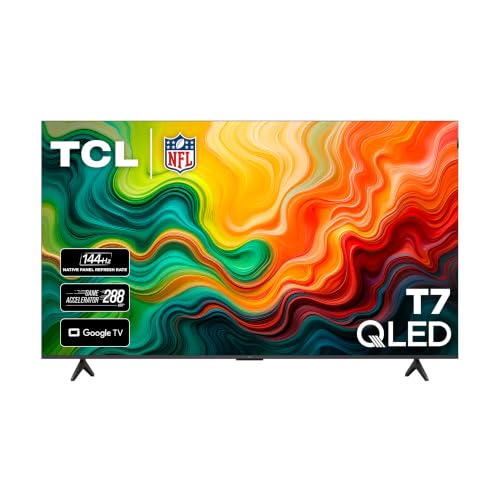
TCL 75″ T7 4K QLED Google TV with 144Hz Gaming (75T7)
Inside Each Recommended Option
The BenQ Zowie RL2455S earns its spot as a console-first gaming display, not a general TV. It runs a 24-inch 1080p panel, which means it won’t take over your living room, but the trade-off is razor-clean pixel density at typical couch distances. Fighting game and FPS players tend to like this format because the entire HUD stays in your sightline without eye darts.
Two gaming-specific features set the panel apart. The 1ms GTG response (gray-to-gray, the speed at which a pixel shifts from one shade to another) keeps motion trails short, and the Black eQualizer plus Color Vibrance settings let you push visibility in dark corners or boost enemy outlines. For most local multiplayer nights, that combo pulls more weight than a bigger screen.
The Good Stuff
- Dedicated RTS, FPS, and fighting game presets let you swap profiles per session.
- Flicker-free backlight reduces eye strain during long tournament-style sessions.
- Black eQualizer lifts shadow detail in dark maps, which competitive players report as a real leg up.
- Dual HDMI inputs handle a console and a PC without swapping cables.
- Compact base leaves room for a controller between sessions.
Things To Consider
- 1080p resolution looks dated next to any 4K TV on this list.
- 75Hz top refresh, which trails the 144Hz TCL panels below.
- Built-in speakers are passable at best, so most setups will add a soundbar.
Who It Suits Best
Tournament-minded console players who prioritize input feel and clarity over cinematic scale.
Look Elsewhere When
The TCL 55-Inch QM64L is the smarter grab if you split time between RPGs, streaming, and couch co-op.
Stepping up from the BenQ monitor, the TCL 55-Inch QM64L brings a real living-room footprint without a flagship price. The Mini LED backlight (thousands of tiny LEDs grouped into dimming zones behind the LCD) pairs with QLED color to give HDR games more punch than older edge-lit sets at this size, and 144Hz VRR support means your console’s frame output can sync smoothly with the screen. Late-night horror sessions benefit most from the local dimming depth.
You also get Dolby Vision HDR and Dolby Atmos audio passthrough, which is genuinely useful for streaming nights when the console sits idle. For most living rooms, 55 inches hits the sweet spot between immersion and viewing comfort.
Features That Help
- 144Hz VRR support keeps fast-paced games tear-free on current consoles.
- Mini LED local dimming lifts contrast in dark game scenes.
- Dolby Vision HDR support covers the most common HDR gaming formats.
Worth Noting
- Fire TV interface favors Amazon’s app ecosystem, which may frustrate Google-cast households.
- 55 inches may feel modest in rooms with long viewing distances, depending on seating layout.
Made For
Living rooms where one panel handles nightly gaming, streaming, and the occasional movie night.
Consider Something Else When
The TCL 75-Inch QM64L is the better fit if you want the same feature set on a bigger canvas.
Same QM64L panel, stretched to 75 inches. That size jump is more than bragging rights: split-screen racing games, four-player party titles, and cinematic RPGs all breathe on a screen this wide. The Mini LED backlight scales with the panel, so contrast in dark game scenes holds up rather than washing out like many edge-lit competitors.
The 144Hz VRR support carries over from the 55-inch sibling, which is the key reason this set belongs on a gaming shortlist. You also get the same Dolby Vision HDR pipeline, so streaming-only nights don’t feel like a compromise.
Everyday Wins
- 75-inch scale makes split-screen multiplayer far more readable.
- Mini LED zones keep dark scenes from looking gray, depending on the title.
- 144Hz VRR covers current-generation console refresh rates.
Honest Caveats
- 75-inch screens demand more mounting planning and a wider stand.
- Fire TV app layout can feel ad-heavy out of the box for some users.
Right Fit For
Households that game together and want everyone on the couch to have a fair view of the action.
Skip It When
The TCL 65″ T7 makes more sense if you prefer Google TV’s app store over Fire TV.
The TCL 65″ T7 swaps the QM64L’s Fire TV layer for Google TV, which matters if you already live inside Google’s app universe. Chromecast built-in, easier YouTube TV hand-off, and broader smart-home hooks come standard. The 4K QLED panel still delivers solid color volume, and 144Hz native refresh covers the latest console output cleanly.
At 65 inches, this set fits most open-plan living rooms without overwhelming them, depending on furniture layout. Motion handling is the quiet win: smoother pans in racing games and steadier sports broadcasts on the same panel.
Positive Points
- Google TV interface tends to feel cleaner for households already using Android apps.
- 144Hz native refresh handles the latest console frame outputs.
- QLED quantum dots (nano-sized particles that boost color brightness and range) help HDR pop on animated and stylized games.
Points To Note
- Lacks the Mini LED backlight of the QM64L siblings, so dark-scene contrast trails those sets.
Best Suited To
Shoppers who value a Google-first smart platform and smooth motion over flagship-tier contrast.
Not Your Match When
The TCL 75-Inch QM64L is a stronger pick if Mini LED contrast matters more than the smart platform.
At 85 inches, the largest QM64L is no longer a TV, it’s a wall feature. The Mini LED backlight scales to match the panel area, so the same local dimming depth you get at 55 inches still applies. Cinematic RPGs, open-world sandboxes, and four-player party titles all feel closer to a public screening on this screen.
You still get 144Hz VRR and the full Dolby Vision HDR pipeline, which is rare at this size in the budget tier. You also need to plan around it: stands get wide, and wall mounts should be rated for the heavier chassis.
Notable Gains
- 85-inch scale turns couch co-op into an event, depending on room depth.
- Mini LED contrast holds up at this size better than many edge-lit competitors.
- 144Hz VRR support is uncommon on screens this large at this tier.
Factors To Consider
- Requires careful measurement for stands, mounts, and doorway clearance.
- Smaller rooms can make 85-inch screens feel overwhelming at typical viewing distance.
Who Will Love This
Dedicated media rooms and large open-plan spaces where the screen doubles as the focal point.
A Better Fit Elsewhere
The TCL 75″ T7 is the smarter choice if you want a large screen but lean on Google TV over Fire TV.
Bedrooms, dorms, and smaller dens benefit from the 55-inch T7 the most. The 4K QLED panel keeps colors accurate at close seating distances, and 144Hz native refresh means you’re not paying flagship money for last-decade motion handling. Google TV handles streaming and casual game downloads from the couch.
The trade-off is contrast: without the QM64L’s Mini LED backlight, dark game scenes can look softer. For most bedroom setups, the difference is subtle, but horror and space games feel the gap.
Well-Handled Touches
- Compact 55-inch scale fits tight spaces without dominating the room.
- Google TV interface streamlines app discovery for casual users.
- 144Hz refresh is rare on smaller-budget panels in this size.
Small Caveats
- No Mini LED backlight means dark scenes lose some depth.
- Built-in speakers are basic, which may push you toward a soundbar for fuller game audio.
Perfect Match For
Bedroom or den gaming setups where size and smart-platform convenience matter most.
Swap It Out When
The TCL 55-Inch QM64L is the upgrade move if you can stretch to Mini LED contrast.
The 75-inch T7 closes the list as the most balanced large-screen Google TV option. You keep the 144Hz native refresh, QLED color, and the Google TV app layer, in a chassis big enough for movie nights and split-screen party games. The motion smoothing helps both sports broadcasts and fast camera pans in third-person shooters.
Where the T7 line gives up ground is backlight control. Without Mini LED zoning, dark scenes look softer than on the QM64L siblings. For most open-plan living rooms, the size and smart platform win out.
Reasons It Performs
- 75-inch scale pairs with Google TV for a versatile family-room centerpiece.
- 144Hz refresh covers current console frame rates without compromise.
- QLED quantum dots help animated and stylized games look vibrant.
Less Ideal Details
- Lacks Mini LED dimming, so contrast in dark scenes trails the QM64L line.
Who Should Grab It
Households that want a big Google TV panel and value app convenience over flagship contrast.
Reach For A Different Pick When
The TCL 75-Inch QM64L is the upgrade if you want Mini LED contrast on a similarly large canvas.
What To Weigh Before Choosing An Affordable Gaming TV
Screen size and seating distance matter more than most people think. A 55-inch panel in a long, narrow room leaves you squinting at UI text, while an 85-inch screen in a den can feel overwhelming. For most living rooms, 65 inches hits the sweet spot.
Refresh rate and VRR are the real gaming upgrades. A 60Hz set still plays today’s games, but 120Hz or 144Hz with VRR delivers smoother motion and tear-free visuals, especially in fast shooters and racing titles. Console gamers benefit more from VRR than PC users chasing the absolute top frame rates.
HDR format support varies. Dolby Vision and HDR10+ (two competing HDR formats that optimize brightness and color scene-by-scene) cover most streaming and game HDR. Sets that list only HDR10 still look good but won’t dynamically adjust per scene, depending on the title.
Smart platform shapes daily use. Fire TV leans into Amazon’s ecosystem, while Google TV plays nicely with Android apps, Chromecast, and YouTube TV. Pick the one that matches your existing apps, not the one with more total apps.
Key Considerations Across These Picks
Wrong Turns To Avoid
Buying on raw size alone backfires. A massive 85-inch screen with weak local dimming looks worse in dark games than a well-tuned 65-inch Mini LED set. Match the screen to your seating distance, not your wish list.
Chasing the highest refresh rate without VRR support is a partial win. Smooth motion matters, but variable refresh rate is what stops screen tearing, so prioritize panels that list both 120Hz or 144Hz and VRR support.
Where The Extra Money Goes
Stepping up the QM64L line over the T7 buys you Mini LED backlighting, which lifts dark-scene contrast meaningfully in horror, space, and noir-style games. The T7’s QLED color stays vibrant, but it lacks the precise light control Mini LED adds.
Larger screens cost more, but the price gap is mostly the panel, not the smarts. If you can wall-mount or stand-mount a 75-inch or 85-inch panel safely, you get the same 144Hz VRR pipeline as the smaller sizes.
Frequently Asked Questions
What size TV is best for gaming in a small room?
A 55-inch panel usually fits a small living room or bedroom without overwhelming it. Sit roughly 5 to 7 feet away for a comfortable view, depending on layout.
Is 144Hz really necessary for console gaming?
Not always. Most current consoles cap below 120fps, but 144Hz panels handle VRR and high-frame-rate modes more cleanly, which can make motion look smoother in supported titles.
Do I need HDMI 2.1 for 4K gaming?
For 4K at 120Hz on modern consoles, yes. Older HDMI standards top out at lower bandwidth, so check the ports before you commit to a panel.
Is Mini LED worth it over standard LED?
Mini LED improves local dimming, which lifts contrast in dark game scenes. For bright, colorful games the gap is smaller, but horror and space titles look noticeably better.
Can a budget TV handle competitive esports?
A 24-inch 1080p monitor like the BenQ Zowie RL2455S often suits competitive play better than a budget TV. Lower input lag and tighter pixel density give competitive players an edge that larger panels can’t match.


