


Big-screen gaming used to mean compromise: muddy blacks, sluggish input, and a TV that looked great with movies but fell apart the moment a match started. That era is gone. Today’s 65-inch gaming displays pair high refresh rates, variable refresh rate (VRR, a tech that syncs the screen’s refresh to your console or PC frame-by-frame to kill screen tearing) support, and Mini-LED backlighting (thousands of tiny LEDs behind the panel that dim and brighten in zones for deeper blacks and brighter highlights than standard edge-lit screens) that would have looked at home in a flagship TV just a few years ago. The trade-off now is choice, with QD-Mini-LED (Quantum Dot + Mini-LED), QLED (Quantum Dot LED, which uses a layer of nano-crystals to boost color and brightness), and even art-mode designs all competing for your wall.
This roundup covers nine 65-inch gaming TVs worth a look in 2026, plus a few larger siblings in the same families for shoppers who want more screen. Each pick was evaluated on panel tech, refresh rate, gaming features, and the practical ownership quirks that show up after the unboxing.
The Essentials At A Glance

TCL 98 Inch Class QM8L Series SQD-Mini-LED QLED Smart TV

TCL 65″ T7 4K QLED Google TV with 144Hz Gaming

Hisense 65-Inch Class QLED 4K S7N CanvasTV Series
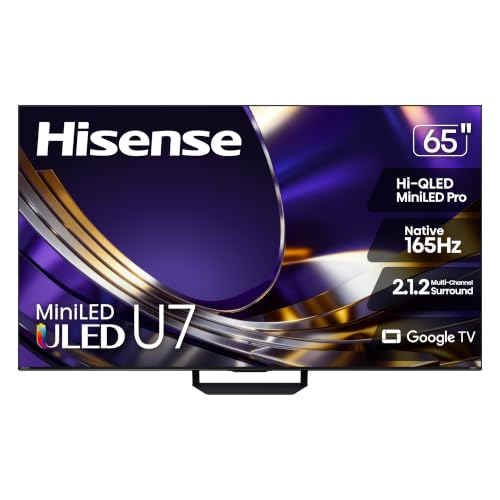
Hisense 65″ U7 Mini-LED ULED 4K UHD Smart Google TV (2026)

TCL 65 Inch Class QM8L Series SQD-Mini-LED QLED Smart TV (2026)
TCL 75 Inch Class QM8L Series SQD-Mini-LED QLED Smart TV (2026)
TCL 85 Inch Class QM8L Series SQD-Mini-LED QLED Smart TV (2026)
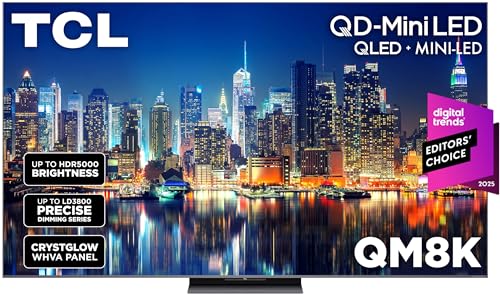
TCL 65 Inch Class QM8K Series Mini LED QLED 4K HDR (2025)

Samsung 65-Inch Class The Frame Pro LS03HW Smart TV (2026)
What Each Pick Brings To The Table
Strictly speaking, the 98-inch TCL QM8L stretches past the 65-inch brief, but it earns a place here as the family flagship. The SQD-Mini-LED backlight (TCL’s Super Quantum Dot Mini-LED system) drives a high peak brightness for HDR highlights, while the 144Hz native panel pairs cleanly with VRR for both PlayStation 5 and Xbox Series X output.
You will want a real media room for this one. The 98-inch footprint dominates any wall it’s mounted on, and the Bang and Olufsen-tuned audio adds enough weight that you may not need a soundbar for casual sessions. Compared to the 65-inch T7 reviewed below, this is the same family turned all the way up.
Notable Gains
- Massive 98-inch screen makes split-screen couch co-op genuinely usable
- 144Hz native refresh handles high-frame-rate console and PC titles smoothly
- SQD-Mini-LED backlight pushes HDR highlights without washing out shadows
- Google TV interface keeps streaming apps tidy alongside console inputs
- Bang and Olufsen audio tuning gives built-in speakers a wider, fuller sound
Points To Keep In Mind
- The 98-inch cabinet demands a wide stand or sturdy wall mount, plus careful measuring before delivery
- Best picture performance typically requires some calibration out of the box
Key Product Details
Right Fit For
Homeowners with a dedicated media wall and the seating distance to take in 98 inches of screen.
Consider Something Else When
The Hisense 65″ U7 is a smarter fit for competitive gamers who want native 165Hz in a more manageable 65-inch cabinet.
The T7 slots in as TCL’s value-first 65-inch gaming screen, and it does not feel stripped down. You still get a 144Hz native panel with Motion Rate 480 (TCL’s motion-smoothing spec, achieved through MEMC frame insertion, which adds interpolated frames to reduce blur) for fast camera pans, plus QLED color and HDR PRO+ with Dolby Vision for the cinematic side of the living room.
For most console-only households, this is the sweet spot. Stepping up to the QM8L above gets you Mini-LED backlighting, but you pay a real premium for it. The T7 is the practical middle ground, especially if you mostly play PS5 and Xbox Series X at 4K/120.
Bright Spots
- 144Hz panel with MEMC frame insertion keeps sports and shooters clean
- HDR PRO+ with Dolby Vision covers the major HDR formats out of the box
- Google TV interface is straightforward and easy for the household to share
- Lower entry price than the QM8L Mini-LED siblings
Room For Improvement
- No Mini-LED backlight, so HDR brightness and black level are a step behind the QM8L line
- Built-in speakers are serviceable but a soundbar is recommended for immersive gaming
- Some users report a short break-in period to dial in motion settings
Who It Suits Best
Console gamers on a tighter budget who still want 144Hz and Dolby Vision in a 65-inch screen.
Not Your Match When
The Hisense 65″ U7 is the better pick for anyone chasing native 165Hz with VRR for PC and competitive play.
The Hisense CanvasTV is a different animal. The Hi-Matte anti-glare display (a low-reflection coating that gives artwork a canvas-like depth) is the star, designed to make paintings and photos look like the real thing when the screen is in Art Mode. When you switch to gaming, you still get a 4K QLED panel with a 144Hz refresh rate and the same UltraSlim wall mount that makes it hang flush.
This one is for the living room that needs to look pulled-together even when the TV is off. Versus the TCL T7 above, the CanvasTV trades a bit of backlight performance for that art-friendly matte coating and the swappable magnetic frame (teak ships in the box, with white and walnut sold separately).
What Stands Out
- Art Mode turns a 65-inch wall into a rotating gallery when you’re not gaming
- Hi-Matte display dramatically reduces glare in sunlit rooms
- UltraSlim wall mount ships in the box for a true flush-to-wall install
- Swappable magnetic frame lets you change the look without remounting
Things To Consider
- Matte coating can slightly soften punchy HDR highlights compared to glossy panels
- Additional frame colors (white, walnut) are sold separately from the teak default
- Two-person install is recommended given the slim-fit mount design
Quick Facts
Made For
Style-conscious shoppers who want a 65-inch gaming TV that disappears into a decorated living room when idle.
Look Elsewhere When
The Hisense 65″ U7 Mini-LED is a better match for gamers who prioritize HDR brightness over Art Mode aesthetics.
The U7 is the speed freak of the roundup. Hisense built it around a native 165Hz panel with VRR 330, which translates to a top VRR ceiling of roughly 330Hz for esports-grade frame rates. The Mini-LED Pro backlight with thousands of local dimming zones and up to 3,000 nits of peak brightness gives the picture real pop, while Dolby Vision IQ and IMAX Enhanced handle the cinematic content on the same panel.
If you split time between Valorant on PC and the latest AAA console releases, this is the most flexible 65-inch display in the lineup. Compared to the TCL T7 above, you trade a slightly lower brand familiarity for much higher peak brightness and a higher VRR ceiling.
What Earns Its Place
- Native 165Hz with a 330Hz VRR ceiling is rare at this size
- Hi-QLED Mini-LED Pro backlight with thousands of dimming zones for strong contrast
- Up to 3,000 nits peak brightness gives HDR real impact in lit rooms
- Dolby Vision IQ, HDR10+, and IMAX Enhanced cover the major HDR formats
Some Limits To Know
- 2.1.2 channel built-in audio is decent but a soundbar helps for cinematic impact
- Best gaming performance typically requires enabling the dedicated Game Mode manually
At A Glance
Best Suited To
Competitive PC and console gamers who want the highest refresh rate and best HDR brightness in a 65-inch panel.
Swap It Out When
The Hisense 65-Inch S7N CanvasTV is the better match for shoppers who care more about Art Mode aesthetics than peak brightness.
The 65-inch TCL QM8L is the version of the flagship most shoppers should actually consider. You keep the SQD-Mini-LED backlight, the 144Hz native panel, and the Bang and Olufsen-tuned audio from the 98-inch model, but in a cabinet that fits a standard living room wall.
For mixed-use households, this hits a satisfying middle. Movie nights benefit from the same TCL Deep Color System that drives the larger 98-inch model, while the 144Hz refresh and Google TV interface keep gaming and streaming in one box. Versus the Hisense U7 above, the QM8L has a slightly lower peak refresh ceiling but a cleaner, more cinematic out-of-box picture.
The Good Stuff
- SQD-Mini-LED QLED backlight delivers strong HDR contrast for the price tier
- Bang and Olufsen audio gives built-in speakers real weight
- 144Hz native refresh with VRR covers the latest console and PC gaming needs
- Google TV interface with built-in voice control simplifies daily use
Trade Offs
- Native 165Hz on competitors like the Hisense U7 gives a small edge for esports
- Default picture mode can look slightly cool until you run a quick calibration
Feature Snapshot
Who Will Love This
Households that split evenly between cinematic streaming, sports, and console gaming, and want a flagship-feeling 65-inch panel without going bigger.
Reach For A Different Pick When
The Hisense 65″ U7 is the better fit for shoppers who prioritize native 165Hz and the highest possible VRR ceiling for competitive gaming.
The 75-inch QM8L is the same panel as the 65-inch model above, scaled up for open-plan living rooms where you sit roughly 8 to 10 feet from the screen. You still get the SQD-Mini-LED backlight, the 144Hz native refresh, and Google TV with voice control.
This is the sweet spot for households that want a noticeable step up from 65 inches without committing to the dedicated media-room footprint of the 98-inch version. Compared to the Hisense U7 at 65 inches, you trade a higher peak refresh rate for a much larger picture, which is a worthwhile swap for most living-room setups.
Real-World Strengths
- 75-inch screen fills the main wall in most open-plan living rooms
- SQD-Mini-LED QLED panel delivers strong HDR at this size tier
- 144Hz with VRR keeps high-frame-rate console gaming smooth
- Bang and Olufsen audio helps the TV carry a room without a soundbar
What To Weigh
- Larger cabinet means a wider stand and more planning for the wall mount
- Heavier than the 65-inch QM8L, so two-person setup is recommended
Perfect Match For
Shoppers with a long media wall and seating around 8 to 10 feet away who want a step up from 65 inches without going theater-scale.
A Better Fit Elsewhere
The TCL 65″ T7 is the smarter call for smaller rooms or tighter budgets where 75 inches is more screen than necessary.
The 85-inch QM8L pushes into true home-theater territory while staying in the same family as the 65-inch model. The Mini-LED backlight and Quantum Dot color layer scale up cleanly, and the Bang and Olufsen audio gives the built-in speakers enough presence that the room fills even at lower volumes.
For basement media rooms and dedicated gaming setups, 85 inches hits a nice balance. Larger than the typical living room installation, but not as overwhelming as the 98-inch flagship. Compared to the 75-inch QM8L above, the step up is more about presence than panel quality.
Positive Points
- 85-inch screen creates a cinema-like gaming experience from a normal couch setup
- SQD-Mini-LED QLED panel holds brightness and contrast at this larger size
- 144Hz native refresh with VRR supports current-gen console and PC gaming
- Bang and Olufsen audio reduces the immediate need for a soundbar
Practical Considerations
- 85-inch cabinet is heavy and demands a sturdy mount or wide furniture
- Best viewed from at least 8 to 10 feet to take full advantage of the size
Built With In Mind
Homeowners building out a basement media room or den who want a true big-screen experience without jumping to 98 inches.
Skip It When
The TCL 75 Inch Class QM8L is a more practical size for living rooms where seating distance is under 8 feet.
The 2025 TCL QM8K is the previous-generation flagship that still holds up. It runs TCL’s Halo Control System with a Super High Energy LED Microchip, Condensed Micro Lens, and a CrystGlow WHVA panel (a wide-view anti-reflective panel tech) for strong brightness and wide-angle viewing. Refresh lands at 120Hz to 144Hz depending on content, and the Anti-Reflective Wide Angle Screen is a quiet bonus for shared seating.
This one is for the patient shopper. As a 2025 model, the QM8K typically sells below current 2026 flagships while delivering close to the same gaming experience. Against the Hisense U7 above, it has a slightly lower native refresh ceiling but a wider viewing angle for off-center seats.
Good Reasons To Consider
- Previous-gen flagship that often sells below current 2026 models
- Anti-Reflective Wide Angle Screen helps off-center seating arrangements
- Dolby Atmos support pairs well with a compatible soundbar
- 120Hz to 144Hz variable refresh covers most console and PC gaming needs
Honest Caveats
- Last-generation model, so future software support window is shorter than 2026 flagships
- Peak brightness trails the newer Hisense U7 by a noticeable margin
Core Details
Whose Shelf It Belongs On
Shoppers willing to consider a 2025 model to get flagship-grade Mini-LED performance at a lower price point.
Where A Sibling Pick Shines
The TCL 65 Inch Class QM8L is the more future-proof choice if you want a 2026 model with longer software support.
The Frame Pro is Samsung’s art-first flagship, and the 2026 LS03HW is the most advanced version yet. The glare-free Neo QLED panel (Samsung’s Mini-LED tech with Quantum Dot color) is tuned for art display, the Wireless One Connect box cleans up cable clutter by sending video and power over a single wireless link to the screen, and the Slim Fit Wall Mount is in the box for a true flush install.
Gaming performance is solid rather than class-leading, but the lifestyle angle is unmatched. Compared to the Hisense CanvasTV above, the Frame Pro adds the wireless One Connect box and a stronger processor, at a higher price.
Everyday Perks
- Glare-free Neo QLED panel makes art display look genuinely canvas-like
- Wireless One Connect reduces cable clutter to a single cord
- Slim Fit Wall Mount ships in the box for a flush, gallery-style install
- Alexa is built in for hands-free control alongside Samsung’s own voice system
Less Ideal Details
- Premium pricing reflects the art-first design more than top-tier gaming specs
- Wireless One Connect needs a clean power outlet near the screen for full effect
Who Should Grab It
Shoppers who want a 65-inch gaming TV that doubles as a centerpiece art display, and who value clean cable management.
Another Choice May Suit
The Hisense 65-Inch S7N CanvasTV delivers a similar art-mode experience with a more approachable price point.
Matching Refresh Rate And Bandwidth To Your Console
Refresh rate gets the headlines, but the full gaming picture is broader. Start with the consoles and PC you actually own, since 120Hz is the realistic ceiling for current PS5 and Xbox Series X titles, while a gaming PC can push 144Hz, 165Hz, or higher in esports titles. Variable Refresh Rate support (VRR) is the more important spec to confirm, because it eliminates screen tearing (visible horizontal splits when the frame rate and refresh rate go out of sync) and stutter when frame rates dip mid-game.
Why HDMI 2.1 Matters
Most of the 65-inch gaming TVs in this list support HDMI 2.1 (the latest HDMI standard that enables 4K at 120Hz, VRR, and Auto Low Latency Mode over a single cable), but the number of full-bandwidth ports varies. Plan your setup around how many devices need the top tier: a PS5, an Xbox Series X, and a gaming PC can eat three HDMI 2.1 slots quickly. Look for at least two full-bandwidth HDMI 2.1 inputs if you run multiple modern consoles.
Local Dimming And HDR
Mini-LED backlighting with hundreds or thousands of local dimming zones is what separates a bright, contrast-rich HDR image from a washed-out one. QLED and Quantum Dot color layers add to that by widening the color gamut (the range of colors a screen can display). If you watch a lot of HDR movies in a bright living room, prioritize backlight tech and peak brightness over refresh rate.
The Practical Stuff: Mounting, Sound, And Viewing Distance
A 65-inch TV needs a VESA mount rated for its weight (the standard bolt-pattern mounting interface on the back of most flat-panel TVs), and the larger QM8L models in this roundup are heavy enough that two-person setup is the safe play. Viewing distance matters too: 65 inches works well at roughly 7 to 9 feet of seating distance, while 75 and 85 inches want a bit more room to breathe.
Key Considerations Across These Picks
Pitfalls Shoppers Hit
The most common mistake is chasing peak refresh rate without checking VRR support. A 144Hz panel without VRR still tears at irregular frame rates, which is exactly when most games actually run. The second is underestimating stand or mount weight, especially for the 75-inch and 85-inch QM8L models. A flimsy mount is a real safety risk on a 100-pound-plus panel.
Where The Extra Money Goes
The jump from the TCL T7 to the QM8L line is mostly about backlight control. SQD-Mini-LED delivers tighter local dimming and higher peak brightness, which translates to a more cinematic HDR image in a lit room. Stepping from the QM8L to the Hisense U7 or Samsung Frame Pro buys you higher native refresh, smarter processors, and design extras like the Wireless One Connect box. The honest read is that the value tier covers most gamers well, and the premium tier pays off when you spend real time in HDR content or care about gallery-style aesthetics.
Frequently Asked Questions
Is 65 Inches Big Enough For Console Gaming?
For most living rooms with 7 to 9 feet of seating distance, 65 inches is the sweet spot. It fills the field of view during fast action without forcing you to sit very far back. Larger sizes work too, but only if your room and seating support them.
Do All 65-Inch Gaming TVs Support VRR?
Most modern 65-inch gaming screens support VRR, but you should confirm the specific VRR ceiling, which ranges from 120Hz to 330Hz across this roundup. Console gamers can be perfectly happy with 120Hz VRR, while PC esports players benefit from higher ceilings.
Should I Prioritize Refresh Rate Or Picture Quality?
For a console-only setup, picture quality usually wins because most PS5 and Xbox Series X games target 4K/30 or 4K/60. A 120Hz or 144Hz panel with strong HDR brightness covers that comfortably. For competitive PC gaming, the reverse is true: native 165Hz with VRR matters more than a slight edge in HDR brightness.
Is Mini-LED Worth It Over Standard LED?
In a lit living room, yes. Mini-LED’s local dimming zones give you deeper blacks and brighter highlights than standard edge-lit LED panels, which makes HDR content look closer to the creator’s intent. In a dark home theater, the difference narrows but is still visible.
Will A 2025 Model Like The TCL QM8K Feel Outdated Soon?
A 2025 flagship still handles current-gen console gaming comfortably and will continue to for several years. The main trade-off is software support window, which is typically shorter on older models.
Closing Remarks
A great 65-inch gaming TV in 2026 is less about raw specs and more about how the panel fits your room, your consoles, and your viewing habits. Start with the panel tech that matches your content, confirm the VRR ceiling for your gaming style, and only then worry about the size step-up. Any of the nine screens here will serve a 65-inch gaming setup well, with the right one depending on whether you lean toward value, speed, art-first design, or raw screen size.


