


Putting together a 4070-class gaming setup in 2026 often means deciding between dropping a full-size RTX 4070 GPU into a tower or leaning on a compact mini PC that handles modern titles in a fraction of the space. Both paths have real merit depending on your desk, your case, and how portable you need the rig to be. This roundup walks through dedicated graphics cards and complete mini PCs that pair well with 4070 Super-Gaming Pcs ambitions, so you can match form factor to play style without overbuilding.
A Fast Comparison Of The Options

ASUS Dual GeForce RTX 4070 OC Edition 12GB GDDR6X

GIGABYTE GeForce RTX 4070 WINDFORCE OC 12G

KAMRUI AM21 Mini PC Ryzen 7 8745HS

KAMRUI E3B Mini PC AMD Ryzen 5 7530U
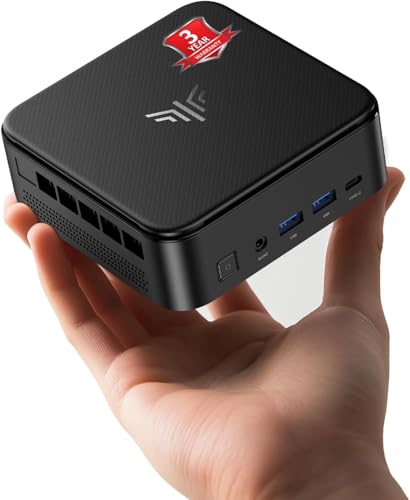
KAMRUI Mini PC Ryzen 7 7735HS 16GB
KAMRUI Hyper H1 Ryzen 7 6800H 32GB
KAMRUI E3B Mini PC Win 11 Pro R7 7730U
A Breakdown Of The Leading Choices
The ASUS Dual GeForce RTX 4070 OC Edition sits in a sweet spot for builders who want serious 1440p muscle without the bulk of a triple-slot flagship. At roughly 2.55 slots wide, it slips into most mid-towers and many small form factor cases where the GIGABYTE WINDFORCE card that follows would simply not fit. Owners get a 12GB GDDR6X frame buffer (GDDR6X is a faster, more power-efficient take on GDDR6) and factory overclocking that takes the sting out of leaving core clocks at stock.
ASUS wraps the board in IP5X dust-resistant fans and a 144-hour validation cycle meant to catch early-life failures before the box ships to you. For a buyer building around 4070 Super-Gaming Pcs ambitions, that extra burn-in period is genuine peace of mind, especially if you plan to run demanding titles for hours at a time.
What Makes Sense
- Slim 2.55-slot footprint fits compact mid-towers and many ITX-class cases
- IP5X-rated fans reduce dust buildup, a real plus if your PC runs long sessions
- Factory OC squeezes extra frames without manual tuning
- HDMI 2.1a and DisplayPort 1.4a outputs handle 4K120 displays cleanly
- Three-year warranty coverage from a major board partner
Trade Offs
- Two-fan cooling runs warmer than the triple-fan GIGABYTE alternative under sustained load
- No metal backplate on every Dual variant, so card sag is worth watching with a heavy cooler
Feature Snapshot
Right Fit For
Mid-tower builders and small-case enthusiasts who want a quiet, compact RTX 4070 that still overclocks out of the box.
Look Elsewhere When
Thermals matter more than footprint: the GIGABYTE GeForce RTX 4070 WINDFORCE OC 12G’s triple-fan layout manages heat more comfortably in warm rooms.
The GIGABYTE GeForce RTX 4070 WINDFORCE OC 12G takes a different route, leaning hard on airflow rather than minimalism. Three WINDFORCE fans pull heat off a 12GB GDDR6X pool across a 192-bit memory bus, which keeps VRAM (video memory) speeds high under load. The bundled anti-sag bracket is a small thing, but a card this long in a tall mid-tower benefits from it.
Where the ASUS Dual feels at home in tight cases, the GIGABYTE shines in larger towers with good front-to-back airflow. RGB Fusion lighting and Dual BIOS let you tune for quiet operation or max throughput without rebooting into a UEFI every time. For 4070 Super-Gaming Pcs setups that run hot during marathon sessions, the WINDFORCE layout is the more thermally generous pick.
Everyday Advantages
- Triple-fan WINDFORCE cooler sustains lower temps over long play
- Metal backplate adds rigidity and helps dissipate VRM (voltage regulator module) heat
- Dual BIOS toggle for silent or performance profiles
- Anti-sag bracket protects the PCIe slot in heavy coolers
Points To Note
- Longer three-fan design needs at least a mid-tower with breathing room
- RGB Fusion software is functional but lighter than mainstream alternatives
Best Suited To
Gamers who run demanding titles for hours and value sustained boost clocks over compact sizing.
Skip It When
Your case is a small form factor build: the ASUS Dual GeForce RTX 4070 OC Edition 12GB slots into tighter enclosures where this card simply will not fit.
The KAMRUI AM21 Mini PC lands on the upper end of what a tiny chassis can deliver. It pairs an AMD Ryzen 7 8745HS built on Zen 4 (AMD’s 2022-and-later CPU microarchitecture) with 16GB of DDR5 RAM and a 1TB NVMe SSD, which is generous storage for a mini PC. Eight cores and sixteen threads make short work of multi-app workflows, and the integrated graphics hold their own in lighter esports titles.
Where the ASUS and GIGABYTE GPUs need a full tower, the AM21 hides behind a monitor. Owners commonly treat it as a living-room console, a workstation tucked under a standing desk, or a streaming box. For shoppers building 4070 Super-Gaming Pcs-flavored rigs in a tiny footprint, this is the most future-leaning of the KAMRUI lineup.
Strong Points
- Ryzen 7 8745HS delivers eight-core throughput in a small enclosure
- DDR5 RAM handles modern games and creative apps without bottlenecking
- 1TB NVMe storage eliminates the need for an immediate drive upgrade
- Compact footprint fits behind monitors or on crowded desks
Honest Caveats
- Integrated graphics cap AAA performance well below the discrete ASUS or GIGABYTE RTX 4070 cards
- Compact cases can trap heat during extended rendering or gaming sessions
Feature Card
Made For
Shoppers who want strong CPU and memory performance in a mini PC that disappears behind a monitor, with gaming handled at modest settings.
Reach For A Different Pick When
Raw GPU horsepower matters more: the KAMRUI Hyper H1’s 32GB RAM makes heavy multitasking smoother, while the ASUS Dual RTX 4070 delivers dedicated graphics for serious gaming.
The KAMRUI E3B Mini PC is the friendliest of the bunch for anyone who treats their PC as a productivity machine first and a gaming rig second. A six-core AMD Ryzen 5 7530U (Zen 3) handles documents, browsers, and 4K streaming with headroom to spare. The 16GB of LPDDR4X and 512GB SSD make this a complete, ready-to-go setup rather than a kit that needs extra purchases.
For 4070 Super-Gaming Pcs-curious shoppers watching their budget, the E3B shows the realistic ceiling of integrated graphics. You can still enjoy older esports titles and light indie work, but demanding AAA games will push the integrated GPU. Treat it as the dorm room, kitchen counter, or home office pick of the lineup.
Notable Upsides
- Six-core Ryzen 5 7530U covers typical workloads easily
- 16GB RAM is sufficient for productivity and light creative work
- Compact form factor tucks behind monitors or mounts via VESA
Room For Improvement
- Integrated graphics limit modern gaming at high settings
- 512GB storage fills quickly on game-heavy libraries
- LPDDR4X is soldered, so memory upgrades later are not an option
Right Fit For
Everyday users who want a quiet, space-saving PC for office work, browsing, and light entertainment rather than dedicated gaming.
Consider Something Else When
You want more headroom for multitasking: the KAMRUI AM21’s DDR5 memory and 1TB NVMe make a clear step up for heavier use.
The KAMRUI Mini PC with Ryzen 7 7735HS strikes a sensible middle ground between the value-oriented E3B and the higher-clocked AM21. Zen 4 architecture (AMD’s current CPU design) feeds eight cores and sixteen threads up to 4.75GHz, paired with 16GB of LPDDR5 RAM. The faster memory standard helps when running modern creative software, even if the storage caps out at 512GB.
For shoppers eyeing 4070 Super-Gaming Pcs builds but preferring a single-box solution, this KAMRUI runs cooler than the AM21 under sustained load and sips less power at idle. It is a comfortable pick for a hybrid work-and-play desk where heavy AAA gaming happens elsewhere.
The Upside
- Ryzen 7 7735HS balances multi-thread speed and power efficiency
- LPDDR5 RAM keeps responsiveness high across many open apps
- Quieter thermals than higher-clocked mini PCs in similar enclosures
Worth Bearing In Mind
- 512GB storage may need supplementing for large game libraries
- No dedicated GPU means AAA gaming leans on integrated graphics
Spec Overview
Perfect Match For
Hybrid work-and-play users who want a quiet mini PC that handles modern apps smoothly without a dedicated graphics card.
Swap It Out When
Storage and gaming headroom matter: the KAMRUI Hyper H1 doubles the RAM to 32GB and ships a 1TB SSD for heavier multitasking.
The KAMRUI Hyper H1 Mini Gaming PC leans into “no compromises inside a small box.” A Ryzen 7 6800H handles eight cores and sixteen threads, paired with a generous 32GB of LPDDR5 RAM at 6400MT/s. The 1TB M.2 NVMe PCIe 3.0 x4 SSD boots Windows quickly and gives creators room to keep working sets local.
For 4070 Super-Gaming Pcs-flavored setups where a full tower is unwanted, the Hyper H1 takes the most memory and storage the KAMRUI lineup offers in mini form. Owners commonly report it staying cool enough for sustained rendering sessions, even with the lid on. The honest read is that it sits right at the upper limit of what integrated graphics can comfortably drive in 2026.
Reasons It Performs
- 32GB LPDDR5 RAM at 6400MT/s handles heavy multitasking and creative apps
- 1TB NVMe storage removes the need for early upgrades
- Ryzen 7 6800H sustains boost clocks under long workloads
- Gaming-oriented chassis design with improved airflow
Some Limits To Know
- Relies on integrated Radeon graphics, no dedicated GPU
- PCIe 3.0 SSD is fast, but not the latest PCIe 4.0 standard
Best Suited To
Multitaskers and content creators who need lots of RAM and storage in a mini PC and rarely push high-fidelity AAA gaming.
Not Your Match When
You want a real GPU on board: the GIGABYTE GeForce RTX 4070 WINDFORCE OC 12G brings dedicated graphics for serious 1440p play in a traditional tower.
The KAMRUI E3B Mini PC with Windows 11 Pro and the Ryzen 7 7730U closes the roundup on a work-first note. Zen 3 architecture drives eight cores and sixteen threads up to 4.5GHz, while 16GB of RAM and a 512GB SSD keep the OS responsive out of the box. The 7nm TSMC process keeps thermals modest, which matters when the unit sits inside a closed cabinet.
You may find this is the most office-ready KAMRUI in the lineup, especially with Windows 11 Pro enabling BitLocker and remote desktop features. For 4070 Super-Gaming Pcs-curious shoppers who actually split time between spreadsheets and indie games, the practical fit is hard to argue with.
What Helps Most
- Windows 11 Pro enables business features like BitLocker and remote desktop
- Ryzen 7 7730U handles multi-app office work comfortably
- Low 15W TDP (thermal design power) keeps the chassis cool and quiet
Factors To Consider
- Integrated graphics limit high-fidelity gaming
- 512GB storage may fill quickly with project files
Key Product Details
Whose Shelf It Belongs On
Home office and small business shoppers who want a quiet, low-power mini PC with Windows 11 Pro pre-installed.
Another Choice May Suit
You need a real GPU for serious 4070 Super-Gaming Pcs performance: the ASUS Dual GeForce RTX 4070 OC Edition is the entry point for dedicated graphics in this list.
Choosing Between GPUs And Mini PCs For 4070 Super-Gaming Pcs Builds
Match Form Factor To Your Desk
Full-size RTX 4070 cards like the ASUS Dual and the GIGABYTE WINDFORCE deliver true 1440p gaming muscle but require a tower with adequate airflow and PCIe clearance. Mini PCs from KAMRUI trade dedicated graphics for a chassis that disappears behind a monitor. Decide whether raw frame rates or desk real estate matters more before comparing specs side by side.
Cooling And Thermals Matter More Than Core Counts
A triple-fan cooler like the GIGABYTE WINDFORCE pulls heat off VRAM (video memory) and VRMs (voltage regulator modules) more effectively than a dual-fan design. Mini PCs with 7nm or smaller Ryzen chips run cooler but still benefit from open-air placement rather than enclosed shelving. If you game in a warm room, plan airflow first and the rest follows.
RAM And Storage Define Day-To-Day Feel
For mini PCs, 16GB is the comfortable floor for productivity and light creative work, while 32GB like the KAMRUI Hyper H1 is the right call for serious multitasking. NVMe SSDs across the KAMRUI lineup keep boot times short, but 512GB fills quickly for game-heavy users. A discrete GPU build typically needs more headroom on the GPU side than the storage side.
When To Spend More
Stepping up to a higher-clocked Ryzen like the 7735HS or 8745HS gains you faster multi-thread performance and better futureproofing for apps that scale with cores. For GPUs, the move from a Dual to a triple-fan WINDFORCE pays off most in warm rooms and long sessions, while adding factory overclocking trims a few percentage points of frame time without any effort on your part.
Key Considerations Across These Picks
Common Shopping Slip Ups
It is easy to assume a mini PC with a Ryzen 7 can match a desktop RTX 4070 in games, since the numbers look similar on a spec sheet. In practice, integrated graphics cap frame rates well below dedicated cards. Buyers also tend to overlook case clearance for triple-fan GPUs, only to discover the WINDFORCE card does not fit their preferred case after it arrives.
Where The Extra Money Goes
A premium GPU like the GIGABYTE WINDFORCE spends the extra money on better cooling, a metal backplate, and dual-BIOS flexibility that extend component life under heat stress. Higher-tier mini PCs like the KAMRUI Hyper H1 pay for doubled RAM, faster NVMe, and a chassis designed for sustained loads. The upgrade is worth it when you run demanding software daily rather than occasionally.
Frequently Asked Questions
Are RTX 4070 cards still good for 1440p gaming in 2026?
Yes, the RTX 4070 remains a strong 1440p card in 2026, especially with DLSS 3 (NVIDIA’s AI-driven frame generation technology) enabled in supported titles. Both the ASUS Dual and GIGABYTE WINDFORCE variants handle modern games at high settings without breaking a sweat.
Do mini PCs need a dedicated GPU for serious gaming?
For AAA titles at high settings, yes. Integrated graphics on the Ryzen 7 chips in the KAMRUI lineup are fine for esports and indie games, but heavy 3D work still benefits from a discrete GPU like the ASUS Dual or GIGABYTE WINDFORCE.
How important is DDR5 over LPDDR4X in a mini PC?
DDR5 and LPDDR5 deliver higher bandwidth (data transfer capacity) than LPDDR4X, which matters when running many apps at once or working with large files. For most productivity tasks the difference is subtle, but creative workflows feel snappier on DDR5-equipped models like the KAMRUI AM21.
What size case fits a triple-fan RTX 4070?
Triple-fan cards like the GIGABYTE WINDFORCE typically need at least a mid-tower with three expansion slots of clearance. Dual-fan cards such as the ASUS Dual fit into more compact mid-towers and some SFX-style enclosures.
Is Windows 11 Pro worth it on a mini PC?
Windows 11 Pro adds BitLocker encryption, remote desktop, and group policy tools that home users rarely need but office setups often require. For dedicated home use, the standard Windows 11 Home license is usually enough.
The Takeaway
Whether you want the dedicated GPU muscle of the ASUS Dual and GIGABYTE WINDFORCE or the tidy desk footprint of the KAMRUI mini PCs, the right pick comes down to where the machine lives and what you play most. Match form factor to your space, then weigh cooling, RAM, and storage against the games and apps you actually run. A thoughtful choice here pays off every time you sit down to play.


