


Shopping for a 3080-class build in 2026 usually means deciding whether to grab a discrete RTX 3080 card for an existing rig or pick up a prebuilt that already houses one. Either path works, but the trade-offs differ: a standalone GPU drops into a system you control, while a prebuilt hands you a tuned, ready-to-run machine. This lineup mixes both angles, so you can match hardware to your comfort level without overspending on parts you’ll never use.
A Snapshot Of The Selections

Skytech Gaming Edge Gaming PC (RTX 5050)

EVGA RTX 3080 FTW3 Ultra 12GB LHR

ASUS TUF Gaming RTX 3080 OC 10GB

Lenovo Legion Tower 5i (RTX 5070 Ti)
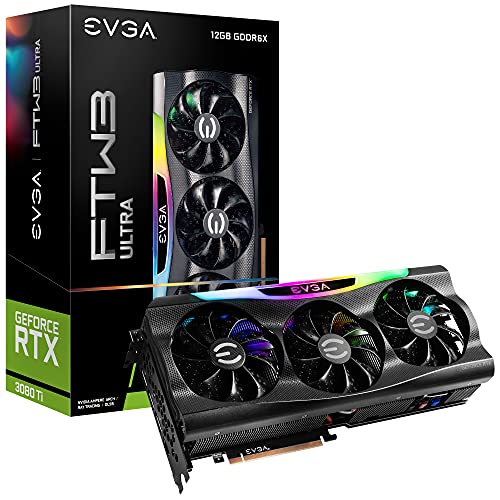
EVGA RTX 3080 Ti FTW3 Ultra 12GB
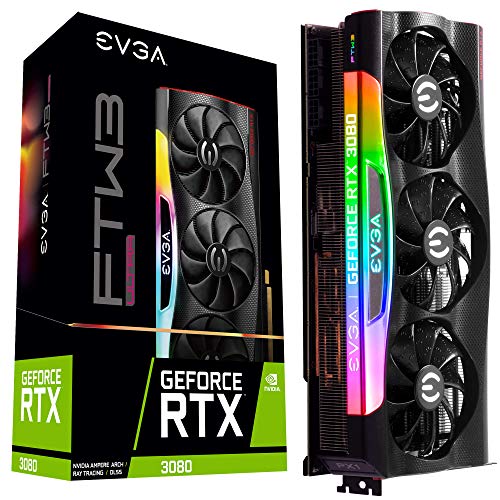
EVGA RTX 3080 FTW3 Ultra 10GB
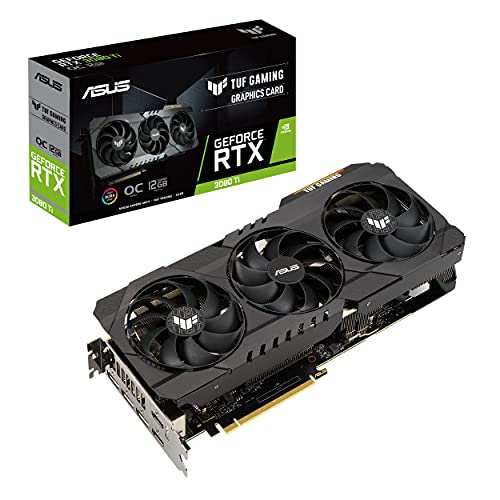
ASUS TUF Gaming RTX 3080 Ti OC 12GB

EVGA RTX 3080 FTW3 Ultra 10GB LHR
A Deeper Look At The Lineup
The Skytech Gaming Edge skips the 3080 entirely and instead pairs an AMD Ryzen 5 5500 with an RTX 5050, so it earns a place on this list for shoppers who want a turnkey prebuilt but don’t need flagship horsepower. A 1TB NVMe boot drive keeps load times snappy, while 16GB of DDR4 at 3200MT/s handles everyday multitasking without choking. The 650W Gold-rated PSU (a power supply unit with 80 Plus Gold efficiency certification) leaves modest headroom for a future GPU upgrade, which is a quiet perk in this segment.
For anyone stepping into PC gaming for the first time, the bundled Windows 11 install and included Wi-Fi remove the usual setup friction. Just plug in a monitor, sign in, and you’re playing.
Useful Highlights
- Ryzen 5 5500 turbos up to 4.2GHz, plenty for esports and mainstream titles
- 1TB NVMe storage means you skip the slow mechanical drive of older prebuilts
- 650W Gold PSU (a power supply with 80 Plus Gold efficiency, meaning less wasted energy as heat) gives breathing room for a future card swap
- Windows 11 preinstalled with no extra bloatware to uninstall on day one
Things To Consider
- Carries an RTX 5050, not a true 3080, so raw ray-tracing (a rendering technique that simulates realistic lighting) muscle is lower than the rest of this list
- The case is compact, so aftermarket GPU upgrades may need length verification
- 16GB of RAM is the modern minimum, meaning background apps can compete for memory during heavy sessions
Spec Overview
Right Fit For
First-time builders who want a plug-and-play PC with a modern GPU and clean Windows install out of the box.
Skip It When
The ASUS TUF Gaming RTX 3080 OC Edition suits you better if your priority is dropping a genuine 3080 into an existing rig.
EVGA’s 12GB FTW3 Ultra is the version of the 3080 most people wish had launched first. The 12GB GDDR6X frame buffer (high-speed video memory dedicated to rendering tasks) gives you breathing room for texture-heavy games at 4K, and the iCX3 sensor array (EVGA’s onboard thermal monitoring system) keeps the triple-fan cooler honest during marathon sessions. Real Boost clocks land at 1800MHz, which for most builds translates to steady frame rates without manual tuning.
The LHR chip (Lite Hash Rate, a limiter that reduces cryptocurrency-mining efficiency) won’t matter for gaming, but you may find second-hand pricing on non-LHR cards slightly more volatile. For pure play, this card focuses on doing one thing well.
Advantages To Know
- 12GB GDDR6X is the largest memory tier in the 3080 family, future-proofing against demanding titles
- iCX3 thermal sensors react to workload shifts faster than basic board designs
- Real Boost clock of 1800MHz leaves little room left for overclocking gains (pushing the GPU beyond factory speeds)
- All-metal backplate adds rigidity and helps passive heat dissipation
Honest Caveats
- Triple-fan cooler is long, so shorter mid-tower cases may need measurement checks
- EVGA exited the GPU market, so warranty support now runs through limited channels
- Power draw is meaningful, meaning your PSU should be 750W or higher for safe operation
Made For
Gamers pushing 4K resolution or running heavily modded titles where 12GB of VRAM (video RAM, the memory dedicated to graphics processing) actually gets used.
Another Choice May Suit
The EVGA RTX 3080 FTW3 Ultra 10GB is the smarter pick if you mainly game at 1440p and want the same cooler design at a lower entry point.
The TUF Gaming 3080 OC leans hard into longevity. Its all-metal shroud (the external casing that channels airflow over internal components) wraps three axial-tech fans (fans with a smaller hub and longer blades for focused downward airflow) running on dual ball bearings, which ASUS rates for far longer service life than sleeve-bearing alternatives. The stop mode that halts all fans at low temperatures is a small touch, but it means the card runs silent during desktop work and only spins up when gaming.
For a system that sees daily four-hour sessions, the thermal headroom here is meaningful. Independent heatsinks for GPU and memory keep VRM (voltage regulator module) components cooler, which is where most long-term wear concentrates.
Everyday Wins
- Dual ball fan bearings outlast sleeve-bearing fans in high-heat conditions
- Stop mode delivers true silence during browsing and productivity work
- HDMI 2.1 and DisplayPort 1.4a outputs handle 4K at high refresh without adapters
- PCIe 4.0 interface (the slot standard that doubles bandwidth over PCIe 3.0) maximizes compatible platform throughput
Worth Noting
- 10GB of VRAM is fine for most games but tight for heavily modded 4K titles
- Card is thick, so smaller cases with strict clearance limits may need spacing checks
Best Suited To
Builders who keep systems for years and prioritize thermal durability over peak memory capacity.
Look Elsewhere When
The EVGA RTX 3080 Ti FTW3 Ultra 12GB makes more sense for you if you want 12GB of VRAM and a different cooler philosophy.
The Legion Tower 5i is the only entry here that steps off the 3080 platform entirely, which is intentional. Pairing an Intel Core Ultra 7 265F with an RTX 5070 Ti means newer DLSS 4 frame generation and AI-driven upscaling (techniques that use neural networks to reconstruct higher-resolution images from lower-resolution input) rather than the older 3080 pipeline. The trade-off is stepping away from Ampere architecture (NVIDIA’s previous-generation GPU design), but gaining several generations of efficiency and feature support in return.
Legion Coldfront cooling handles the higher power envelope (the total wattage a system pulls under load) without sounding like a hair dryer. With 32GB of memory and a 1TB drive, this tower is ready for streaming and creative workloads on day one.
Where It Helps
- Intel Core Ultra 7 265F handles modern titles with headroom for productivity and streaming
- RTX 5070 Ti supports current-generation DLSS features unavailable on 3080 cards
- 32GB of memory removes the bottleneck when running Discord, browser tabs, and a game simultaneously
- Legion Coldfront cooling balances thermals and noise under sustained load
Trade Offs
- Not a true 3080 build, so this entry deviates from the rest of the list for shoppers committed to Ampere silicon
- Prebuilt form factor means component swaps require checking Lenovo’s case clearance specs
- Newer platform commands a higher price than older 3080 prebuilts still in circulation
Feature Snapshot
Whose Shelf It Belongs On
Streamers, content creators, and shoppers who want a modern prebuilt with AI-powered graphics features instead of an older flagship card.
Not Your Match When
The EVGA RTX 3080 Ti FTW3 Ultra is a better fit if you specifically want a high-tier 3080 card for an existing build.
The 3080 Ti is where the 3080 family stops being “very fast” and starts being “genuinely excessive.” EVGA’s FTW3 Ultra variant layers its iCX3 cooling and metal backplate over the 12GB GDDR6X frame buffer, with the same 1800MHz real boost clock the 12GB non-Ti offers. In practice, the Ti delivers higher sustained frame rates at 1440p, especially when ray tracing is enabled.
For shoppers who want the fastest traditional 3080-tier card on the market, this is the apex before jumping to a 3090. The trade-off is power draw, so budget for a quality PSU.
Positive Takeaways
- 3080 Ti silicon delivers the highest frame rates in the 3080 family
- 12GB GDDR6X buffer handles 4K textures without compromise
- iCX3 cooling keeps boost clocks stable during long sessions
- 7680 x 4320 digital max resolution supports 8K display output for future monitors
Small Caveats
- Power draw is higher than the standard 3080, so a 750W+ PSU is necessary
- EVGA has exited the GPU business, which complicates warranty claims
Perfect Match For
Gamers running 1440p at high refresh rates who want the strongest 3080-tier card before stepping to flagship territory.
A Better Fit Elsewhere
The ASUS TUF Gaming RTX 3080 OC 10GB is the right call if you don’t need Ti-level power and prefer a more serviceable warranty path.
Among 10GB 3080 cards, EVGA’s FTW3 Ultra stands out for thermal design. The triple HDB fans (hydro dynamic bearing fans, which use fluid film to reduce friction and extend lifespan) are quieter than sleeve-bearing alternatives, and the all-metal backplate doubles as passive heat dissipation for the memory modules on the rear. The 1800MHz real boost clock matches its bigger siblings, so the only real difference here is the 10GB frame buffer instead of 12GB.
For most 1440p builds, 10GB is plenty. The cooling focus is the real story.
Useful Strengths
- Triple HDB fans run quieter and last longer than standard sleeve-bearing fans
- All-metal backplate helps dissipate memory heat passively
- Real Boost clock of 1800MHz matches higher-tier EVGA models
- 7680 x 4320 max resolution supports future 8K monitor upgrades
Factors To Consider
- 10GB frame buffer is tighter than the 12GB FTW3, which can matter in mod-heavy 4K titles
- EVGA’s GPU warranty support is now limited after their market exit
- Long triple-fan cooler needs case clearance checks before installation
Key Product Details
Right Fit For
1440p gamers who want strong cooling and quiet operation without paying the 12GB premium.
Swap It Out When
The ASUS TUF Gaming RTX 3080 Ti OC is a smarter pick if you want a longer warranty window and military-grade component certification.
The TUF 3080 Ti OC is what happens when ASUS takes its durability-first philosophy and pairs it with the most powerful 3080-tier silicon. The MaxContact heatsink (a precision-machined baseplate that makes fuller contact with the GPU die for better heat transfer) and three axial-tech fans push thermals lower than the standard 3080, while military-grade capacitors target long-term reliability over raw benchmark glory. The 19Gbps memory speed keeps the 12GB buffer fed without bottlenecking.
For builders planning a five-year ownership cycle, the component quality is the main draw.
Standout Benefits
- Military-grade capacitors resist heat degradation better than standard components
- MaxContact heatsink improves thermal transfer from the GPU die to the cooler
- Memory speed of 19Gbps keeps the 12GB buffer well-fed at high resolutions
- 7680 x 4320 max resolution output supports 8K display use cases
- Three-year warranty is more meaningful when the manufacturer still actively supports the product
Points To Note
- High power draw requires a robust 750W+ PSU for stable operation
- Physical size is substantial, so compact cases will need measurement verification
Built With In Mind
Builders who want a long-service-life 3080 Ti and value component quality over peak clock speed.
Where A Sibling Pick Shines
The EVGA RTX 3080 Ti FTW3 Ultra 12GB is a better match if you prefer EVGA’s iCX3 cooling approach and don’t need ASUS’s warranty window.
Functionally identical to the non-LHR 10GB FTW3 Ultra, this variant adds the Lite Hash Rate limiter that NVIDIA introduced to discourage crypto mining. For gamers, LHR is a non-issue: it doesn’t affect frame rates, ray tracing, or any real-world play. The 1800MHz real boost clock, triple HDB fans, and metal backplate match the standard card’s spec sheet.
The honest read is that the LHR version often sells for less than the non-LHR counterpart, which can make it the better value if you find one in stock.
Noteworthy Benefits
- LHR limiter has zero impact on gaming performance, only mining throughput
- Often priced lower than non-LHR equivalents for similar gaming output
- Triple HDB fans deliver the same quiet cooling as the standard FTW3
- All-metal backplate handles memory thermals passively
Less-Strong Areas
- 10GB VRAM is limiting for 4K mod-heavy titles compared to 12GB siblings
- EVGA’s exit from the GPU market means warranty support is now limited
- Availability can be inconsistent, depending on retailer stock
Who Should Grab It
Gamers who find a discounted LHR card and want the same FTW3 cooling without paying a premium over the non-LHR version.
Reach For A Different Pick When
The ASUS TUF Gaming RTX 3080 Ti OC suits you better if you want a 12GB buffer and an active manufacturer warranty.
Choosing The Right 3080 Gaming PC: What Actually Matters
VRAM Capacity And Resolution Targets
The 3080 family splits into 10GB and 12GB tiers, and that gap matters more than the spec sheets suggest. At 1080p, 10GB is comfortable for nearly every current title. At 1440p, you’ll rarely feel the difference unless you load heavy texture mods. At 4K, the 12GB cards pull ahead because modern games routinely push past 8GB of frame buffer use, and the extra headroom prevents the stuttering that comes from constant texture streaming.
If your monitor is 1440p or smaller, the 10GB cards on this list will satisfy you for years. If you’re eyeing 4K or planning to keep the card through a future monitor upgrade, lean toward the 12GB options.
Cooler Design And Sustained Performance
A GPU’s boost clock (the speed the chip automatically ramps up to when thermals allow) is only as good as its cooling. Cards like the EVGA FTW3 Ultra and ASUS TUF Gaming variants use multiple fans with quality bearings, and that translates directly into how long the card can hold its peak speed during a four-hour session. Cheaper coolers throttle (intentionally reduce clock speed to prevent overheating) earlier, and the performance drop is visible in frame time graphs even when average FPS looks fine.
For systems that run hot or sit in warm rooms, cooler quality matters more than factory overclocking.
PSU Headroom And Case Fit
Every 3080-tier card in this list draws meaningful power under load. A 650W PSU is the absolute minimum, and a 750W unit is the realistic target. Skimping on the power supply leads to shutdowns under spike loads (sudden brief power surges the GPU draws when a demanding scene starts rendering), which are notoriously hard to diagnose. Case fit is the other half: triple-fan cards are long, and some mid-towers simply don’t have the clearance.
Prebuilt Versus Standalone GPU
If you already own a capable system, dropping in a 3080 card is the most cost-effective path. If your existing PC is aging or you’re building from scratch, a prebuilt like the Lenovo Legion Tower 5i or Skytech Edge removes compatibility guesswork. The trade-off is paying a small premium for assembly and warranty, but you skip the chance of a DOA component (dead on arrival, meaning the part failed immediately out of the box).
Key Considerations Across These Picks
Pitfalls Shoppers Hit
The most common mistake is buying a 3080 card without checking the PSU wattage. These cards draw 320W+ under gaming load, and a 550W supply will either throttle the card or trigger shutdowns. The second pitfall is ignoring case length. Triple-fan 3080 cards are physically massive, and “will it fit” is a real question for compact mid-towers. Measure twice.
What Separates Premium From Basic
The price gap between a base 3080 and a 3080 Ti is mostly silicon quality, memory bandwidth (the speed at which data moves between the GPU and its VRAM), and binning (the manufacturer’s process of selecting chips that meet higher performance thresholds). Premium models also tend to use better VRM designs, which matter less for stock gaming and more for sustained loads and overclocking. If you don’t tweak clocks, the premium tier’s gains come from cooler thermals and quieter fans, both of which are real but not transformative.
Frequently Asked Questions
Is A 3080 Still Worth Buying In 2026?
For 1440p gaming, a 3080 still delivers strong frame rates in nearly every modern title. The 12GB variants hold up well at 4K, especially with DLSS enabled. If you’re coming from a 10-series or older card, the jump is substantial.
What’s The Difference Between LHR And Non-LHR 3080 Cards?
LHR (Lite Hash Rate) limits cryptocurrency mining efficiency but has no effect on gaming performance. For gaming purposes, the two are functionally identical, and LHR cards often sell for less.
Do I Need A 750W PSU For A 3080?
A 650W PSU will run most 3080 cards, but 750W gives you more headroom and reduces the risk of shutdowns during power spikes. If you’re using a 3080 Ti, 750W is the practical minimum.
Can A 3080 Handle 4K Gaming?
Yes, especially the 12GB variants. With DLSS enabled, most modern games run smoothly at 4K on a 12GB 3080, though you may need to tune some settings in the most demanding titles.
Should I Buy A Prebuilt Or A Standalone GPU?
A standalone GPU is more cost-effective if your existing system is capable. A prebuilt makes more sense if you’re building from scratch, want a warranty on the whole system, or don’t want to handle assembly yourself.
Bottom Line
A 3080-tier build in 2026 still has plenty of life left, especially the 12GB variants that hold up at higher resolutions. Match the card to your monitor first, your case second, and your PSU third. The prebuilt path makes sense if you want everything handled in one transaction, while standalone cards reward shoppers who already own a compatible system and want maximum control over the parts list.


