


A 180Hz QHD display hits a sweet spot that plenty of PC players chase: motion stays smooth enough for competitive shooters, while the 2560×1440 panel keeps textures and HUD text crisp without dragging a mid-range GPU to its knees. The category has quietly expanded through 2025, with new Fast IPS and TN options pushing response times lower and stand ergonomics getting genuinely useful.
You’ll see everything from compact 24-inch panels for tight desks, to curved 27-inch screens built for immersion, to flat 27-inch monitors tuned for esports. The picks below lean on what the manufacturers actually publish: refresh rate, panel type, response time, color coverage, and stand adjustability. Where one monitor overdelivers on speed but skimps on color, the trade-off is called out. Where another leans into a richer panel with slightly fewer hertz, that’s noted too. Use this list to match a screen to how you actually play, rather than chasing the biggest number on the box.
The Picks In Brief

KTC 25M2 Pro 400Hz Gaming Monitor, 24.5 Inch 360Hz Gaming Monitor 1080P

KTC 27 Inch Gaming Monitor 200Hz, 2K 1440P, H27T6 (White)

KTC 27 Inch 240Hz Gaming Monitor, 1080P Fast IPS, H27F7

KTC 27M1 27 Inch 200Hz oc 210Hz Monitor 1440P
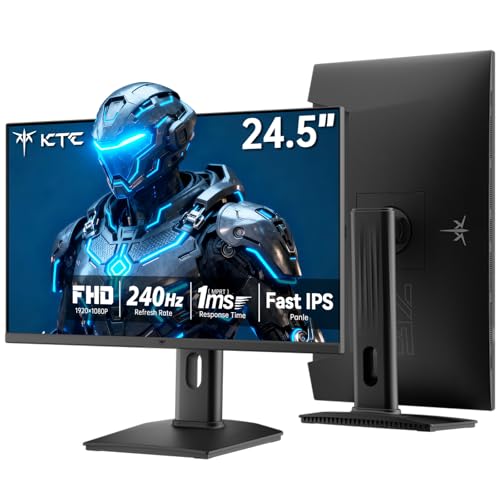
KTC 24.5 Inch 240Hz Gaming Monitor, FHD Fast IPS, H25T7-3

KTC 25M1 400Hz Fast TN 24.1 Inch FHD PC Monitor

KTC 24 Inch Gaming Monitor 180Hz 1440P, H24T7

SANSUI 27 Inch WQHD Curved Gaming Monitor 180Hz

KTC 27 Inch 240Hz FHD 1080p Fast IPS Gaming Monitor
A Breakdown Of The Leading Choices
Esports players chasing the lowest possible motion blur will find the KTC 25M2 Pro a familiar shape: a 24.5-inch Fast IPS panel pushing up to 400Hz, with Adaptive Sync to keep frames aligned and a 1ms GTG (gray-to-gray, meaning how fast one pixel shifts from one shade of gray to another) response that keeps the trails short. The smaller canvas also keeps pixel density tight at 1080p, which matters when your GPU can drive the high refresh without skipping a beat.
For most FPS mains, the practical upside is real: tracking a strafing opponent at 400Hz feels meaningfully smoother than at 240Hz, and the included shielding hood cuts glare during daytime sessions. The fully adjustable stand (tilt, swivel, pivot, height) and VESA compatibility make it easy to dial in a clean posture. Compared with the SANSUI curved pick later in the list, this one stays flat and focused, which is exactly what competitive play tends to want.
What It Does Well
- 400Hz ceiling with Adaptive Sync keeps motion fluid and tearing low in fast shooters
- 1ms GTG response time, useful for reducing visible ghosting during flick shots
- Shielding hood included, which helps in brightly lit rooms or near windows
- Full ergonomic stand with pivot, so portrait mode is a simple rotation away
- DAC (DisplayPort Alternate Mode) over USB-C simplifies a single-cable desk setup
Points To Keep In Mind
- 1080p resolution is sharp on a 24.5-inch panel but feels soft if you step down from 1440p
- To fully use 400Hz, your system needs a high-end GPU driving competitive titles
- Fast IPS delivers solid color, yet still trails TN panels on raw response at the extremes
Right Fit For
Competitive FPS players running a strong GPU on a 24-inch-class panel and willing to feed it the frames.
Skip It When
You’d rather have the extra pixel density of the KTC H24T7 (reviewed later), since that 1440p panel suits single-player and sim play more naturally.
The KTC H27T6 sits right in the middle of the category: a 27-inch Fast IPS panel at 2560×1440, a 200Hz native refresh that overclocks to 210Hz, and built-in speakers for setups where a separate pair isn’t on the desk. The 131% sRGB color coverage suggests reasonably vibrant out-of-box tones, which is helpful for anyone bouncing between games and photo editing.
You may find the white chassis a nice change from the usual black slabs, and the full tilt-swivel-pivot-height stand is a clear upgrade over fixed bases. Versus the KTC 25M2 Pro above, the trade-off is fewer hertz, but you gain real pixel density, which makes RPG menus, flight sims, and productivity work noticeably crisper. Adaptive Sync covers both FreeSync and G-Sync compatible modes, so a wide range of GPUs pair cleanly.
Everyday Wins
- 1440p resolution on a 27-inch panel hits the sweet spot of sharpness and GPU friendliness
- 210Hz overclock headroom over the 200Hz native refresh
- Built-in speakers keep your desk minimal if you don’t run external audio
- Full ergonomic stand including pivot, helpful for reading long documents
- 131% sRGB coverage supports content work between gaming sessions
Honest Caveats
- Built-in speakers are convenient but rarely replace a dedicated pair for music or shooters
- White finish shows dust more readily than a textured black bezel
Best Suited To
Mid-range PC players who want 1440p sharpness and smooth motion without giving up desk flexibility.
Look Elsewhere When
You prefer a 24-inch footprint; in that case, the KTC H24T7 1440p pick (Item 7) gives you similar resolution density on a smaller panel.
The H27F7 is a 27-inch Fast IPS panel that runs at 240Hz with 1ms MPRT (Moving Picture Response Time, a measurement of how long a pixel stays visible per frame), and Adaptive Sync rounds out the core motion package. At 1080p on a 27-inch screen, the pixel density is looser than the KTC H27T6 above, but the trade-off lets you push higher frame rates without upgrading your GPU.
For most home setups, the practical benefit is hitting 240Hz in popular competitive titles with a mid-range graphics card, rather than needing a flagship. The 131% sRGB coverage is a small bonus for casual content work. Tilt, pivot, and height adjustments are all there, plus VESA mounting if you’d rather use a third-party arm.
Everyday Perks
- 240Hz refresh is plenty fast for fast-paced shooters and MOBAs
- 1ms MPRT response helps motion stay clean during camera swings
- Adaptive Sync works across both FreeSync and G-Sync compatible setups
- 131% sRGB coverage keeps colors lively for general use
- Tilt, pivot, and height adjustments make finding a comfortable angle straightforward
Trade-Offs To Consider
- 1080p on a 27-inch screen leaves pixel density noticeably lower than 1440p peers
- No built-in speakers, so external audio or headphones are required
- Stand is functional but lacks swivel, so off-center viewing angles take more effort
Made For
Players with mid-tier GPUs who want a fluid 240Hz experience without paying for 1440p headroom.
Another Choice May Suit
Esports purists chasing 400Hz ceilings should look at the KTC 25M1 TN panel, which trades color depth for raw frame throughput.
The KTC 27M1 is the 1440p version of a feature-stacked gaming panel: 200Hz native (210Hz overclock), 1ms MPRT, a shielding hood, and dual 2W speakers baked in. With 130% sRGB color coverage on a Fast IPS panel, it leans toward vibrant tones for both games and casual creative work.
The bundled hood is a quieter feature, yet in a sunlit room it’s the difference between squinting and actually playing. The full tilt-swivel-pivot-height stand means the panel can be repositioned without a separate arm. Compared with the H27T6 above, this one shares the same resolution and refresh range but adds the hood, which is a real perk in bright environments.
What Stands Out
- Shielding hood included, useful for daytime gaming and reducing reflections
- 1440p at 200Hz native, with 210Hz available through overclock
- Dual 2W speakers keep your desk setup minimal
- 130% sRGB coverage delivers lively color out of the box
- Full adjustability including pivot, so portrait reads are easy
Some Limits To Know
- 2W speakers are convenient for system sounds but light for music or cinematic games
- The shielding hood adds bulk and needs desk depth to sit comfortably
- Fast IPS color is good, though professional photo work still benefits from a calibrated display
Key Advantages
Bright-room 1440p gaming with the practical extras (hood, speakers, full stand) built in rather than sold separately.
Consider Something Else When
You play mostly in a dim or controlled-light setup, where the hood becomes unnecessary; the KTC H27T6 (Item 2) is a more stripped-down 1440p alternative.
The H25T7-3 is built for tight desks and small footprints, packing a 24.5-inch Fast IPS panel with 240Hz refresh, 1ms MPRT, and HDR 400 support. 94% DCI-P3 coverage is unusually wide for this class, making it a sensible pick for anyone who games and edits on the same panel.
HDR 400 (the entry-level VESA HDR tier) won’t transform a darkened RPG into a sun-drenched blockbuster, but it does help highlights pop a touch, and the wider DCI-P3 gamut gives video content a slightly richer look. Versus the 27-inch 240Hz H27F7, the trade is screen real estate for pixel density; you may find the smaller canvas easier to scan during tense fights.
Practical Pluses
- 240Hz refresh keeps motion smooth for competitive play
- 94% DCI-P3 coverage supports richer color in games and video
- HDR 400 entry-tier support, a small boost for highlight detail
- 1ms MPRT response reduces visible motion trails
- 24.5-inch size fits comfortably on smaller desks and LAN tables
Worth Bearing In Mind
- 1080p resolution is the common compromise at this size and price tier
- Stand offers tilt, pivot, and height, but no swivel for off-angle adjustments
- Two HDMI ports plus DisplayPort cover most setups, though a USB-C input is absent
Who It Suits Best
Players with small desks or LAN-style setups who want vibrant color alongside a high refresh.
Reach For A Different Pick When
You’d rather step up to 1440p on a compact panel; the KTC H24T7 (Item 7) is the more pixel-dense 24-inch option.
The KTC 25M1 is the speed-first choice in the list, leaning on a Fast TN panel rather than IPS to chase 0.5ms GTG response and a 400Hz ceiling. TN (Twisted Nematic) panels are traditionally viewed as the fastest option for esports, with the trade-off being narrower viewing angles and more muted color than IPS peers. The 24.1-inch canvas keeps pixel density tight at 1080p.
For tournament-minded players, the practical reason to choose TN over the IPS KTC 25M2 Pro is reduced motion blur at the extremes, where every frame of latency compounds during long sessions. The shielding hood is included, and the full ergonomic stand supports a clean posture over multi-hour play. Just be aware that color and viewing angles don’t compete with the IPS options in this list.
A Strong Showing
- 400Hz refresh rate tuned for the most competitive esport titles
- 0.5ms GTG response, among the lowest numbers you can find on a consumer panel
- Adaptive Sync keeps tearing and stutter in check at high frame rates
- Shielding hood included to reduce glare during daytime play
- Full tilt, swivel, pivot, and height adjustments for ergonomic comfort
Soft Spots
- TN panel viewing angles are narrower than IPS, so off-center positions lose color fidelity
- Color and contrast are noticeably more muted than the Fast IPS peers in this list
Feature Snapshot
Who Will Love This
Esports athletes and ranking-focused FPS players who want the lowest possible motion blur, even at the cost of color richness.
Where A Sibling Pick Shines
Anyone who splits time between fast shooters and visually rich single-player games will get a more balanced experience from the KTC 25M2 Pro (Item 1) with its Fast IPS panel.
The H24T7 is a near-ideal pick for anyone who wants 1440p sharpness on a smaller desk footprint. The 24-inch Fast IPS panel runs at 180Hz native, with support up to 185Hz, Adaptive Sync, and HDR 400. Compared with the 27-inch 1440p KTCs earlier in the list, this panel offers noticeably higher pixel density, which makes text crisp and UI elements feel more compact.
For most productivity-leaning setups, the practical upside is fitting two windows side by side without a 32-inch panel. The tilt, pivot, and height adjustments are useful, and VESA mounting opens up third-party arm options. Color coverage isn’t fully published in the spec sheet, so you may want to check live photos before deciding if this matches your color needs.
Key Advantages
- 1440p resolution on a 24-inch panel delivers very tight pixel density
- 180Hz native refresh, with up to 185Hz available in supported modes
- Fast IPS panel keeps motion clean and colors reasonably vibrant
- Adaptive Sync compatible with FreeSync and G-Sync systems
- HDR 400 entry-level support adds a touch of highlight pop
Possible Compromises
- Smaller screen area than 27-inch peers, so multi-window multitasking is tighter
- Color coverage figures aren’t specified in the source data, leaving color work uncertain
Perfect Match For
Small-desk PC players who want 1440p clarity without the footprint of a 27-inch monitor.
A Better Fit Elsewhere
If you want more screen real estate to match that 1440p density, the KTC 27M1 (Item 4) is a step up in size while keeping 1440p resolution.
The SANSUI is the only curved entry in the list, with a 1500R curvature that pulls the edges of the screen closer to your peripheral vision. The 27-inch WQHD panel runs at 180Hz, with 1ms MPRT and FreeSync support. The 5000:1 contrast ratio is genuinely high for a VA-class panel, which makes dark scenes in RPGs and horror games feel weightier than typical IPS competitors.
Color coverage is specified at 90% DCI-P3 and 120% sRGB, alongside 300 nits of brightness and HDR support, which together give the panel a colorful but not eye-searing character. Crosshair, timer, and shadow booster utilities are built into the OSD (on-screen display menu), which is a nice touch for FPS players. The stand only supports tilt plus a Kensington lock, so VESA mounting is a useful add-on for serious ergonomics.
Good Reasons To Consider
- Curved 1500R panel enhances immersion in single-player and sim games
- 5000:1 contrast ratio delivers strong black depth for moody scenes
- 90% DCI-P3 and 120% sRGB coverage provide wide color for the category
- 180Hz refresh with 1ms MPRT keeps motion clean for casual competitive play
- Built-in OSD utilities (crosshair, timer, shadow booster) help during FPS sessions
A Few Limitations
- Stand is tilt-only, so VESA mounting is the path to swivel and height control
- 300 nits brightness is fine for typical rooms yet modest for sunlit setups
Quick Facts
Whose Shelf It Belongs On
Single-player, RPG, and sim players who value immersion and contrast over flat-panel speed.
Swap It Out When
Esports players chasing 240Hz or higher should consider the KTC 27F7 (Item 9), which prioritizes speed on a flat 27-inch panel.
This second KTC 27-inch 240Hz FHD panel, the H27F7 in a slightly different configuration, leans on HDR10 support and 350 nits of brightness to stand out from its sibling above. The combination of 131% sRGB color coverage, 97% DCI-P3, and a 1ms MPRT response makes it a sensible generalist panel for gaming, streaming, and casual photo or video work.
For most home setups, the practical benefit is a panel that handles bright HDR-adjacent content without feeling washed out, and 240Hz is enough for fast-paced genres. The stand is height, tilt, and pivot adjustable with VESA support, so positioning is easy. The trade-off remains 1080p on a 27-inch screen, which won’t suit pixel-density enthusiasts who prefer the 1440p picks earlier in the list.
Positive Takeaways
- 240Hz refresh covers competitive genres without pushing your GPU to extremes
- HDR10 support with 350 nits brightness, slightly above typical for the class
- 131% sRGB and 97% DCI-P3 coverage suit general creative work
- Height, tilt, and pivot adjustments for ergonomic positioning
- Adaptive Sync compatible with both FreeSync and G-Sync systems
Where It May Fall Short
- 1080p resolution on a 27-inch screen is the main spec compromise
- No built-in speakers, so audio needs separate hardware
At A Glance
Right Fit For
Gamers who want a brighter, HDR-friendly 240Hz FHD panel and don’t mind giving up 1440p resolution.
Not Your Match When
You want 1440p density on the same screen size; the KTC H27T6 (Item 2) is a closer match for 2560×1440 QHD play.
Picking The Right Panel For Your Setup
A 1440p 180Hz monitor is a meaningful upgrade over older 1080p 60Hz screens, but not every spec sheet serves every playstyle. Refresh rate, panel type, and resolution all pull in different directions, and understanding the trade-offs is what turns a good purchase into the right one.
Resolution Versus Refresh Rate
A 1440p panel packs about 78% more pixels than a 1080p screen, which gives text and UI elements a noticeably cleaner look. The catch is that your GPU has to push far more frames per second to feed a 180Hz or 240Hz refresh. Mid-range cards often handle 1080p at 240Hz comfortably but struggle to sustain those frame rates at 1440p in demanding titles. If your build leans toward a mid-tier GPU, the 1080p 240Hz options deliver smoother real-world motion than a 1440p screen that drops into the 80–100Hz range during busy scenes.
Panel Type And Response Time
IPS panels offer wide viewing angles and good color, while TN panels like the KTC 25M1 trade color richness for the lowest possible pixel response. VA panels, as seen on the SANSUI curved pick, sit between the two with strong contrast. Response time numbers come in two common flavors: GTG (gray-to-gray) and MPRT (Moving Picture Response Time). GTG measures pixel transition speed, while MPRT measures perceived blur. Lower numbers mean less visible smearing during camera movement.
Adaptive Sync And Compatibility
Adaptive Sync, including FreeSync and G-Sync compatible modes, synchronizes the monitor’s refresh with your GPU’s frame output to prevent tearing and stutter. Most of the panels in this list support both major standards, but for cleanest results, check that your graphics card matches the supported range of the specific monitor. Without Adaptive Sync, fast motion at 180Hz can still show minor tearing depending on your frame rate.
Size, Ergonomics, And Desk Space
A 24-inch panel keeps pixel density tight at 1440p, while a 27-inch screen offers more breathing room for productivity and open-world games. Curved 27-inch options pull the edges closer, helping with immersion in single-player titles. Adjustable stands (tilt, swivel, pivot, height) matter more than people expect, particularly if you spend long sessions at the desk. VESA mounting is the escape hatch when a stock stand feels limiting.
Key Considerations Across These Picks
Mistakes Worth Dodging
The most common slip in this category is chasing the highest refresh rate without checking whether your system can actually feed it. A 400Hz monitor running 200 frames per second in demanding games is wasted potential. A second trap is overlooking panel type: TN screens can feel flat and washed out for anyone who plays visually rich titles. Always check that the stand supports the adjustments you need, or budget for a third-party arm.
When Paying More Pays Off
Stepping up from a basic 1080p 240Hz panel to a 1440p 180Hz screen typically adds sharper text, wider color, and HDR support. For gamers who also edit photos or watch a lot of high-quality video, that extra clarity and color coverage justifies the price bump. The added shielding hoods, USB-C inputs, and full ergonomic stands on premium picks pay off across long sessions and bright rooms, where comfort and glare control matter more than the spec sheet suggests.
Frequently Asked Questions
Is 180Hz enough for competitive gaming?
For most players, 180Hz delivers a clearly smoother experience than 144Hz, especially in shooters and MOBAs. Only professional esports players tend to benefit meaningfully from pushing past 240Hz, and only on titles they play at elite level.
Can my GPU handle 1440p at 180Hz?
That depends entirely on the game and your graphics card. Mid-range cards often hit 180Hz at 1440p in competitive titles, but demanding AAA games may require lowering settings. Lowering resolution or using upscaling tools helps maintain high frame rates.
Do I need Adaptive Sync at 180Hz?
Yes, Adaptive Sync is genuinely useful at 180Hz and above because small frame drops become more noticeable. Without it, tearing can appear when frame rates dip below the refresh ceiling.
Is a curved 1440p monitor better for gaming?
Curved screens, like the SANSUI 1500R pick in this list, help with immersion in single-player and sim titles. For competitive FPS where every pixel needs to be read instantly, flat panels are usually preferred because the geometry stays consistent across the screen.
Should I prioritize 1440p or higher refresh rate?
Run your most-played games first. If your GPU already pushes 200+ FPS at 1080p in those titles, stepping up to 1440p is the cleaner upgrade. If 1440p drops your frame rate to uncomfortable levels, a high-refresh 1080p panel is the more practical pick.
Final Verdict
A 180Hz 1440p monitor is one of the easiest upgrades to feel immediately in everyday play, and the category now spans everything from compact TN speed demons to curved immersive panels. Match the resolution, refresh, and panel type to how you actually play, rather than chasing the biggest numbers. Whichever pick you land on, your eyes and frame times will both thank you.


