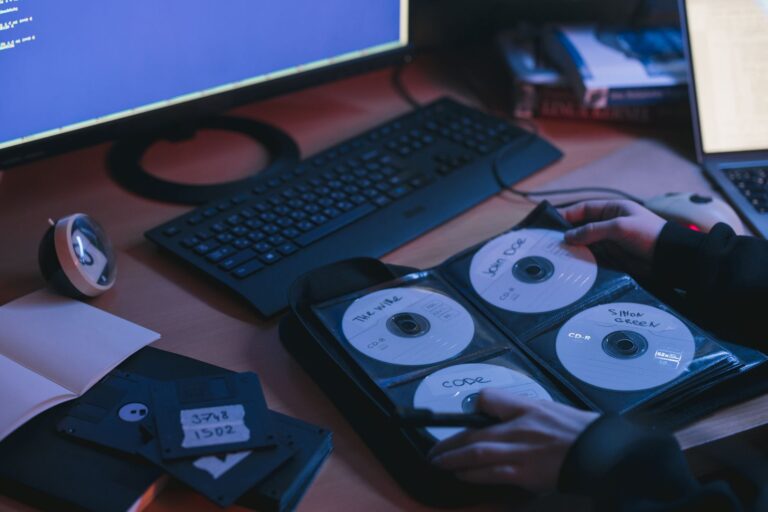
Each system is built to defend against a fundamentally different category of threat, which is the core distinction in the DRM vs anti-cheat comparison. DRM (Digital Rights Management) refers to software that enforces licensing and ownership rights on digital content like movies, music, ebooks, and games, while anti-cheat refers to software that enforces fairness in multiplayer matches by detecting cheats, hacks, and exploits. Both run quietly in the background, both can demand elevated system access, and both frustrate users when they fail, yet they solve fundamentally different problems.
This guide breaks down DRM and anti-cheat side by side, helping gamers, developers, and curious players understand why these two background systems are so often confused.
Two Systems Built to Solve Different Problems
Picture launching a new game: the launcher checks your purchase, a license server confirms ownership, and your system loads the executable. Within seconds, a second layer wakes up and starts scanning memory for tampered processes, injected DLLs, or suspicious input patterns. The first layer exists to make sure you paid. The second exists to make sure the opponent on the other end of the lobby paid and plays fair.
DRM focuses on piracy prevention by tying access to a verified license, a signed certificate, or a hardware fingerprint. Anti-cheat focuses on game integrity by detecting tools like aimbots, wallhacks, and memory editors. One protects creators from unauthorized copying and redistribution. The other protects players from unfair advantage. Conflating them is easy because both restrict how software runs on your machine, but the threat model behind each stays entirely separate.
Why the Confusion Happens
Both technologies police software behavior, both run invisibly, and both can crash a session when they misfire. A game that refuses to launch looks identical whether the license check failed or the anti-cheat driver did not initialize. Public forums amplify this by lumping the two under a single complaint bucket, which is why naming the exact layer matters when you read troubleshooting threads or platform policies.
What DRM Actually Does on Your Device
DRM enforces licensing rules by checking that your copy is legitimate before granting access. A license might allow three simultaneous devices, one offline playback every 72 hours, or a single install per account. To enforce those rules, DRM relies on encryption keys, license servers, certificate checks, and sometimes hardware-backed roots of trust like a TPM or secure enclave. The goal is straightforward: stop unauthorized copying and redistribution of copyrighted digital content.
Common implementations include Widevine for browser-based video, FairPlay inside Apple’s ecosystem, PlayReady on Windows and Xbox, and Steamworks for PC games. Denuvo shows up frequently on the Windows side, often wrapped around a game’s executable as an additional anti-tamper layer. None of these systems care whether you are a skilled player or a newcomer. They care only that your copy is legitimate, which is also where DRM piracy protection explained applies across publisher policies.
Failure Modes and User Friction
DRM failure almost always affects paying users. A license server outage can block thousands of legitimate owners at once. A region lock can prevent a purchased film from playing abroad. A hardware change can force a re-authorization flow that feels punitive. These failures have nothing to do with skill, fairness, or gameplay quality, and they play no role in stopping cheats.
DRM is a content-protection system. It does not detect aimbots, it does not scan for memory injection, and it does not care who wins the match.
How Anti-Cheat Differs in Purpose and Method
Anti-cheat detects cheating methods inside multiplayer and competitive environments. The threats it watches for include aimbots, wallhacks, ESP overlays, speed hacks, macro scripts, and memory injection through tools like Cheat Engines. To spot these, anti-cheat uses heuristic analysis, signature scanning, behavioral monitoring, and code integrity checks that look for tampered executables or loaded modules. Understanding how anti-cheat software works helps you see why it has to dig deeper than a simple license check ever would.
Notable systems include Valve Anti-Cheat (VAC), BattlEye, and Easy Anti-Cheat (EAC). Epic Online Services ships its own anti-cheat layer for Fortnite and affiliated titles. Ubisoft has integrated proprietary systems into several flagship games, including Rainbow Six Siege and older Ghost Recon titles. Where DRM asks “Did you pay?”, anti-cheat asks “Is this process behaving like a normal player?”
Where Anti-Cheat Is and Is Not Relevant
Anti-cheat is largely irrelevant to single-player content. A solo campaign has no opponents to protect from unfair advantage, so the engine overhead and false-positive risk of an anti-cheat driver offer no benefit. Conversely, DRM is irrelevant to gameplay integrity. A flawless license check does nothing to keep a wallhack out of a competitive lobby. Each system targets its own threat model and stays out of the other’s lane.
Side-by-Side Comparison of Core Mechanisms
Here is how the two stack up across the dimensions that actually matter when you are trying to tell them apart. A clean DRM anti-cheat comparison makes the split obvious at a glance.
| Dimension | DRM | Anti-Cheat |
|---|---|---|
| Primary threat | Piracy and unauthorized redistribution | Cheating and unfair advantage |
| What it watches | Licenses, decryption events, certificates | Memory, processes, input patterns, loaded modules |
| Privilege level | Often user-space; some use hardware roots of trust | Frequently kernel-level drivers |
| Failure impact | Blocks legitimate paying users | Disrupts competitive fairness and match integrity |
| Common examples | Widevine, FairPlay, PlayReady, Steamworks, Denuvo | BattlEye, Easy Anti-Cheat, VAC |
| Relevance offline | High for licensed content | Low to none in single-player |
The two systems diverge on almost every axis. The single point of overlap is privilege escalation: some anti-cheat solutions run as kernel-level drivers on Windows, which grants deep system access for tamper detection. This is the same kind of access that historically drew scrutiny toward DRM, and it explains why the privacy debate around competitive gaming mirrors the older debate around copy protection.
Where the Two Systems Overlap in Practice
Many AAA titles bundle both layers into the same executable. A game might ship with Denuvo wrapping the binary for anti-piracy, while Easy Anti-Cheat runs alongside it to police the multiplayer layer. From your seat as a player, both stay invisible until one of them misfires. A crash on launch could be a license check failing, a tampered executable being rejected, or a kernel-level driver failing to initialize. Diagnosing the culprit requires reading the error log, not guessing.
Kernel-level anti-cheat has drawn the same privacy scrutiny traditionally aimed at DRM. Because a driver running in ring 0 can theoretically inspect any process, security researchers and privacy advocates have raised concerns about data exposure, attack surface, and compatibility with other security tools. These concerns echo earlier criticism of DRM’s always-on phone-home behavior, even though the underlying purpose differs.
Reading Patch Notes and EULAs More Clearly
When a publisher updates BattlEye, they are tightening the anti-cheat layer. When they rotate certificate signing keys for Steamworks, they are refreshing the DRM layer. When a ban wave hits, it almost always traces back to anti-cheat telemetry, not DRM. Recognizing this boundary helps you parse security advisories, decide which risks you accept, and explain the distinction to non-technical friends without hand-waving.
Trade-offs, Limits, and Practical Takeaways
DRM trade-offs pit content protection against user convenience. Heavier obfuscation, more frequent online checks, and tighter device limits frustrate paying customers whenever a server hiccups or a hardware change triggers a re-auth flow. Anti-cheat trade-offs pit competitive integrity against privacy, false positives, and performance cost. A kernel-level driver consumes resources, can conflict with other security software, and occasionally bans innocent players whose system happened to look suspicious.
Neither system is a silver bullet. Determined attackers eventually find workarounds for both, whether through cracked executables, bypass tools, or hardware-level exploits. Cracked copies of Denuvo-protected titles typically appear within 7 to 14 days of launch for blockbuster releases, and private anti-cheat bypasses trade for hundreds to thousands of dollars on invite-only forums. The clearest next step is checking a specific title or platform to see which layers are actually active, then deciding which trade-offs fit your setup.
Check the launch logs before blaming the wrong layer. Anti-cheat errors usually name a driver or service, while DRM errors name a license, region, or activation code.
- Check the error code: License or activation errors point to DRM; driver or module errors point to anti-cheat.
- Read the platform’s status page: License server outages and anti-cheat outages are usually reported separately.
- Note the game mode: Anti-cheat only matters in multiplayer; solo campaigns rarely run it.
- Watch for kernel-level drivers: Services like BattlEye and EAC install system-level components, which is normal but worth knowing.
- Understand ban scope: VAC bans are game-specific, while platform-wide bans usually involve account-level enforcement beyond anti-cheat.
Final Word
DRM protects ownership of digital content, and anti-cheat protects fairness in competitive play. The two technologies often share a launch sequence and occasionally share a kernel, but they answer different questions. Once you can name which layer is at fault when a game refuses to start, you read patch notes, EULAs, and security advisories with far more clarity, and you make better decisions about which trade-offs fit your setup.
FAQ
What does DRM stand for and what is its purpose?
Short for Digital Rights Management, this technology enforces licensing rules on digital content such as movies, music, ebooks, and games. It checks that your copy is legitimate by validating encryption keys, license servers, certificates, or hardware fingerprints before granting access.
What is anti-cheat software and what does it protect against?
Battling cheats like aimbots, wallhacks, ESP overlays, speed hacks, and memory injection through tools such as Cheat Engine is the main job of this distinct class of security software. It uses heuristic analysis, signature scanning, behavioral monitoring, and code integrity checks to spot tampered processes.
Is anti-cheat the same as DRM?
No. Anti-cheat detects cheating methods inside multiplayer matches, while DRM enforces licensing rules for digital content. They share a background presence and sometimes share elevated system access, but they target entirely different threats and operate on different data.
Do anti-cheat systems use DRM technology?
Some anti-cheat solutions borrow anti-tamper techniques that resemble DRM, such as executable integrity checks or certificate validation. But the primary role of anti-cheat stays cheat detection, while DRM remains focused on licensing and piracy prevention. The two can share an executable without sharing a purpose.
What are the main differences between DRM and anti-cheat?
DRM guards licensing and ownership of digital content against piracy and unauthorized redistribution. Anti-cheat guards competitive multiplayer matches against cheats and unfair advantage. DRM usually runs in user-space with hardware roots of trust, while anti-cheat frequently relies on kernel-level drivers for deep memory inspection.
Which games and platforms use both DRM and anti-cheat together?
Many AAA PC titles combine both layers. Examples include Denuvo plus Easy Anti-Cheat, Denuvo plus BattlEye, and Steamworks DRM plus VAC. Fortnite ships with its own anti-cheat plus platform-level DRM through the Epic Games Store.