A 2007 life-cast side project, a 2011 rebrand, and a roughly 970 million dollar acquisition together turned a niche hobby into a daily habit for tens of millions of viewers. Justin Kan’s head-mounted camera, Emmett Shear’s pivot to a gaming-only site, Amazon’s 2014 purchase of Twitch, and cultural moments like Twitch Plays Pokémon in 2014 each pulled live gameplay into the mainstream.
This article covers the rise of live gaming broadcasts, tracing how a quirky 2007 life-casting experiment grew into today’s multi-billion-dollar streaming industry and what that evolution means for curious newcomers, aspiring streamers, and longtime fans.
The Origins of Game Streaming as a Niche Experiment
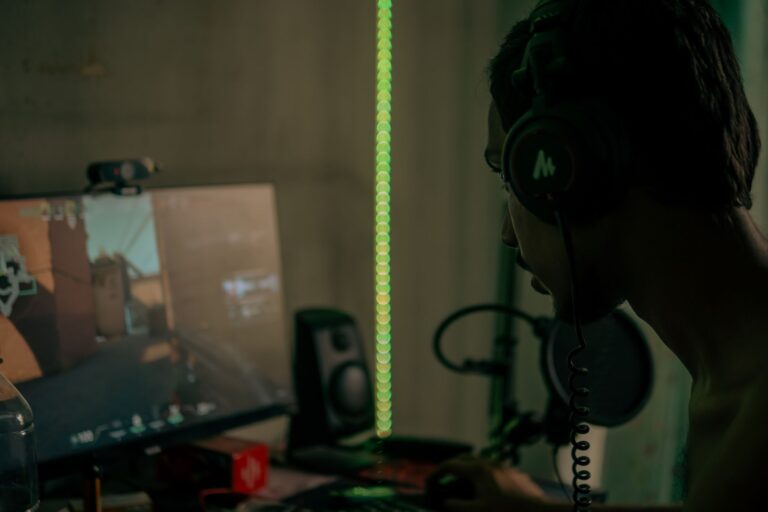
Live game streaming began as an accidental side effect of a stranger stunt in San Francisco. Justin Kan strapped a camera to his head, wired it to a laptop, and broadcast every hour of his daily life on Justin.tv, which launched in March 2007. The site proved that consumer broadband could carry a continuous live feed, and most viewers stuck around for the gaming tab rather than Kan’s grocery runs.
When Broadband Finally Made Live Broadcast Possible
Real-time gameplay broadcasting needed two things at once: a fast upload pipe from the player’s home and enough download capacity on the viewer’s end to keep the video smooth. By the late 2000s, cable and fiber rollout across US suburbs crossed that threshold. Before then, you could push a static webcam, but a 30-frame-per-second game feed stuttered into an unwatchable slideshow. That infrastructure transition is the unglamorous reason live gameplay ever became a daily habit for you and millions of other viewers.
Speed Demos Archive, a community of console-speedrunners, also shaped the early scene by posting recorded runs of Super Mario 64 and Ocarina of Time long before Twitch existed. When those runners moved into the Justin.tv gaming tab, the platform gained its first loyal micro-audiences. StarCraft: Brood War matches broadcast from Korean PC bangs added another layer, and a small but devoted viewer base started forming around competitive play.
The Cloud-Streaming Confusion That Still Persists
From the start, two very different products shared the phrase “game streaming.” One is broadcasting your local gameplay to a live audience, which is what Justin.tv, Twitch, and YouTube Gaming do. The other is cloud gaming, where a remote server runs the game and streams the rendered video to your device, the model behind NVIDIA GeForce Now and Xbox Cloud Gaming. The terminology collision has confused buyers and casual viewers for more than a decade, and even seasoned storefront copy sometimes blurs the line.
The Pivot From Justin.tv to Twitch and the Birth of a Gaming Giant
By 2010, the Justin.tv team realized gaming was the only category retaining real engagement, so co-founders Justin Kan and Emmett Shear spun the gaming vertical into its own site. That decision shaped how video game streaming became popular in the long run. Twitch launched in June 2011, and the general life-streaming leftovers kept the original Justin.tv brand until its shutdown in 2014. The focused product caught fire almost immediately because it removed friction for both broadcasters and viewers.
The Esports Anchor That Proved the Model
Twitch’s early growth was tied directly to competitive gaming events. ESL One broadcasts in 2013 pulled record concurrent viewership and demonstrated that tournament play could anchor an entire platform’s calendar. Once a viewer showed up for a Counter-Strike: Global Offensive final, the site could surface a related channel, a casual streamer’s broadcast, or a retro speedrun, and that viewer often stayed. Esports tournaments became the appointment viewing that built daily habits around the platform.
Twitch Plays Pokémon as a Viral Cultural Event
In February 2014, an anonymous programmer launched Twitch Plays Pokémon, a single instance of Pokémon Red accepting chat commands from anyone watching. At peak, more than a million concurrent viewers mashed the same keyboard to navigate a virtual world together. Newspapers that had never covered video games ran features, and the experiment proved streaming could generate a phenomenon that traditional media had to cover. That kind of communal moment was something a passive video site could not replicate.
Amazon’s 2014 Acquisition of Twitch
In August 2014, Amazon finalized its roughly 970 million dollar deal to acquire the live-streaming platform, a price widely reported at the time. From that point on, every major tech company wanted a piece of the market, and the phrase “Amazon acquisition of Twitch” became shorthand for the moment game streaming went corporate.
That corporate buyout set off a scramble, as every platform with a user base suddenly wanted a slice of the audience Twitch had proven lucrative.
Competing Platforms and the Streaming Wars of the Mid-2010s
Twitch’s early lead created a vacuum that several well-funded challengers tried to fill. Some died fast, some stuck around for years, and the failure pattern reveals why network effects in live streaming are nearly impossible to disrupt once they take hold.
| Platform | Launched | Key Differentiator | Outcome |
|---|---|---|---|
| own3d.tv | 2010 | Esports tournament focus | Shut down 2015 |
| Hitbox | 2013 | Smaller stream bitrate caps | Acquired by Azubu in 2016 |
| YouTube Gaming | August 2015 | Search and recommendation engine | Standalone app retired May 2019 |
| Microsoft Mixer | 2016 (rebrand from Beam) | Sub-second streaming latency | Shut down June 2020 |
| Facebook Gaming | January 2018 | Social graph from existing accounts | Survives as a niche option |
YouTube Gaming launched with a massive advantage: an existing creator base already trained to record and upload gameplay videos. Its search and recommendation algorithm could surface a new creator overnight, a power Twitch’s directory lacked. The product folded back into the main YouTube app in May 2019 after failing to build a dedicated audience, a quiet admission that even a recommendation engine cannot beat an entrenched chat culture.
Microsoft Mixer bet on FTL (faster-than-light) streaming technology that cut delay to under a second, opening the door to true interactive broadcasts where chat could steer gameplay in real time. The tech was real, but without enough streamers and viewers, the chat stayed empty. Facebook Gaming leaned on its social graph, poaching established creators with cash and offering instant reach to people already logged in. Both platforms survive today in diminished form, proving that capital and infrastructure matter less than habit.
The Cultural Catalysts That Took Streaming Mainstream
After Twitch stabilized, three cultural shifts pulled the medium out of the gaming subculture and into living rooms worldwide. Each built on the infrastructure and platform focus the previous sections described.
Mobile Games and a New Audience
Fortnite’s 2017 launch on consoles and PC, followed by PUBG and the rise of Clash Royale, dragged viewers who had never owned a gaming PC onto streaming channels. Phones and tablets meant anyone could pull up a stream on a lunch break, and broadcasters could cast from a console in their living room without a $1,500 rig. The audience ballooned, and the median viewer age climbed alongside the spending power of mobile gamers.
The Celebrity Streamer Era
By 2018 and 2019, top creators like Tyler “Ninja” Blevins, Michael “shroud” Grzesiek, and Imane “Pokimane” Anys were earning multi-million dollar annual incomes from subscriptions, ads, and sponsorships. Ninja’s August 2019 exclusive deal with Microsoft Mixer reportedly ran into eight figures, a number that signaled individual streamers had become assets worth bidding wars. When Mixer shut down in June 2020, Ninja returned to Twitch, and the episode showed both the upside and the volatility of platform-locked contracts.
The 2020 Pandemic Surge
COVID-19 lockdowns turned every living room into a potential broadcast studio. With esports leagues, sports broadcasts, and concerts canceled, audiences hungry for live content poured into game streams. Twitch viewership, YouTube Gaming hours watched, and Facebook Gaming sessions all hit record highs during 2020, and the lift never fully reversed. Streamers who had been hobbyists became full-time professionals almost overnight.
The pandemic pulled millions of new eyes onto these channels, and the next question became how anyone could actually get paid for the time invested.
How Streamers Built Sustainable Careers From Subs, Ads, and Donations
The economic engine behind modern streaming is layered, and understanding each layer explains why the top 1 percent of creators can earn seven figures while the median streamer makes pocket money.
- Platform subscriptions: Twitch’s Affiliate and Partner programs unlock recurring monthly income, typically a 50/50 split of a $4.99 subscription, with top-tier partners negotiating higher cuts.
- Bits and super chats: Twitch Bits and YouTube Super Chat let viewers tip with micro-transactions during a live broadcast, turning one-off fans into paying supporters during key moments.
- Advertising revenue: Pre-roll, mid-roll, and display ads share revenue with streamers based on hours watched and CPM (cost per thousand impressions) rates that vary by category and seasonality.
- Sponsorships and merchandise: Brand deals, energy drink placements, gaming chair promos, and creator-owned apparel stores add the largest income layer for the most popular broadcasters.
- Exclusive platform contracts: Multi-year exclusivity deals can pay millions up front, but they lock the creator into a single platform and risk collapse if that platform shuts down, exactly what happened when Mixer migrated users to Facebook Gaming in 2020.
The Mixer shutdown is the canonical warning: a streamer who builds a community on one platform can lose access to that audience overnight if the business behind it fails. Diversifying across Twitch, YouTube, and emerging platforms like Kick is now standard practice for top earners.
Where Game Streaming Stands Now and What Comes Next
Twitch still averages more than 30 million daily visitors with peaks above 2 million concurrent viewers, anchoring a creator economy worth billions. YouTube Gaming, folded into the main YouTube app, remains the strongest challenger thanks to superior video-on-demand for highlights and VODs (video on demand). Facebook Gaming survives as a small but persistent option tied to social login, and Kick emerged in 2023 with a 95/5 revenue split favoring creators, a model designed to pressure the established players into renegotiating payouts.
The line between game streaming, traditional entertainment, and creator content keeps blurring. Streamers sign Hollywood talent deals, launch original scripted shows, and appear on magazine covers alongside actors and musicians. The medium that started as a San Francisco life-cast has become a parallel entertainment industry, and the small, technically ambitious community behind it shows no sign of slowing down.
All of that growth and consolidation now demands a blunt assessment of what viewers and creators should actually take away.
The Bottom Line
Game streaming became popular because the right technical foundation, the right platform focus, and a string of cultural accidents converged at the same moment. Broadband made it possible, Twitch made it easy, esports and viral events made it appointment viewing, and the 2020 pandemic made it essential. The result is an industry where a teenager with a webcam can build a global audience and a Fortune 500 company will pay hundreds of millions to own the rails.
FAQ
When did video game streaming start?
Justin.tv launched in 2007, and its gaming category hosted the earliest live gameplay broadcasts. Twitch spun off from Justin.tv in 2011, marking the moment game streaming became its own dedicated product rather than a tab on a general life-cast.
What made Twitch so successful?
Twitch focused exclusively on gaming from day one, built chat culture that turned viewers into community members, and locked in early esports partnerships. Amazon’s 2014 acquisition added the infrastructure and capital needed to scale globally.
Why did streaming games become a mainstream phenomenon?
Three shifts combined: broadband finally supported smooth video, mobile games broadened the audience, and the 2020 pandemic pushed millions of people home with time to fill. Each shift fed the next.
How do streaming platforms make money from gaming?
Subscriptions, advertising, bits or super chat tips, and sponsorships all flow through the platform, which takes a cut before paying the streamer. Exclusive contracts and merchandise sales add higher-margin revenue for both sides.
Did YouTube Gaming and Microsoft Mixer fail completely?
YouTube Gaming folded its standalone app back into the main YouTube platform in May 2019, but the brand and live feature still operate inside YouTube. Microsoft Mixer shut down in June 2020, with users migrated to Facebook Gaming.
What is the difference between game streaming and cloud gaming?
Game streaming means broadcasting your local gameplay to a live audience, which is what Twitch and YouTube Gaming do. Cloud gaming means a remote server runs the game and streams the rendered video to your device, the model used by NVIDIA GeForce Now and Xbox Cloud Gaming.