


Esports setups live or die on frame consistency, low input lag, and quick reflexes between rounds. A mismatched tower or sluggish mouse can undo hours of practice in a single ranked session. The right combination of a capable machine and a precise pointer gives you the headroom to climb ladders without stutter, heat throttle, or missed flick shots. This roundup pulls together four full desktops and three wired gaming mice that pair well with high-refresh monitors and tournament-style play. You’ll find options tuned for entry-level ranked grind, mid-range 1440p competition, and high-end streaming-heavy setups, plus a compact everyday mouse for long practice blocks.
A Side-By-Side Look

The Horizon Autherium Dragon RGB I9 RTX Gaming PC

SOLAKAKA SM900 Wired Gaming Mouse White

SOLAKAKA SM900 Green Honeycomb Gaming Mouse
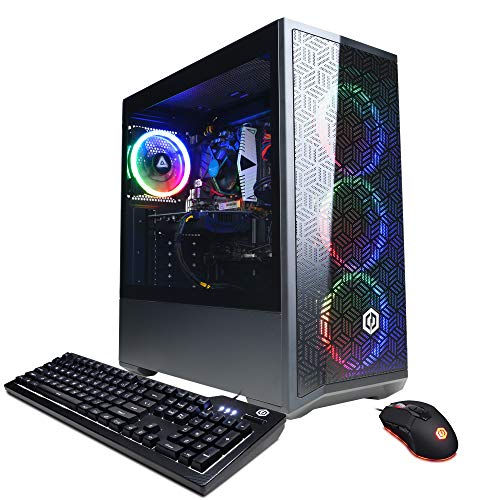
CyberpowerPC Gamer Xtreme VR Gaming PC

Skytech Gaming PC Storm Ryzen 5 RTX 5050

SOLAKAKA SM900 Black Honeycomb Gaming Mouse

Lenovo Legion Tower 5i RTX 5070 Ti
Taking A Closer Look At The Options
Esports players running heavy stream overlays, voice chat, and browser tools at the same time need a tower that doesn’t buckle under multitasking, and this Horizon Autherium Dragon configuration is built for exactly that workload. The pairing of a Core i9 processor with an RTX 5070 OC graphics card pushes well past 1080p and gives you comfortable headroom at 1440p on fast-paced shooters.
Storage and memory are where the build flexes hardest: 64GB of RAM (twice the 32GB most prebuilts ship with) and a 5TB split between a 1TB NVMe M.2 drive and a 4TB 7200RPM HDD mean instant match loads and a deep library of clips, patches, and alt accounts. A 360mm AIO liquid cooler keeps boost clocks steady during marathon ranked sessions, and a 2.4GB/s Wi-Fi card keeps ping stable on crowded home networks. Compared to the entry-level CyberpowerPC Gamer Xtreme that follows, this is the tier for players ready to push frame rates without compromise.
A Few Strong Suits
- RTX 5070 OC handles 1440p and 4K esports with stable frame pacing and DLSS support for modern titles.
- 64GB of RAM is genuinely useful for streamers, since OBS, chat bots, and game clients stay smooth together.
- NVMe primary drive cuts map load times dramatically, so reconnecting after a crash feels almost instant.
- Spare M.2 and HDD ports let you expand storage later without swapping the boot drive.
- 360mm AIO helps the unlocked Core i9 hold boost clocks longer than a basic tower cooler would.
Trade Offs To Consider
- Full-size tower needs a dedicated floor spot and decent cable management space behind the desk.
- High-end internals pull more power, so a surge-protected outlet is worth the small extra cost.
- RGB and the AIO pump add a faint hum that open-back headsets can pick up in quiet scenes.
Key Attributes
Who It Suits Best
Hardcore ranked players who stream or run heavy background tools and want a system that won’t feel dated in three years.
Consider Something Else When
Casual players on a tight budget should look at the CyberpowerPC Gamer Xtreme VR, which covers 1080p ranked play at a friendlier price point.
Stepping into ranked play for the first time usually means replacing a stock office mouse with something that tracks cleanly, and the SOLAKAKA SM900 in white covers that step without a heavy spend. It’s a wired-only pointer aimed at casual and competitive players who want responsive tracking for FPS, MOBA, and battle royale sessions.
Six adjustable DPI steps, scaling up to 12800, let you switch between precise aim and fast flicks on a high-refresh monitor. The 1000Hz polling rate (how often the mouse reports its position to the PC each second) keeps cursor updates smooth for twitch aiming. The white shell looks clean on a light desk setup, and side buttons give you thumb-accessible shortcuts for push-to-talk, grenades, or ability bindings. Versus the heavier honeycomb variants later in this list, this one keeps a more traditional solid build, which some newcomers prefer.
Why It Works Well
- Six DPI presets and a 1000Hz polling rate give you responsive tracking for fast flick shots.
- Side buttons add useful shortcuts for voice chat, reload, or ability binds without keyboard stretching.
- White shell stays visually clean and pairs nicely with light-themed battlestations.
- Wired USB connection avoids battery surprises during long ranked nights.
Minor Gripes
- Solid shell weighs more than the honeycomb SOLAKAKA variants, which can cause wrist fatigue on very long sessions.
- Cable drag may require a mouse bungee for low-sensitivity aim.
Right Fit For
New esports players and budget-focused setups who need a reliable, customizable mouse for daily ranked play.
Look Elsewhere When
Players who want the lightest possible shell for fingertip grip should look at the SOLAKAKA SM900 Green Honeycomb model instead.
Players who log six-hour ranked blocks often find that a heavy mouse drags down aim and strains the wrist, which is exactly the gap the green SOLAKAKA SM900 was designed to fill. The honeycomb shell cuts weight while letting air through, so sweaty grip sessions stay comfortable through a full tournament bracket.
Seven programmable buttons give fingertip grip users a real edge on MOBAs and hero shooters, where every keybind matters. The 12800 DPI ceiling and 1000Hz polling rate carry the same responsive feel as the white version, but the shell design is the real differentiator. RGB lighting rings the scroll wheel and base for a clean, customizable look. Compared to the white SM900 reviewed earlier, this is the more breathable, lighter sibling built for long competitive play.
Benefits That Matter
- Honeycomb shell drops weight and improves airflow, so grip stays dry during tense matches.
- Seven programmable buttons let you map complex ability sets or push-to-talk directly under the thumb.
- Perforated design makes long sessions noticeably easier on the wrist for fingertip and claw grip players.
- RGB accents add personality without adding any weight to the chassis.
Small Caveats
- Open shell lets dust collect inside the cavity, so a quick weekly cleaning with compressed air is wise.
- Button remapping requires the macro software, which adds a small setup step before first use.
Feature Snapshot
Best Suited To
Fingertip and claw grip players who prize low weight and ventilation during multi-hour ranked sessions.
Swap It Out When
Players who prefer a solid shell and a different colorway will find the SOLAKAKA SM900 White a more traditional fit.
The CyberpowerPC Gamer Xtreme GXiVR8060A10 is a sensible first step into PC esports, giving new players a real dedicated GPU and a quick NVMe boot drive without the sticker shock of a high-end tower. The 10th-gen Intel i5-10400F handles everyday multitasking, and the GTX 1660 Super drives smooth 1080p frames in popular competitive titles.
8GB of DDR4 and a 500GB NVMe SSD are modest but practical for a starter setup, covering OS boot, main client, and a few key games. Wi-Fi is built in for clutter-free placement, and the chassis leaves room for future storage upgrades. Compared to the RTX-equipped towers above, this build stays clearly in the 1080p entry tier, but it’s a solid foundation for someone learning the ropes in ranked ladders.
Where It Helps
- GTX 1660 Super pushes reliable 1080p frame rates in popular esports titles like CS2 and Valorant.
- 500GB NVMe cuts boot and load times well below traditional hard drives.
- Wi-Fi ready for cable-free placement in dorms or shared rooms.
- i5-10400F is a proven, efficient processor for streaming light overlays and chat.
Honest Caveats
- 8GB of RAM is tight for heavy multitasking, so closing browser tabs before ranked helps.
- Older-generation components will feel dated sooner than the RTX-equipped picks above.
Who Should Grab It
First-time competitive players and students on a budget who need a plug-and-play entry into 1080p ranked play.
Where Another Pick Suits Better
Players planning to stream or play at 1440p should step up to the Skytech Gaming PC Storm, which offers a modern RTX 5050 and 32GB of RAM.
The Skytech Storm slots into the mid-range sweet spot that most competitive players actually want, pairing a current-generation RTX 5050 with a Ryzen 5 5500 and a full 1TB NVMe drive. The result is a system that breezes through 1440p competitive titles while leaving room for streaming software and chat tools in the background.
32GB of DDR4-3200 memory with heat spreaders handles multi-app loads, and a high-performance air cooler keeps thermals in check during long sessions. HDMI and DisplayPort outputs let you run a single high-refresh monitor today and add a second later. Compared to the entry-level CyberpowerPC Gamer Xtreme, the Storm steps up meaningfully in both memory and GPU generation. The promised clean Windows install with no bloatware means the system arrives ready to game.
Useful Touches
- RTX 5050 with 8GB GDDR6 covers 1440p esports with DLSS support for smoother frame pacing.
- 32GB of DDR4-3200 is a meaningful upgrade over the 8GB in entry-level rigs.
- 1TB NVMe SSD holds a deep library of competitive titles without slowdowns.
- Clean Windows install means no trial software to uninstall before jumping into ranked.
Worth Noting
- Air cooler works fine for stock settings, but heavy overclocking headroom is limited compared to the AIO-equipped Horizon build.
- Mid-tower footprint still needs a clear spot for airflow around the side panel.
Feature Rundown
Made For
Mid-range competitive players who want 1440p headroom without jumping to flagship-tier pricing.
Not Your Match When
Players chasing the highest possible 4K frame rates and stream-heavy multitasking should consider the Lenovo Legion Tower 5i with its RTX 5070 Ti.
Black-themed battlestations and stealthy minimalist desks get a better match from the dark variant of the SOLAKAKA SM900, which carries the same breathable honeycomb shell and adjustable tracking as the green version. The ABS plastic body stays light, and the perforated design keeps the palm cool across back-to-back ranked matches.
The mouse supports the same six DPI levels up to 12800, a 1000Hz polling rate, and macro-driven button customization, so daily use feels consistent with the rest of the SOLAKAKA lineup. Side buttons stay accessible for push-to-talk, melee, or quick-buy binds, and the wired USB connection keeps input lag predictable for tournament play. Compared to the green SM900 reviewed earlier, the only real differences are color and a slight ergonomic refinement.
What Stands Out
- Ergonomic honeycomb shell reduces hand fatigue during long ranked sessions.
- ABS construction keeps the mouse light without feeling fragile.
- Perforated design improves heat dissipation, useful for players with sweaty grip in long brackets.
- Wired plug-and-play setup avoids pairing headaches on tournament day.
Points To Keep In Mind
- Honeycomb openings can collect dust and skin oils, so occasional cleaning is a smart habit.
- Macro software is required to unlock the full button customization, which adds setup time for first-time users.
Who Will Love This
Players who prefer a darker aesthetic and prioritize ventilation during long competitive nights.
Another Choice May Suit
Anyone who prefers a colorful setup that matches green or white accents will find the SOLAKAKA SM900 Green Honeycomb variant a better visual match.
The Legion Tower 5i sits at the high end of this roundup, pairing an Intel Core Ultra 7 265F with an RTX 5070 Ti to push real-time ray tracing (light behavior that simulates real-world reflections and shadows) and AI-powered DLSS (Deep Learning Super Sampling, a feature that renders at lower resolution and upscales for higher frame rates) across modern competitive and AAA titles. The 32GB of memory and 1TB of storage cover most streamers’ needs out of the box, and three months of PC GamePass gives you a deep library to test from day one.
Legion Coldfront cooling is engineered to keep the system quiet under heavy load, which matters for streamers who run mic capture nearby. Ray tracing and DLSS support mean you can crank visual settings in story-driven games after ranked sessions without swapping hardware. Compared to the Horizon Autherium Dragon reviewed first, this build trades some raw storage capacity for a more refined thermal design and the latest Intel Core Ultra platform.
The Case For It
- RTX 5070 Ti with DLSS and ray tracing pushes high-refresh 1440p and entry 4K in modern titles.
- Coldfront cooling keeps the system quieter than many air-cooled prebuilts during long sessions.
- Three months of PC GamePass gives instant access to a wide rotating library.
- Intel Core Ultra 7 265F platform leaves headroom for AI-assisted streaming and productivity tools.
Possible Compromises
- 1TB storage fills up fast with modern competitive titles and recorded clips, so external storage may be needed.
- Full tower size and Lenovo’s distinctive chassis need a dedicated desk or floor spot.
Product Snapshot
Perfect Match For
Competitive streamers and high-refresh players who want flagship-tier graphics with quiet thermals under load.
Skip It When
Players chasing maximum storage capacity for a deep clip archive should look at the Horizon Autherium Dragon with its 5TB combined storage.
Picking The Right Esports Gaming Pcs For Your Setup
Matching Specs To The Games You Play
Start with the resolution and refresh rate of your monitor, because the GPU and CPU you actually need flow from that. A 1080p 144Hz display is comfortable territory for the CyberpowerPC Gamer Xtreme and the Skytech Storm, while a 1440p 240Hz panel really wants at least an RTX 5050 or 5070. Esports titles like CS2, Valorant, and Rocket League are easier on hardware than open-world games, so a mid-range build handles them well, but streaming and recording add CPU load that bumps the bar higher. Players who stream or run background tools should prioritize 16GB of RAM as a floor, with 32GB as the comfortable target.
Why A Quality Mouse Matters As Much As The Tower
Even the strongest desktop gets let down by an imprecise pointer. A wired gaming mouse with at least a 1000Hz polling rate (how often it tells the PC where it is) and adjustable DPI (dots per inch, the sensitivity unit) gives you the consistent tracking ranked play demands. Lightweight honeycomb designs suit fingertip and claw grips, while solid shells tend to feel more stable for palm grip. Side buttons, programmable macros, and a comfortable shell shape all help during long sessions, so try to handle the mouse or read ergonomic feedback before committing.
Storage, Cooling, And Future Upgrades
NVMe SSDs have become the baseline for boot and load times, so any modern esports PC should pair a 500GB+ NVMe with enough extra capacity for clips, patches, and alt accounts. A 1TB drive is a sensible minimum for most players, with larger drives or a secondary HDD making sense for heavy archivists. Cooling is the other unsung hero: an AIO liquid cooler or a quality air cooler keeps boost clocks stable during long ranked nights. Look for spare M.2 and PCIe slots so you can add storage or capture cards down the line without rebuilding the rig.
Balancing Budget And Headroom
Entry-level builds like the CyberpowerPC Gamer Xtreme cover 1080p ranked play without straining the wallet, but they show their age within a few years. Mid-range rigs like the Skytech Storm hit a comfortable balance for most competitive players, while premium picks like the Horizon Autherium Dragon and Lenovo Legion Tower 5i add headroom for streaming, AI features, and 4K gaming. The honest read is that most players sit best in the mid-range, with premium builds reserved for those who know they need the extra performance.
Key Considerations Across These Picks
Pitfalls Shoppers Hit
A common mistake is overspending on a flagship tower while ignoring the mouse and monitor, which actually dictate how the game feels in the moment. Another trap is picking a desktop with too little RAM, since 8GB fills up fast with Discord, browser, and game clients running together. Buyers also forget to check expansion slots and PSU headroom, so they end up replacing the whole tower a year later instead of upgrading storage or a capture card. Wired-only mice can feel limiting to anyone used to wireless, so factor in cable management before dismissing them.
Where The Extra Money Goes
Stepping up to a higher tier typically buys you a more capable GPU, a more efficient cooling system, and faster memory. RTX 5070 and 5070 Ti cards add real-time ray tracing and AI-driven upscaling, which keeps frame rates high in modern titles with cranked visual settings. Better cooling means quieter operation under load, which streamers especially appreciate during late-night sessions. The honest read is that the upgrade pays off for players who stream, multitask heavily, or want their build to last several years without swapping core components.
Frequently Asked Questions
How Much RAM Do You Need For Esports In 2026?
16GB is the practical minimum for smooth competitive play, and 32GB is the sweet spot for players who stream or run browser and chat tools at the same time.
Is A Wired Gaming Mouse Better Than Wireless For Competitive Play?
Wired mice avoid battery concerns and tend to deliver consistent input without wireless interference, which is why many tournament players still prefer them, though modern wireless options have closed the gap.
Do You Need An SSD For Esports Gaming?
Yes, an NVMe SSD dramatically reduces boot and map load times, so any modern esports PC should have at least a 500GB NVMe as the primary drive.
What GPU Is Enough For 1440p Esports?
An RTX 5050 or higher handles 1440p competitive titles comfortably, while an RTX 5070 or 5070 Ti gives you the headroom for high-refresh monitors and visual settings cranked up.
How Important Is Cooling For A Gaming PC?
Cooling matters because sustained boost clocks depend on it, and a quality air cooler or AIO keeps frame rates steady during long tournament sessions.
The Takeaway
The right esports rig comes down to matching your monitor, your genre, and your multitasking habits to the components that matter most. Mid-range towers like the Skytech Storm cover the most ground for typical competitive players, while flagship builds like the Horizon Autherium Dragon and Legion Tower 5i reward streamers and high-refresh setups. Pair any of those towers with a precise wired mouse like the SOLAKAKA SM900 variants, and you have a foundation that feels good in the hand and the scoreboard. Pick the configuration that fits your style, and let the practice do the rest.


