


A prebuilt gaming PC used to mean compromise, but 2026’s lineup flips that script. DDR5 memory, the latest standard for system RAM that delivers much higher bandwidth than DDR4, has gone from premium to standard, and that shift unlocks smoother frame rates, faster load times, and enough headroom to keep a build relevant for years. The picks below span budget-friendly daily drivers, balanced mid-range builds, and high-end rigs that chew through 4K gaming and creative workloads alike. Every desktop here runs DDR5, ships with Windows 11, and leans on current-generation CPUs from Intel or AMD paired with RTX 50-series graphics cards (NVIDIA’s newest gaming GPUs with hardware-accelerated ray tracing for realistic lighting and DLSS for AI-boosted frame rates).
A Closer Look At The Lineup

HP OmniDesk Desktop Computer PC – AMD 8-Cores Ryzen 5 – 16GB DDR5 – 1.5TB Storage

Skytech Gaming PC Azure 3 – Ultra 7, RTX 5060, 32GB RAM, 1TB SSD

Skytech Gaming Chronos Mini Gaming PC – Ultra 7 270K Plus, RTX 5060
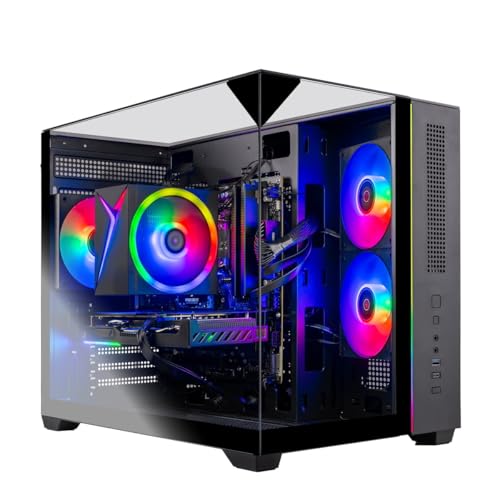
Skytech Gaming Crystal Gaming PC – Ryzen 7 7700, RTX 5060 Ti, 32GB DDR5
HP OmniDesk Desktop Computer PC – AMD 8-Cores Ryzen 5 – 64GB DDR5 – 3TB Storage

HP OmniDesk Desktop Computer PC – AMD 8-Cores Ryzen 5 – 32GB DDR5 – 2TB Storage

Skytech Gaming King 95 – Intel Ultra 7 270K Plus, RTX 5070 Ti, 32GB DDR5
HP OmniDesk Desktop Computer PC – AMD 8-Cores Ryzen 5 – 32GB DDR5 – 3TB Storage
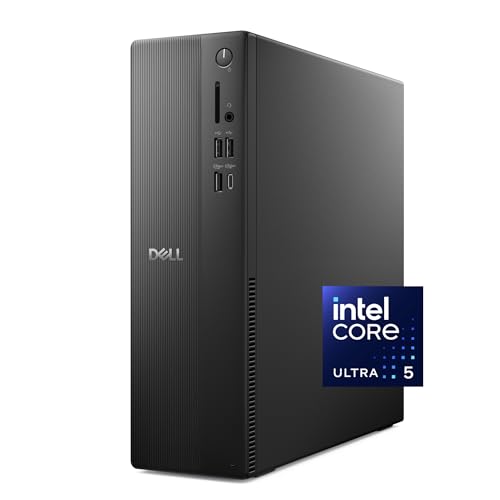
Dell Slim Desktop – Intel Core Ultra 5-225, 16GB DDR5, 512GB SSD

ASUS ROG G700 (2025) Gaming Desktop PC – Intel Core Ultra 7 265F, RTX 5070, 32GB DDR5
What Each Pick Brings To The Table
The HP OmniDesk with a Ryzen 5 8500G and Radeon 740M graphics lands at the accessible end of the DDR5 gaming-PC market, and for plenty of households, that’s exactly the right starting point. Unlike the dedicated RTX-equipped picks further down this list, this one leans on integrated Radeon graphics (graphics built into the CPU rather than a separate card) to keep costs in check while still handling esports titles and light creative work with room to spare.
The 16GB of DDR5 memory is a genuine upgrade over older DDR4 office towers, and Wi-Fi 6 keeps wireless lag low for online play. You also get a 512GB SSD for fast boot and a 1TB HDD for bulk file storage, plus a wireless keyboard and mouse right in the box.
The Helpful Details
- Quad-monitor support turns a home office into a wide command center
- Front-mounted USB Type-C 10Gbps port makes file transfers painless
- Bluetooth 5.4 pairs cleanly with modern controllers and headsets
- Hybrid SSD+HDD storage means quick boot plus room for a big game library
Honest Caveats
- Radeon 740M integrated graphics will struggle with demanding AAA titles at high settings
- 16GB RAM is enough for today but may feel tight a few years in
Made For
First-time gaming-PC owners and families who mostly play esports, MOBAs, or older titles and want a clean, quiet tower that doubles as a productivity station.
Look Elsewhere When
You want real 1440p or 4K gaming performance, in which case the Skytech Gaming PC Azure 3 delivers a far stronger GPU at a reasonable step up.
The Skytech Azure 3 marks the first real jump into dedicated gaming hardware, pairing an Intel Core Ultra 7 270K with a GeForce RTX 5060 and 32GB of DDR5-5200 RAM. That pairing handles 1440p gaming in most modern titles without breaking a sweat, and the 1TB NVMe SSD (a fast solid-state drive that plugs directly into the motherboard) means game load times stay snappy even with a hefty library.
Compared to the HP OmniDesk above, this build swaps integrated graphics for a true gaming GPU, adds a 360mm AIO liquid cooler (an all-in-one water-cooling unit that keeps the CPU temperatures low under load), and ships with Windows 11 Home pre-installed. Skytech also skips bloatware, which means more of the storage stays usable from day one.
Where It Excels
- RTX 5060 with 8GB GDDR7 VRAM handles ray tracing and DLSS in current AAA games
- 32GB DDR5-5200 gives you comfortable headroom for streaming or heavy multitasking
- 1TB NVMe boot drive keeps Windows and games launching quickly
- 360mm AIO liquid cooling helps the unlocked K-series CPU sustain boost clocks
Trade Offs To Consider
- No optical drive, so physical media collectors will need an external reader
- Wi-Fi 6 is fast, but Wi-Fi 7 routers will leave some wireless bandwidth on the table
Best Suited To
Mid-range competitive gamers and streamers who want a clean, balanced rig that handles modern esports and single-player titles at high settings without overpaying for top-tier silicon.
A Better Fit Elsewhere
Gamers chasing 4K or high-refresh ultrawide performance should step up to the Skytech Gaming King 95 instead, which adds an RTX 5070 Ti and a beefier power supply.
The Chronos Mini takes the Azure 3’s core spec list and shrinks it into a small-form-factor case that fits comfortably next to a monitor or tucked into a media console. For anyone working with a tight desk, a dorm room, or an apartment where floor space matters, that footprint alone is the selling point.
Under the hood you still get the Intel Core Ultra 7 270K, an RTX 5060 8GB card, and 32GB of DDR5-5600 RAM. The denser memory speed is a small but welcome bump over the Azure 3, and the same 1TB NVMe keeps load times short.
Well-Handled Touches
- Compact chassis frees up desk space without sacrificing CPU and GPU power
- DDR5-5600 memory offers a slight throughput edge over slower kits
- Same 360mm AIO cooling helps the chip sustain boost behavior under load
A Few Limitations
- Smaller cases often run warmer and louder, so expect fans to ramp under sustained gaming
- Limited room for future storage expansion compared to mid-tower builds
Perfect Match For
Students and apartment dwellers who want full-size gaming performance in a build that disappears on a small desk or shelves under a monitor.
Skip It When
You plan to upgrade storage or add capture cards down the line, since the Skytech Gaming Crystal gives you a larger case with more internal bays for future tinkering.
The Crystal lands as the AMD-flavored alternative to the Intel-led Skytech builds above, and it earns its spot by pairing a Ryzen 7 7700 with the upgraded RTX 5060 Ti. That “Ti” designation means more CUDA cores (NVIDIA’s parallel processing units that handle graphics and compute work) and a stronger memory subsystem, which translates to smoother frame rates in demanding games and better performance in GPU-accelerated creative apps.
The 32GB of DDR5-5600, the 1TB NVMe, and a 650W Gold-rated PSU (a power supply with 80 Plus Gold efficiency certification, meaning less wasted energy and heat) round out a thoughtful mid-tower. You also get HDMI and DisplayPort outputs so multi-monitor setups plug straight in.
What Makes Sense
- RTX 5060 Ti outperforms the standard 5060 in most GPU-bound scenarios
- Ryzen 7 7700 runs cool and efficient for both gaming and productivity
- 650W Gold PSU leaves headroom for future GPU upgrades
- High-performance air cooler keeps the build quiet and low-maintenance
Points To Note
- Wi-Fi uses 802.11ac rather than Wi-Fi 6, which may matter for fast home networks
- No included peripherals, so you’ll need a keyboard and mouse separately
Whose Shelf It Belongs On
AMD-fans and Ryzen loyalists who want a step-up GPU without crossing into flagship pricing, especially those using productivity software that benefits from the Ryzen 7’s strong multi-thread performance.
Not Your Match When
You want Intel’s latest platform or the absolute best GPU you can get at this tier, in which case the Skytech Gaming King 95 sits a clear step above.
Step the HP OmniDesk up in RAM and storage and you land here: a 64GB DDR5 configuration with 3TB of combined SSD and HDD space. The Ryzen 5 8500G and Radeon 740M integrated graphics remain, so the gaming ceiling is the same as the entry OmniDesk, but the multitasking headroom is dramatically different.
For content creators running multiple browser tabs, video calls, and editing software at the same time, that 64GB of DDR5 feels luxurious. Quad-monitor support and the included wireless peripherals keep the desk setup simple, and the 2TB SSD gives you fast storage for active project files alongside the 1TB HDD bulk drive.
Points In Its Favor
- 64GB DDR5 handles dozens of browser tabs plus editing software without slowing down
- 2TB SSD means most active projects stay on fast storage
- Wi-Fi 6 and Bluetooth 5.4 keep wireless peripherals and networks responsive
Where It Is Less Suited
- Integrated Radeon 740M graphics limits AAA gaming at higher settings
- Higher cost without a stronger GPU may frustrate shoppers expecting a gaming leap
Who Will Love This
Home-office power users, streamers running chat-heavy workflows, and families who want a future-proof tower that doubles as a productivity workhorse without dedicated GPU costs.
Consider Something Else When
Your priority is actual gaming frame rates rather than multitasking capacity, since the Skytech Gaming PC Azure 3 spends the same budget far more wisely on a dedicated RTX 5060.
The middle child of the HP OmniDesk family splits the difference between the 16GB entry model and the 64GB configuration, giving you 32GB of DDR5 and 2TB of hybrid storage. For households using the same PC for daytime work and evening play, that balance lands well.
You keep the same Ryzen 5 8500G and Radeon 740M, which means esports and indie titles run fine, but AAA games demand lower settings. Quad-monitor support and the wireless keyboard and mouse bundle keep things tidy, while the front USB-C 10Gbps port speeds up file transfers from phones and external drives.
The Practical Payoff
- 32GB DDR5 hits a sweet spot for modern multitasking without overspending
- 1TB SSD plus 1TB HDD balances speed and capacity for most families
- Wireless keyboard and mouse included mean zero extra accessory shopping
Minor Gripes
- Same integrated graphics ceiling as the cheaper OmniDesk, so frame rates don’t scale with the cost
Right Fit For
Work-from-home professionals who game on the side and want enough RAM and storage to run Office apps, browsers, and Discord all at once without hiccups.
Where Another Pick Suits Better
Gamers focused on competitive online play will get more out of the Skytech Gaming Chronos Mini, which pairs a similar budget with a real RTX 5060.
The King 95 is the build for shoppers who want flagship-class silicon without venturing into custom-loop cooling territory. An Intel Core Ultra 7 270K Plus handles the CPU heavy lifting, and the RTX 5070 Ti with 16GB of GDDR7 VRAM delivers the kind of frame rates 4K monitors and high-refresh ultrawides demand.
You also get a 1TB Gen4 NVMe (PCIe 4.0 solid-state storage, a step above the PCIe 3.0 drives found in older builds), 32GB of DDR5-6000 RGB memory, an 850W Gold ATX 3 PSU (the latest power supply standard with better transient handling for high-end GPUs), and a 360mm AIO with ARGB fans. Windows 11 Home comes installed, and Wi-Fi 6 covers the wireless side.
Real Benefits
- RTX 5070 Ti 16GB handles 4K gaming and high-refresh 1440p with settings maxed
- 32GB DDR5-6000 RGB memory hits the sweet spot for both gaming and creative workloads
- 850W ATX 3 PSU future-proofs the build for next-generation GPU upgrades
Things To Consider
- Premium price puts this out of reach for casual shoppers
- RGB lighting and ARGB fans add visual flair, but those who prefer stealth builds may want a different case
Who Should Grab It
Enthusiast gamers and creative professionals pushing 4K or 1440p ultrawide displays who want a turnkey high-end PC without building one themselves.
Another Choice May Suit
You prioritize aesthetic design and brand polish over raw GPU tiers, in which case the ASUS ROG G700 offers a comparable GPU in a more design-forward chassis.
Where the 32GB OmniDesk earlier delivers 2TB of storage, this version stretches the capacity to 3TB by adding a 2TB SSD alongside the 1TB HDD. The rest of the spec sheet mirrors that build: Ryzen 5 8500G, Radeon 740M integrated graphics, quad-monitor support, and wireless peripherals in the box.
For households archiving years of family photos, video projects, or a massive Steam library, that extra terabyte on the SSD side keeps more of your active content on fast storage. Wi-Fi 6 and Bluetooth 5.4 round out the connectivity, and the front USB-C port remains handy for quick transfers.
Positive Points
- 2TB SSD plus 1TB HDD offers the most storage in the OmniDesk lineup
- Quad-monitor support is rare at this price point
- Bundled wireless peripherals save the hassle of separate purchases
What To Weigh
- Same integrated graphics ceiling caps AAA gaming performance
- No dedicated GPU means you pay a premium for storage rather than frame rates
Built With In Mind
Media collectors, family households, and small-business owners who need a reliable, roomy tower for work files and entertainment libraries but don’t game heavily.
Reach For A Different Pick When
Gaming is the real priority, since the Skytech Gaming Crystal Gaming PC delivers stronger GPU performance in a similar budget neighborhood.
The Dell Slim Desktop (ECS1250) breaks the gaming-PC mold on this list, and that’s the point. It runs an Intel Core Ultra 5-225 with Intel UHD integrated graphics, 16GB of DDR5, and a 512GB SSD inside a small-form-factor chassis that fits almost anywhere.
This is a productivity-first machine that happens to ship with DDR5, Wi-Fi 6, and Bluetooth. For shoppers wanting a quiet, low-power tower for a home office, a reception desk, or a living-room PC, the Dell Slim’s footprint and clean design outweigh the missing dedicated GPU. The wired keyboard and bundled Windows 11 Home keep setup to a minimum.
What Works In Its Favor
- Compact chassis disappears on a desk or behind a monitor
- Intel Core Ultra 5-225 brings modern efficiency cores to everyday tasks
- DisplayPort output supports up to a 4K monitor or daisy-chained FHD displays
A Few Limitations
- Intel UHD graphics are not designed for modern gaming, so frame rates in titles will be limited
- Only 512GB of storage fills up quickly with media files
The Right Fit
Minimalist home-office owners, reception desks, and living-room PC shoppers who value a small, quiet tower more than gaming muscle.
Swap It Out When
You actually want to game, since the HP OmniDesk with Radeon 740M graphics gives you noticeably better integrated performance in the same general form factor.
The ASUS ROG G700 closes the list with a build that blends genuine flagship performance and a design-forward chassis. The dual-glass-panel exterior shows off the internals alongside customizable RGB lighting (multi-color LEDs on fans and components that sync with compatible peripherals) controlled by Aura Sync, and the iconic ROG Slash and Fearless Eye logo give the tower an unmistakably enthusiast look.
Inside, the Intel Core Ultra 7 265F pairs with a GeForce RTX 5070, 32GB of DDR5, and a 1TB M.2 NVMe PCIe 4.0 SSD. Windows 11 Home comes pre-installed, and the whole package targets shoppers who care as much about the aesthetic as the benchmark numbers. Versus the Skytech King 95 earlier, the G700 trades the Ti-tier GPU for ROG’s design language and ecosystem polish.
A Favorable Mix
- RTX 5070 paired with the Core Ultra 7 265F handles 1440p and 4K gaming with ease
- Dual-glass chassis with Aura Sync RGB turns the tower into a desk centerpiece
- 1TB PCIe 4.0 SSD keeps the build feeling responsive across the OS and game library
Possible Compromises
- Glass-panel cases show dust, so owners can expect more frequent cleaning
- RTX 5070 is a strong card but sits a tier below the RTX 5070 Ti found in the King 95
The Right Fit
Taste-conscious esports players and enthusiast gamers who want a polished, branded tower that performs strongly in modern titles and looks the part on camera or under RGB lighting.
Where A Sibling Pick Shines
You want the absolute strongest GPU in this price range, in which case the Skytech Gaming King 95 edges ahead with its RTX 5070 Ti and higher-wattage PSU.
What To Look For In A Ddr5 Gaming Pc In 2026
GPU Tier Matters More Than CPU
For most gamers, the graphics card drives frame rates far more than the processor does. RTX 5060 builds handle 1080p and 1440p with high settings comfortably, while RTX 5070 and 5070 Ti systems push into 4K and high-refresh ultrawide territory. Integrated Radeon 740M graphics work for esports and indie titles but struggle with demanding AAA releases. Match the GPU to the resolution and refresh rate of your monitor first, then worry about the CPU.
Memory Capacity And Speed
DDR5’s main upgrade over DDR4 is bandwidth, and speeds range from 5200 MT/s (megatransfers per second, a measure of how much data the memory moves) on entry kits to 6000 MT/s on premium ones. Real-world differences between 5200 and 6000 are small in most games, but jumping from 16GB to 32GB dramatically improves multitasking and future-proofs the build. For content creators or streamers, 64GB removes the ceiling entirely.
Storage Strategy
NVMe SSDs (fast solid-state drives) deliver the snappy boot and load times modern gamers expect, and a 1TB drive is the practical minimum for a Windows install plus a few large games. Pairing an SSD with a secondary HDD remains a smart way to archive media, and several picks above combine both. Builders planning to install a dozen AAA titles should target at least 2TB of total storage.
Cooling And Power Delivery
High-end CPUs and GPUs generate real heat, and sustained boost clocks depend on solid cooling. A 360mm AIO liquid cooler or a high-performance air cooler keeps thermals in check, and an 850W Gold-rated PSU with ATX 3 support provides clean power with headroom for future GPU upgrades. Skimping on either cooling or the power supply tends to shorten a build’s usable lifespan.
Smart Considerations Before You Commit
Common Shopping Slip Ups
The easiest mistake is overspending on RAM and storage while underinvesting in the GPU, since the graphics card is what actually moves frame rates. The opposite trap is buying a flagship GPU and pairing it with a basic 16GB DDR5 kit, which bottlenecks multitasking in 2026’s games and creative apps. Another common miss is ignoring the PSU wattage, and an underpowered supply can cause crashes or limit future GPU upgrades.
Where The Extra Money Goes
Premium Ddr5 Gaming Pcs command higher prices for a few clear reasons: stronger GPUs like the RTX 5070 and 5070 Ti deliver frame rates that budget cards simply cannot match at 4K, faster DDR5-6000 memory improves throughput in bandwidth-sensitive workloads, and beefier cooling plus higher-wattage PSUs keep the system stable under sustained load. For shoppers running high-refresh monitors, doing creative work, or planning to keep the build for five or more years, the upgrade from a mid-range RTX 5060 system to a flagship-tier build often pays for itself in longevity and headroom.
Frequently Asked Questions
How Much RAM Do I Need For Gaming In 2026?
16GB of DDR5 handles most modern games comfortably, but 32GB gives you headroom for background apps like Discord, browsers, and streaming tools without slowdowns. For content creation or heavy multitasking, 64GB removes the ceiling entirely.
Is DDR5 Really Worth It Over DDR4?
Yes, especially in 2026. DDR5 delivers higher bandwidth, which improves performance in CPU-bound games and creative workloads, and every new Intel and AMD platform now ships with DDR5 support. The price gap has closed enough that DDR4 no longer makes sense for new builds.
Do I Need A Dedicated GPU For Gaming?
For esports titles, indie games, and older AAA releases, integrated graphics like the Radeon 740M in the HP OmniDesk line work fine. For modern AAA games at high settings or 1440p and above, a dedicated RTX-series card is essentially required for smooth frame rates.
How Important Is The Power Supply Wattage?
Very important. A low-wattage PSU can cause crashes, throttle performance, and limit your ability to upgrade the GPU later. Aim for at least 650W for mid-range builds and 850W for high-end systems with RTX 5070-class cards or above.
Can I Upgrade These Prebuilt PCs Later?
Most prebuilt towers accept standard RAM, storage, and GPU upgrades, though small-form-factor cases like the Skytech Chronos Mini and Dell Slim Desktop limit expansion. Mid-tower builds with ATX motherboards offer the most flexibility for adding storage or swapping components down the line.
The Takeaway
A great Ddr5 Gaming Pc in 2026 comes down to matching the right silicon to the games you actually play and the monitor you sit in front of. The Skytech Azure 3 and Crystal hit the sweet spot for most 1440p gamers, the King 95 and ROG G700 answer the call for 4K and high-refresh setups, and the HP OmniDesk family covers everything from budget home offices to multitasking power towers. Pick the spec sheet that matches your resolution, your workload, and your upgrade plans, and you’ll get years of smooth gaming out of the build.


