


Stock motherboard audio rarely tells you where that shot came from. The picks below pair with gaming headsets, IEMs (in-ear monitors), and full-size headphones, and they’re tuned for the spatial cues that matter in shooters, raids, and open-world lobbies. Most work with PC, PS5, and Switch, and a couple of them live entirely in dongle form for laptop-only setups.
The Main Contenders

Fosi Audio C3 Gaming DAC Amp

ASUS ROG Sheath Gundam Edition Mousepad

FOLA Wired Gaming Earbuds (TANCHJIM)

Razer Base Station V2 Chroma
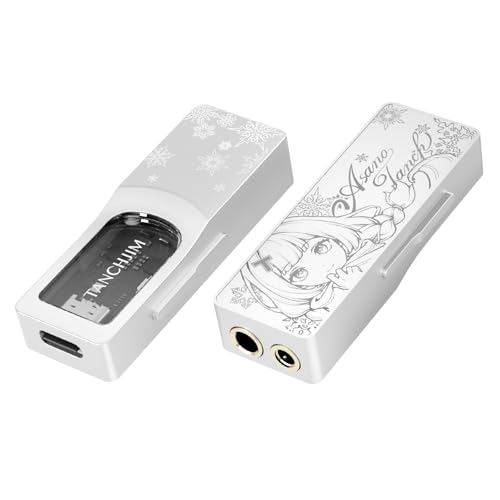
TANCHJIM Space PRO Gaming AMP

Fosi Audio K7 DAC Headphone Amp

Aenllosi Hard Case for SteelSeries Arctis

MECHEN AP10 USB DAC Dongle
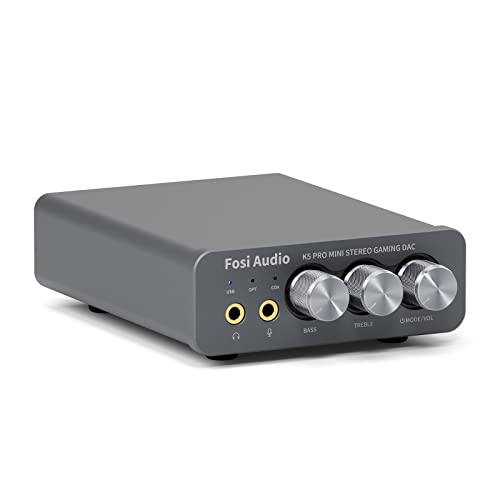
Fosi Audio K5 Pro Gaming DAC

TANCHJIM Bunny Wired Gaming Earphones
Meet The Standout Selections
The Fosi Audio C3 is built for the player who loses sleep over a single missed footstep. Unlike the wider Fosi K5 Pro, this desktop unit leans hard into native 7.1 surround sound with a built-in StepSense footstep radar that lifts quiet movement cues above the bed of gunfire and explosions.
Set it on a small monitor shelf, run a single USB cable to your rig, and the desktop volume dial becomes your fastest reaction tool. It speaks the same language as the Fosi K7, but with a much more aggressive FPS tuning curve.
The Practical Payoff
- StepSense footstep radar gives early directional cues in shooters
- Native 7.1 surround with a single desktop volume knob for fast adjustment
- USB input works across PC, PS5, Switch, and laptop without driver fuss
- Handy for late-night sessions where on-screen visuals are harder to read
Trade Offs
- The footstep lift can color music and cinematic scores
- Owners commonly report that the included software takes a few minutes to learn
Key Specs
Made For
Ranked and competitive FPS players who value positional audio over studio-neutral tuning.
Look Elsewhere When
You want a more music-first desktop amp; the Fosi Audio K5 Pro suits a casual mix of music and play.
Audio quality depends on a stable hand, and a slipping mousepad quietly ruins more matches than bad drivers. The ROG Sheath Gundam Edition takes the proven Sheath cloth weave and wraps it in a limited-edition colorway that slots into a mech-themed battlestation.
It also belongs in this roundup because good audio often travels with good gear, and a tuned desktop does not feel complete without a consistent mouse surface. The 3mm thickness cushions long sessions, while the stitched edge keeps the pad from fraying under heavy lift-offs.
A Strong Showing
- Woven cloth surface delivers smooth glide and pixel-precise tracking
- 3mm cushion eases wrist pressure during ranked grinds
- Anti-fray stitching keeps the edge tidy through years of use
- Non-slip rubber base holds firm on glass and laminate desks
Room For Improvement
- Wide desk footprint may crowd compact monitor arms
- Gundam branding is loud, so minimalist setups will clash
Right Fit For
Players building a themed battlestation who want a mouse surface that matches a premium audio chain.
Skip It When
You want a pure audio upgrade; the Fosi Audio C3 is the more direct path to better game sound.
Not every gaming rig lives on a desk. The FOLA wired IEM from TANCHJIM targets laptop and handheld players who want real imaging without a full desktop chain. Inside sits a dual-cavity, dual-magnetic driver paired with a brass waveguide that helps the surround mode stay coherent.
Compared with the heavier Fosi Audio C3 sitting on a shelf, this is the kind of audio you can coil up and slide into a laptop sleeve. The virtual 5.1 and 7.1 modes swap on the fly, which makes it easy to tune for an FPS one night and a movie the next.
Useful Strengths
- Compact IEM form factor for travel, cafés, and shared spaces
- Switchable virtual 5.1 and 7.1 surround profiles
- Brass waveguide and composite diaphragm support a wide dynamic range
- Wired 3.5mm connection sidesteps dongles and battery limits
Honest Caveats
- No built-in mic, so call-heavy sessions will need a separate solution
- IEM fit varies; owners commonly swap stock tips for a better seal
Feature Snapshot
Best Suited To
Travelers and students who game on a laptop and want a richer IEM than stock earbuds deliver.
Reach For A Different Pick When
You sit at a fixed desk most nights; the TANCHJIM Space PRO Gaming AMP is a stronger portable amp pairing.
A premium headset does not do its best work tossed beside a keyboard. The Razer Base Station V2 Chroma gives your cans a proper home while doubling as a low-profile hub on the desk. The weighted base keeps the stand planted even when you yank the headset off mid-round.
This is the only pick in the roundup with no audio circuitry, and that is the point. It protects the headset, the cable, and the DAC sitting next to it, then ties the whole desk together with Chroma RGB.
Benefits That Matter
- High-friction rubber base stops the stand from sliding on slick desks
- Chroma RGB lighting ties in with other Razer peripherals
- Detachable base simplifies transport to a friend’s place
- Low center of gravity protects heavier over-ear headsets from tipping
Practical Considerations
- It is a stand, not a DAC, so the audio itself still needs a separate source
- Chroma software is required to unlock the full lighting suite
Whose Shelf It Belongs On
Anyone who already owns a Razer ecosystem and wants a clean, lit home for a flagship headset.
A Better Fit Elsewhere
You want one box that does the audio job too; the Aenllosi Hard Case is a better travel-focused complement to a separate DAC.
The Space PRO sits in the gap between the desktop Fosi K7 and the laptop-bound FOLA IEM. It runs dual CS43198 DACs with independent left and right channel amplification, a balanced four-channel decoding layout, and a virtual 5.1 or 7.1 toggle that handles both headphones and a plugged-in mic.
It is a real desktop amp in portable clothing, with the kind of channel separation that gives a clear sense of where a reload is happening. For players who travel between a dorm, a café, and a home setup, it pulls serious double duty.
Points In Its Favor
- Dual CS43198 DACs run a balanced four-channel decoding path
- Independent left and right amps reduce cross-channel interference
- Built-in mic support keeps chat working on the road
- Virtual 5.1 and 7.1 surround modes swap on demand
Some Limits To Know
- Portable size means fewer physical knobs than a full desktop amp
- Heat can build up during long sessions in a closed laptop bag
Quick Facts
Who Should Grab It
Mobile competitive players who refuse to leave their desktop imaging behind when they pack a bag.
Swap It Out When
You mostly game at a single desk; the Fosi Audio K7 offers a more permanent desktop home.
The K7 is the more grown-up sibling to the Fosi Audio C3, trading the footstep radar for a broader HiFi feature set. The AK4493S DAC, XMOS XU208 USB processor, and TPA6120 headphone amps handle up to 2100mW of output, which is enough headroom to drive demanding planar magnetic headsets without strain.
It is the pick for someone whose desktop pulls double duty as a music listening room and a gaming station. USB-C, Bluetooth aptX HD LL, optical, coaxial, and mic inputs all live on the back, and the 4.4mm balanced output keeps audiophile headphones happy.
Strong Points
- AK4493S DAC plus TPA6120 amps deliver 2100mW of clean output
- 4.4mm balanced, 3.5mm, and RCA outputs cover a wide headphone collection
- USB-C, Bluetooth, optical, and coaxial inputs make it a true hub
- PCM 384kHz/32bit decoding handles high-resolution game and music tracks
Trade-Offs To Consider
- More inputs than the average gamer needs, which can complicate initial setup
- Bluetooth adds latency that competitive FPS players may want to avoid
Feature Card
Who Will Love This
Hybrid users who game and listen to critical music on the same desk and want one device to rule both.
Another Choice May Suit
You live and die by FPS audio cues; the Fosi Audio C3 is the more focused play.
The fanciest DAC in the world means little once a headset hits a tile floor. The Aenllosi hard case exists to keep a SteelSeries Arctis safe between sessions, and it is the only accessory in this roundup designed purely around the headset itself.
The velvet-lined interior cushions against drops, the shell is waterproof and heat resistant, and a small mesh pocket holds the wireless dongle so it never goes missing the morning of a tournament. It feels like a quiet insurance policy next to a stack of audio gear.
Where It Delivers
- Hard outer shell guards against drops and rough backpack handling
- Velvet interior cushions the headband and ear cups
- Internal mesh pocket stores the wireless dongle and small cables
- Comfortable hand strap makes it easy to grab on the way out
Less Ideal Details
- Fit is tuned to SteelSeries Arctis shapes, so other headsets may not seat cleanly
- Compact size leaves little room for extra accessories beyond the dongle
Perfect Match For
Lan-party regulars and students who carry a SteelSeries Arctis between home, class, and events.
Where Another Pick Suits Better
You travel with a portable amp too; the TANCHJIM Space PRO covers a more complete mobile audio chain on its own.
When the goal is to dodge the noisy headphone jack of a Switch or a thin laptop, a dongle can be the cleanest fix. The MECHEN AP10 stuffs an ESS Sabre ES9028Q2M DAC into a pocket-sized stick with both 3.5mm and 4.4mm balanced outputs.
It handles native DSD256 and 32-bit/384kHz decoding, which puts it well past what most laptop ports can manage. The hyperstream architecture and time-domain jitter eliminator inside help keep the imaging steady during fast camera pans in shooters.
What Works In Its Favor
- ESS Sabre ES9028Q2M DAC supports native DSD256 and 32-bit/384kHz audio
- Dual 3.5mm and 4.4mm balanced outputs for varied headphone collections
- Pocket-friendly size suits handheld and laptop gaming
- USB-powered with no batteries or charging routine to manage
Things To Weigh
- No mic input, so chat will need a separate path
- Balanced output gain varies by headphone, and some sensitive IEMs hiss at high volume
Built With In Mind
Handheld and laptop players who want reference-grade decoding in a stick smaller than a matchbox.
Not Your Match When
You need mic support on the go; the TANCHJIM Space PRO Gaming AMP covers both headphones and chat in one box.
The K5 Pro is the quiet workhorse of the Fosi lineup. It picks up where the older Q4 leaves off by adding a mic input, the Texas Instruments NE5532 op-amp, and a clean low-noise floor for a desktop price that does not shout about itself.
Front-panel bass and treble knobs pair with a master volume control, so a single box can shape a late-night ranked session and a casual music break without swapping cables. For most mixed-use desks, this is the most practical anchor on the list.
What Stands Out
- Texas Instruments NE5532 op-amp keeps the noise floor low for game and music
- Front-panel bass and treble knobs shape sound without extra software
- USB-C, optical, and coaxial inputs cover modern consoles and PCs
- Mic input supports chat without a separate audio interface
Points To Note
- No native 7.1 surround, so FPS imaging relies on the source or headphones
- Master knob doubles as the power switch, which can confuse first-time users
At A Glance
Right Fit For
Mixed-use desks where the same box has to handle ranked play, music, and voice chat.
Where A Sibling Pick Shines
You want native 7.1 in the chain; the Fosi Audio C3 is the more game-focused Fosi option.
The Bunny slots in as the easy-entry IEM for casual players. The dual-chamber dynamic driver keeps harmonic distortion under 0.05 percent at 94dB, which is a quietly impressive number for a budget IEM you can toss in a jacket pocket.
It uses the same 3.5mm jack the FOLA relies on, but adds a built-in mic for voice chat. For a commute, a study session, or a few rounds on a phone, it covers the basics without much fuss.
Noteworthy Benefits
- Dual-chamber driver limits distortion at typical listening volumes
- Built-in mic covers casual voice chat without extra hardware
- Lightweight shell stays comfortable during long play sessions
- Wired 3.5mm connection keeps latency near zero
Small Caveats
- Imaging is more music-tuned than the FOLA’s 7.1-focused profile
- Stock cable is functional but tends to tangle in a crowded bag
Who It Suits Best
Casual mobile and PC players who want a step up from bundled earbuds without a learning curve.
Where A Different Pick Suits Better
You chase ranked play on a laptop; the FOLA Wired Gaming Earbuds deliver more pronounced surround cues.
Matching A Gaming DAC To Your Setup
A DAC, or digital-to-analog converter, takes the digital audio signal from your PC or console and turns it into the analog signal your headphones actually play. Gaming-focused DACs add surround processing and stronger headphone amplification, which matters most when you play with open-back cans or power-hungry planars.
For desktop players, the Fosi K7 is a strong all-rounder, while the C3 leans into FPS imaging. Handheld and laptop users get the most from the TANCHJIM Space PRO or the MECHEN AP10 dongle. IEM listeners who want portable imaging should look at the FOLA earbuds first.
Console-only setups should check that the DAC supports their input (USB-C, optical, or coaxial) and offers a mic path if chat matters. The K5 Pro and the K7 both cover console-friendly inputs, while the C3 is most natural on PC.
Points Worth Weighing Before You Buy
Where Shoppers Go Wrong
The most common mistake is chasing surround channels without checking the headphone side. A 7.1 DAC on a closed-back headset with weak imaging will not fix your audio.
Another trap is buying a DAC with no mic input and then realizing chat is suddenly harder. The K5 Pro, the C3, and the Space PRO all carry a mic path, while the AP10 and the FOLA do not.
Where The Extra Money Goes
Higher-tier models in this list spend the extra cost on better op-amps, balanced outputs, and stronger amplification. The K7, for example, can drive demanding headphones the cheaper K5 Pro will struggle with.
The honest read is that the upgrade pays off most for players who own high-impedance or planar magnetic headphones, and less so for casual gaming with standard cans.
Frequently Asked Questions
Do I really need a DAC for gaming?
Modern motherboards handle basic audio fine, but a dedicated DAC cleans up hiss, lifts volume headroom, and adds surround profiles that make positional cues easier to read. You will hear the biggest difference in shooters and open-world games.
Are DACs compatible with consoles like PS5 and Switch?
Most USB-input DACs work with the PS5 and Switch, though some surround features stay PC-only. Check the input list before assuming a console will unlock every feature.
What is the difference between a DAC and a headphone amplifier?
The DAC converts digital audio to analog, and the amplifier boosts that signal to drive your headphones. Many products in this roundup combine both jobs in one box.
Will a DAC make a cheap headset sound expensive?
It will improve clarity, separation, and volume, but the driver quality inside the headset still sets the ceiling. Pairing a good DAC with a decent mid-range headset usually beats pairing it with a bargain-bin pair.
Is a portable DAC dongle enough for competitive play?
For handheld and laptop setups, yes. Dongles like the MECHEN AP10 deliver clean decoding and balanced output without the bulk of a desktop amp, though a desktop chain still wins on raw power.
Closing Remarks
A good gaming DAC does not need to be complicated. Match the form factor to your setup, confirm the mic path if chat matters, and pick the imaging profile that matches the games you play most. The right box will fade into the background while your headset finally sounds the way it was built to.


