


Buying a desktop today can feel like picking parts in a foreign language. CPU cores, GPU tiers, RAM speeds, and case airflow all matter, and getting one wrong can leave you with a build that bottlenecks on day one. Prebuilt gaming PCs solve that puzzle for you, arriving tuned and ready to power on.
The six machines below cover the spread most shoppers actually care about, from budget-friendly 1080p rigs to 4K-capable flagships. Each one was selected for a clear reason, and each one serves a specific kind of gamer.
A Quick View Of The Lineup
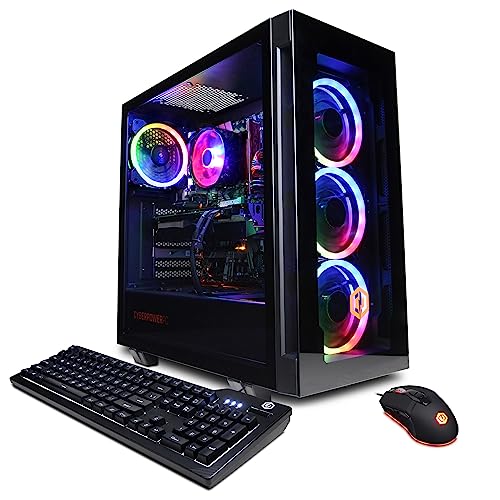
CYBERPOWERPC Gamer Master Gaming PC (GMA2700A)

KOTIN Prebuilt Gaming PC Ryzen 5 9600X, RTX 5060

KOTIN Prebuilt Gaming PC RTX 5070 12GB, Ryzen 7 9700X

Skytech Gaming PC Storm, Ryzen 5, RTX 5050

KOTIN Prebuilt Gaming PC Ryzen 7 7800X3D, RTX 5060 Ti

Lenovo Legion Tower 5i RTX 5070 Ti Gaming PC
More On The Choices That Made The List
The Gamer Master is the kind of prebuilt that quietly gets the job done without asking you to think about airflow curves or BIOS tuning. Inside the tempered-glass case sits an AMD Ryzen 5 7600, a 6-core/12-thread chip (a core is a processing unit, and threads let it juggle two tasks per core) that handles esports and modern AAA games at 1080p with room to spare.
Paired with a GeForce RTX 4060 8GB (a mid-range NVIDIA graphics card that supports ray-traced lighting and DLSS frame generation), it targets gamers who want smooth 60+ fps on a standard 1080p monitor. The 16GB of DDR5 RAM keeps multitasking clean, and 802.11AC Wi-Fi plus gigabit Ethernet cover the connectivity basics for most home networks.
A Few Highlights
- DDR5 memory and PCIe Gen4 NVMe storage keep load times short in modern titles.
- Three display outputs (one HDMI, two DisplayPort) make multi-monitor setups easy to wire up.
- Custom RGB lighting and a tempered-glass panel add visual flair without raising the build cost much.
- 7.1 channel audio output is useful for surround headsets and home theater setups.
- Keyboard and mouse come in the box, so you can start playing the same day.
Things To Consider
- 500GB of SSD fills up quickly once a few large modern games are installed, so external or secondary storage may be needed within months.
- Wi-Fi 5 is fine for most households but trails newer Wi-Fi 6/7 standards in crowded network environments.
Who It Suits Best
First-time custom gaming PC shoppers who want a low-fuss 1080p build that just works out of the box.
Not Your Match When
Esports players chasing 240Hz frame rates should look at the KOTIN Ryzen 7 7800X3D build instead.
Step up from 1080p and the KOTIN Ryzen 5 9600X build is the one most shoppers land on. The 9600X is a current-generation AMD CPU with boost speeds up to 5.4GHz, and the RTX 5060 brings DLSS 4 Multi Frame Generation to the table, a technology that uses AI to render extra frames, lifting frame rates in supported games without crushing the GPU.
It arrives fully assembled in California with Windows 11 Home, so you can plug in peripherals and load a game the same evening. For a 1440p monitor (a 2560×1440 resolution that sits between 1080p and 4K), the combo lands in a sweet spot where modern titles run smoothly without the cost of a flagship card.
What Stands Out
- 1TB SSD leaves room for a healthy game library without an immediate storage upgrade.
- DLSS 4 and ray tracing support future-proof the build for upcoming releases.
- Plug-and-play setup removes the guesswork of driver installs and BIOS tweaks.
- Reflex 2 low-latency support helps competitive shooters feel more responsive on supported titles.
Honest Caveats
- 16GB of RAM is enough today, but heavy multitaskers running games plus streaming and browser tabs may want to upgrade later.
- Like most prebuilts, internal cable management and upgrade paths depend on the case design, so opening it up later can be tight.
- You may want to double-check which case and cooler ship with your specific batch, since KOTIN configurations can shift between orders.
Made For
Mid-range enthusiasts stepping up from 1080p to 1440p who want modern features like DLSS 4 without flagship pricing.
Consider Something Else When
Hardcore 4K gamers should consider the Lenovo Legion Tower 5i with its RTX 5070 Ti graphics card.
This KOTIN build targets people who care about more than raw frame rates. The RTX 5070 with 12GB of GDDR7 memory handles 1440p and entry-level 4K, while the Ryzen 7 9700X brings 8 cores for streaming and creative work running in the background. The 32GB of DDR5-6000MHz memory is generous for most workflows.
The standout feature is a built-in 11.3-inch smart display on the case that shows real-time CPU and GPU temperatures, usage stats, and weather. For streamers and content creators, that on-case screen is more than decoration, it gives you a quick visual check without alt-tabbing out of a game. An 850W 80 Plus Gold power supply and 360mm AIO liquid cooler (an all-in-one liquid cooling unit attached to the CPU) round out a build that feels ready for the long haul.
A Strong Showing
- Smart display on the case offers at-a-glance system monitoring during long sessions.
- 32GB DDR5 handles gaming, streaming, and editing simultaneously without slowdown.
- 850W Gold-rated PSU leaves headroom for a future GPU swap.
- Wi-Fi 7 support future-proofs wireless networking for years to come.
Points To Note
- The smart display adds bulk to the case footprint, so plan your desk space accordingly.
- Custom cases with integrated screens can be harder to find replacement parts for if a panel fails.
Who Should Grab It
Streamers and content creators who want a custom gaming PC that doubles as a productivity workhorse with visible system stats.
Look Elsewhere When
Esports-only players can save money with the Skytech Gaming PC Storm, since they won’t use the smart display.
The Skytech Storm hits a price point that makes sense for first-time builders and esports-focused setups. The Ryzen 5 5500 keeps things running, and the RTX 5050 8GB is NVIDIA’s newest entry-tier card, built for 1080p gaming with DLSS support to stretch frame rates when needed. With 32GB of RAM already installed, this is a system that doesn’t need immediate upgrades.
For shoppers playing competitive titles like Valorant, CS2, or League of Legends, where high frame rates matter more than visual fidelity, the Storm covers the basics without overspending. Skytech also ships without bloatware, which is a small but appreciated touch for anyone who’s fought pre-installed trial software before.
Advantages To Know
- 32GB of RAM is unusual at this tier and removes a common early upgrade.
- No bloatware means more free storage and fewer startup programs to disable.
- 1TB NVMe SSD provides quick load times across a sizable game library.
- RTX 5050 supports DLSS and ray tracing for future-proofed visuals at 1080p.
Trade Offs
- The Ryzen 5 5500 lacks the boost headroom of higher-tier Ryzen parts, so heavy multitasking under load can feel tight.
- Wi-Fi 5 is dated compared to newer Wi-Fi 6/7 builds and may need an Ethernet cable in congested networks.
Best Suited To
Esports players and entry-level gamers who want 32GB of RAM and a clean Windows install without overspending.
A Better Fit Elsewhere
AAA title enthusiasts should consider the CYBERPOWERPC Gamer Master, since its Ryzen 5 7600 offers more processing headroom.
For gamers who measure success in frames per second, the Ryzen 7 7800X3D is a special chip. AMD’s 3D V-Cache technology stacks extra cache (a small pool of ultra-fast memory the CPU uses for quick data lookups) directly on top of the processor die, expanding the available game cache and improving frame-rate stability in cache-hungry titles. Paired with an RTX 5060 Ti, this build targets 1440p high-refresh gaming.
It’s the right pick for competitive Valorant or Apex Legends players who already own a 165Hz or 240Hz monitor and want the CPU to feed frames fast enough. The 32GB of DDR5 memory is generous, and the 1TB SSD keeps load times short. For shoppers who prioritize pure gaming performance over creator features, the 7800X3D build is hard to argue with.
What It Does Well
- 3D V-Cache technology delivers stronger gaming frame rates in cache-sensitive titles.
- RTX 5060 Ti with DLSS 4 Multi Frame Generation pushes high-refresh monitors to their potential.
- 32GB DDR5 keeps the system responsive even with Discord and browser tabs running alongside games.
- 1TB PCIe NVMe storage handles a healthy game library without a secondary drive.
A Few Limitations
- The 7800X3D favors gaming over heavy productivity, so video editors may want a Ryzen 9 alternative.
- 8GB of VRAM (video RAM on the graphics card) is comfortable at 1440p today but may feel tight at 4K in future titles.
Right Fit For
Competitive gamers running high-refresh 1440p monitors who want maximum frame rates from a proven gaming CPU.
Skip It When
4K-focused shoppers should look at the Lenovo Legion Tower 5i, which pairs an RTX 5070 Ti with a current Intel CPU.
Lenovo’s Legion Tower 5i is the polished choice for shoppers who want a name-brand build backed by a major manufacturer. The Intel Core Ultra 7 265F is a current-generation processor (the “F” suffix means it lacks integrated graphics, since this system has a dedicated GPU) paired with the RTX 5070 Ti, a card that targets 4K gaming with DLSS and ray tracing. The 32GB of memory and 1TB SSD match what most power users want on day one.
Legion Coldfront cooling aims to keep the system quiet under load, which matters for streamers and people who keep their PC in a living space. The 5070 Ti brings real-time ray tracing and AI-powered DLSS, making 4K gaming viable in modern AAA titles. For shoppers who want a system built by a recognizable brand and plan to keep it for several years, the Tower 5i is a sensible flagship pick.
A Few Strong Suits
- RTX 5070 Ti delivers strong 4K frame rates with DLSS assistance in demanding titles.
- Legion Coldfront cooling keeps the system quiet during long gaming sessions.
- Intel Core Ultra 7 265F provides strong multi-threaded performance for productivity workloads.
- 32GB of memory supports gaming and content creation running simultaneously.
Potential Drawbacks
- Premium pricing compared to the KOTIN builds above, so it may stretch budgets.
- 1TB storage can fill quickly with modern 4K game installs, so an external SSD may be needed.
Who Will Love This
Long-term 4K gamers who want a recognizable brand, strong thermals, and a build that should hold up over several years.
Another Choice May Suit
Shoppers prioritizing raw gaming frame rates at 1080p should look at the KOTIN Ryzen 7 7800X3D build instead.
Key Specs To Weigh Before You Click Buy
A custom gaming PC is only as good as the weakest link in its spec sheet. CPU and GPU pairing matters most, since a powerful graphics card bottlenecked by a slow processor will leave performance on the table. RAM capacity affects multitasking, and storage size determines how many modern games you can keep installed at once.
GPU tier is the single biggest driver of frame rate. An RTX 4060 or 5050 handles 1080p well, RTX 5060 and 5060 Ti cards stretch to 1440p, and RTX 5070/5070 Ti cards push into 4K territory. For most gamers shopping today, a mid-range card paired with a current-generation CPU hits the best balance.
Why RAM And Storage Matter
16GB of DDR5 is fine for pure gaming, but 32GB gives breathing room for streaming, browser tabs, and background apps. SSD capacity is another quiet decision. 500GB fills up fast, while 1TB gives most shoppers enough room to skip an immediate storage upgrade.
Connectivity And Future-Proofing
Wi-Fi 6 and Wi-Fi 7 matter in homes with many connected devices, while older Wi-Fi 5 can struggle in crowded networks. A 650W+ power supply with an 80 Plus Gold rating (an efficiency certification that means less wasted heat) leaves headroom for a future GPU upgrade, which is worth prioritizing if you plan to keep the system for years.
Picking The Right Tier Without Overpaying
Common Shopping Slip Ups
The biggest mistake is paying flagship prices for hardware you won’t fully use. An RTX 5070 Ti paired with a 1080p monitor is overkill, since the GPU is capable of much higher resolutions. Match the build to the monitor you own or plan to buy. Buying a 500GB SSD in 2026 also tends to feel cramped within a year, so 1TB is the practical floor for most gamers.
What The Higher Tier Buys
Stepping up to a Ryzen 7 or Core Ultra 7 tier brings more cores and stronger multitasking, which matters for streamers, content creators, and anyone running games alongside productivity apps. Premium picks also tend to include better cooling, higher-wattage power supplies, and quieter operation under load. If your use case is purely esports at 1080p, those upgrades are harder to justify, but for 1440p and 4K gaming, the extra spend shows up where it counts.
Frequently Asked Questions
What should I look for in a prebuilt gaming PC? Match the GPU to your monitor’s resolution: RTX 4060 or 5050 for 1080p, RTX 5060/5060 Ti for 1440p, and RTX 5070/5070 Ti for 4K. Aim for at least 16GB of RAM and a 1TB SSD to avoid early upgrades.
Is a prebuilt gaming PC worth it compared to building my own? Prebuilts save you the time and risk of sourcing parts, especially for shoppers new to PC hardware. Building your own can offer more component control, but prebuilts arrive tested and often include a warranty plus lifetime tech support.
How much RAM do I need for modern gaming? 16GB handles most current titles, though 32GB is increasingly the sweet spot for gamers who multitask with Discord, browsers, or streaming software running in the background.
Do I need a 4K-capable GPU for high-refresh gaming? Not necessarily. A 1440p 165Hz or 240Hz monitor paired with an RTX 5060 Ti often delivers a better experience than 4K at 60Hz, since higher frame rates feel smoother in motion. Match the GPU to your monitor, not to a spec sheet.
How long should a prebuilt gaming PC last? Most modern prebuilts stay relevant for four to six years before requiring major upgrades. Choosing a system with a higher-wattage power supply and current-generation components extends that window, since future GPU swaps become easier.
The Takeaway
The right custom gaming PC depends on your monitor, your favorite genres, and how long you plan to keep the system. Entry-level 1080p builds like the Skytech Storm and CYBERPOWERPC Gamer Master cover most casual gamers well, while the KOTIN 7800X3D and Lenovo Legion Tower 5i step up for shoppers chasing higher resolutions and frame rates. Pick the tier that matches your current setup, and you can always upgrade individual parts later.


