


Gaming on a budget has come a long way from the days of watered-down budget towers that struggled to run anything past a few browser tabs. Entry-level parts now punch well above their weight, so a modest desktop can carry you through competitive shooters, indie favorites, and even modern AAA titles with the right settings dialed in. The trick is matching the hardware to the games you actually play, and not paying extra for muscle you’ll never use. This list rounds up nine options worth comparing, from value-first towers for casual play to more ambitious rigs built for higher resolutions and faster frame rates. Along the way, there’s a practical accessory that quietly improves the day-to-day experience of owning any of them.
The Choices Worth Comparing
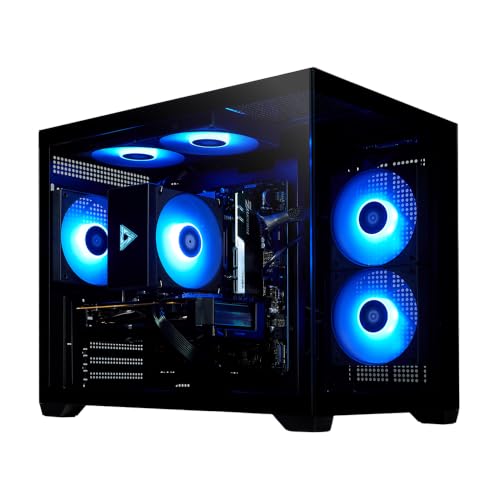
STORMCRAFT Sirius AI Gaming Desktop, Intel i5 14400F, Arc B570 10GB GDDR6

HP OmniDesk Desktop Computer PC, AMD 8-Cores Ryzen 5, Radeon 740M

Ultra 50 V3 Gaming PC, RTX 5080 16GB GDDR7, Ryzen 7 9800X3D

EUREKA ERGONOMIC PC Stand Height Adjustable Black, 2-Tier with Wheels

Lenovo Legion Tower 5i Gaming PC, Intel Core Ultra 7 265F, RTX 5070 Ti
HP OmniDesk Desktop Computer PC, AMD 8-Cores Ryzen 5, 64GB DDR5, 3TB

HP OmniDesk Desktop Computer PC, AMD 8-Cores Ryzen 5, 32GB DDR5, 2TB

Lenovo Legion Tower 5i Gaming PC, Intel Core Ultra 7 265F, RTX 5070 Ti
HP OmniDesk Desktop Computer PC, AMD 8-Cores Ryzen 5, 32GB DDR5, 3TB
The Details Behind The Selections
The STORMCRAFT Sirius lands in a sweet spot for gamers who want smooth 1440p play without crossing into flagship-GPU territory. The Intel Core i5 14400F handles 10 cores of multithreaded work, which matters in modern games that lean on the CPU for streaming, chat, and background tasks. The Intel Arc B570 graphics card brings 10GB of GDDR6 VRAM, a healthy buffer for high-resolution textures.
Storage comes via a 1TB NVMe SSD, fast enough that boot times and level loads feel near-instant. The 16GB of DDR4 RGB memory adds a touch of personality to the case, though the lighting is purely cosmetic. For a desktop that aims at mainstream gaming rather than extreme 4K, the parts here line up sensibly.
Practical Advantages
- 10-core CPU keeps streaming and gameplay running side by side without stutter
- 10GB of VRAM (video memory used to store textures and frame data) handles modern textures at 1440p comfortably
- 1TB NVMe boot drive delivers quick load times and enough room for a solid starter library
- VR-ready certification means mainstream headsets connect and run without extra setup headaches
- RGB memory adds visible flair without raising the price meaningfully
Things To Consider
- DDR4 memory is a generation behind the DDR5 found in costlier builds, so future upgrade paths are narrower
- Owners commonly report the stock cooling solution runs warm under sustained load, so a case fan upgrade helps in warmer rooms
Feature Snapshot
Who It Suits Best
Mainstream 1440p gamers who want a balanced rig for popular competitive and AAA titles will find this configuration fits their habits well.
Look Elsewhere When
Gamers targeting 4K resolution or extreme frame rates should consider the Ultra 50 V3 Gaming PC instead, since its RTX 5080 graphics and 9800X3D CPU deliver more overhead.
The HP OmniDesk with the AMD Ryzen 5 8500G isn’t built for blockbuster 3D titles, but it earns its keep in mixed-use setups. The integrated Radeon 740M graphics are surprisingly capable for esports games, indie titles, and older favorites, and the eight-core CPU (AMD’s mid-range chip with eight processing cores) handles office apps and browser tabs in stride. Quad-monitor support makes it feel like a productivity hub first, with light gaming on the side.
The 16GB of DDR5 memory and 1.5TB of combined SSD and HDD storage cover the basics for most households. Wi-Fi 6 (the latest mainstream Wi-Fi standard, offering faster and more stable wireless than older versions) and Bluetooth 5.4 come built in, so wireless peripherals connect without hunting for adapters. The included wireless keyboard and mouse are serviceable rather than exciting, which keeps the total package tidy.
What It Does Well
- Quad-monitor support turns any desk into a serious multitasking station
- DDR5 memory at this tier is a welcome shift from slower DDR4 systems
- Wireless peripherals ship in the box, so setup stays to a single power cord
Honest Caveats
- Integrated graphics are best suited to esports, indie, and older titles rather than modern AAA releases
- 512GB of SSD space fills quickly on a gaming-focused household, so the 1TB HDD is best for media rather than active libraries
- For most setups, the included peripherals feel generic compared with dedicated gaming gear
Made For
Shoppers who split time between light gaming, school or office work, and general browsing will appreciate the balanced, quiet configuration.
Consider Something Else When
Anyone focused on modern AAA gaming should look at the STORMCRAFT Sirius AI Gaming Desktop, which pairs a dedicated GPU with faster 1440p throughput.
The Ultra 50 V3 is the heavyweight in this list, built for gamers who want every frame counted at 4K or in competitive esports. The combination of an AMD Ryzen 7 9800X3D processor and an NVIDIA RTX 5080 graphics card is the centerpiece. That CPU uses 3D V-Cache (a stacked layer of high-speed memory on the chip that accelerates game data) to push higher frame rates in cache-hungry games, and the 16GB of GDDR7 VRAM is the current generation of high-bandwidth graphics memory for demanding textures and ray tracing.
Backing the silicon is 32GB of DDR5 memory running at 6000MHz, which keeps the platform humming under heavy loads, and a 2TB Gen4 SSD (a fast solid-state drive using the PCIe 4.0 interface) for sizable game libraries. The 850W Gold-rated PSU (a power supply unit with 80 Plus Gold efficiency, meaning it wastes less energy as heat) gives headroom for future component swaps, and ARGB fans add a touch of flair while helping with airflow.
The Good Stuff
- RTX 5080 GPU delivers top-tier 4K performance and strong ray tracing in modern releases
- 9800X3D CPU uses 3D V-Cache for measurable frame-rate gains in cache-sensitive games
- 2TB Gen4 SSD holds a sizeable library and cuts load times down dramatically
- 850W Gold PSU leaves room for future GPU upgrades without a full rebuild
Points To Note
- This kind of spec list carries a much higher cost than the other picks, so it isn’t a casual purchase
- Owners commonly report the ARGB software takes a bit of patience to configure for matching lighting effects
Quick Facts
Who Will Love This
Enthusiast gamers chasing high frame rates at 4K or content creators streaming and editing on the same machine will find this rig sized to their ambition.
Swap It Out When
Shoppers who mostly play at 1080p and want a quieter budget should look at the STORMCRAFT Sirius AI Gaming Desktop, which targets mainstream resolutions without the flagship price.
The EUREKA ERGONOMIC PC Stand isn’t a gaming computer, but it’s the kind of accessory that quietly transforms the ownership experience of any tower on this list. The 2-tier steel frame holds a full-size ATX case on the lower tier (ATX is the standard size for most consumer desktop towers) while leaving the top shelf free for a printer, peripherals, or even a laptop. Six height settings let you position the tower at floor level or up at desk height.
Wheels at the base make it easy to roll the rig out for cleaning, cable management, or a quick swap of components. The durable steel frame keeps the tower stable even when fully loaded, and the open design supports airflow around the case, which helps components run cooler during long sessions.
Reasons It Performs
- Six height adjustments fit ATX towers under most desks or beside them
- Wheels make repositioning for cleaning or upgrades a one-person job
- Open steel frame promotes airflow, which helps tower thermals in warmer rooms
- 2-tier layout doubles as a printer or accessory shelf
Trade Offs
- Wheels work best on hard floors; on thick carpet they may need a push now and then
- Owners commonly report that the assembly step is straightforward but benefits from a second pair of hands
Best Suited To
Anyone with a mid-tower or full-tower case who wants better airflow and easier access to cables and ports will appreciate this stand.
A Better Fit Elsewhere
Gamers shopping for a primary system, not an accessory, should focus on the gaming towers earlier in the list like the Lenovo Legion Tower 5i.
The Lenovo Legion Tower 5i sits in a confident middle ground, pairing the Intel Core Ultra 7 265F with an NVIDIA GeForce RTX 5070 Ti. That combination handles modern AAA releases at 1440p with high frame rates and supports ray tracing, a rendering technique that simulates realistic lighting and shadows in real time. For most households that’s a sweet spot between flagship costs and 1080p compromises.
The package also includes the Legion K510 Mini Pro mechanical keyboard, which uses tactile mechanical switches (individual key mechanisms that give a distinct, clicky feel and respond to each press with precision) for a more responsive feel. Its 75% layout (a compact keyboard that drops the number pad and shrinks arrow keys to free up desk space) keeps the desk tidy, and the matte keycaps resist fingerprints during long sessions. With 32GB of memory and a 1TB SSD, the storage and RAM balance suits gaming and streaming simultaneously.
Advantages To Know
- RTX 5070 Ti graphics bring real-time ray tracing and DLSS 4 (an AI-driven image upscaling feature that boosts frame rates) to modern titles
- Mechanical keyboard included in the box saves a separate purchase for new tower owners
- Compact 75% keyboard layout frees up desk space for mouse movement
Soft Spots
- 1TB of storage fills quickly for gamers with multiple large libraries, so external storage may be needed over time
- You may find the smaller keyboard layout takes adjustment for users coming from full-size boards
Right Fit For
Streamers, competitive players, and creative hobbyists who game and edit on the same machine will find the CPU and GPU pairing well suited.
Not Your Match When
Buyers chasing flagship 4K performance should look at the Ultra 50 V3 Gaming PC, which uses the more powerful RTX 5080 GPU.
This higher-tier HP OmniDesk configuration keeps the same AMD Ryzen 5 8500G platform but doubles down on memory and storage. With 64GB of DDR5 RAM, you can keep dozens of browser tabs, chat apps, and creative tools open without the system slowing down. The 3TB of combined storage (a fast 2TB SSD paired with a 1TB HDD) gives you room for large game libraries plus work files without juggling drives.
The integrated Radeon 740M graphics still position this as a light-gaming and productivity machine, so this configuration is best for users who value multitasking muscle over raw frame rates. Quad-monitor support, Wi-Fi 6, and Bluetooth 5.4 round out the connectivity, and the included wireless keyboard and mouse let you set up without extra peripherals.
Where It Helps
- 64GB of DDR5 RAM keeps heavy multitasking smooth and future-proofs the build
- 2TB SSD provides fast storage for active projects and games
- 3TB combined capacity covers large media collections alongside daily use
A Few Limitations
- Integrated graphics limit modern AAA gaming, so the GPU is the real bottleneck for frame rates
- For most shoppers, 64GB of RAM is more than daily gaming requires, so this build pays for headroom you may not need
Feature Card
Whose Shelf It Belongs On
Power users with demanding productivity workflows and large game libraries will find the memory and storage ceiling comfortable to live with.
Skip It When
Gamers focused on frame rates over multitasking should look at the STORMCRAFT Sirius AI Gaming Desktop, which prioritizes GPU performance at a friendlier tier.
The 32GB version of the HP OmniDesk slots neatly between the lighter 16GB build and the 64GB flagship in the same family. It’s the configuration most households will live with comfortably, since 32GB of DDR5 covers modern gaming, browser-heavy work, and the occasional creative task without ever feeling pinched. The 1TB SSD plus 1TB HDD pairing keeps active software fast and tucks larger files out of the way.
Like the other OmniDesk variants, it ships with a wireless keyboard and mouse, supports four monitors, and runs on integrated Radeon 740M graphics. That’s a fine baseline for esports, indie, and older games, while heavier AAA work belongs on a more dedicated rig.
Well-Handled Touches
- 32GB of DDR5 strikes a balanced middle ground for multitasking and gaming
- 1TB SSD keeps boot and load times snappy for active programs
- Wireless peripherals included for a tidy one-box setup
Things To Weigh
- Integrated graphics still mean this isn’t a match for modern AAA releases at high settings
- For most mid-range shoppers, the 1TB HDD will fill up faster than expected if used as a primary game drive
Perfect Match For
Households splitting the desktop between office work, school, and casual gaming will find the memory and storage balance hits the right notes.
Another Choice May Suit
Gamers prioritizing modern titles should consider the Lenovo Legion Tower 5i, whose RTX 5070 Ti GPU offers a far larger jump in frame rates.
This second Lenovo Legion Tower 5i shares the same CPU and GPU as the earlier Lenovo entry, but it swaps the included keyboard for three months of PC Game Pass. For new tower owners without a game library, that’s an immediate runway into hundreds of titles, both AAA and indie, without separate purchases. It also softens the upfront cost of building a collection.
The Legion Coldfront cooling system (Lenovo’s branded airflow design that channels cool air through dedicated heat paths) is built for sustained load, which matters when a long session turns into a full evening. With 32GB of DDR5 memory and 1TB of SSD storage, the rig handles modern games plus the usual streaming and chat tools without sweating.
Strong Points
- Game Pass trial provides a wide library to explore without separate purchases
- RTX 5070 Ti graphics support modern ray tracing and DLSS 4 features
- Coldfront cooling aims to keep temperatures in check during marathon sessions
Some Limits To Know
- 1TB of SSD storage fills up quickly with modern AAA installs, so a secondary drive may become useful
- Game Pass is a limited trial rather than a permanent addition, so the value depends on how much you play during those months
Who Should Grab It
New gamers without an existing library who want to explore many titles right away will benefit most from the bundled subscription.
Reach For A Different Pick When
Owners who already own a large library and want a mechanical keyboard in the box should pick the keyboard-equipped Lenovo Legion Tower 5i configuration earlier in the list.
Closing the list is the 3TB version of the 32GB HP OmniDesk, a configuration that prioritizes long-term storage above all else. The 2TB SSD gives the system a generous fast pool for installed games and active projects, while the additional 1TB HDD handles media, backups, and the kind of files you don’t want cluttering your boot drive. It’s a quiet upgrade that pays off over years of accumulating libraries.
Beyond storage, the rest of the platform matches the other OmniDesk builds: the AMD Ryzen 5 8500G CPU, integrated Radeon 740M graphics, 32GB of DDR5 memory, and quad-monitor support. For a household that wants to keep every game, photo, and project on the same machine, the capacity is the main draw.
A Favorable Mix
- 3TB total capacity gives long breathing room for libraries and media
- 2TB SSD keeps the most-used programs fast and responsive
- 32GB of DDR5 supports modern multitasking needs
Possible Compromises
- Integrated graphics still cap this at light and older gaming, regardless of storage size
- For most shoppers, the larger storage adds cost that may go unused if the library stays modest
Built With In Mind
Long-term library builders and households that want to keep years of media and projects on one machine will benefit most from the extra capacity.
Where A Sibling Pick Shines
Gamers chasing high frame rates in modern titles should pivot to the Lenovo Legion Tower 5i, where the RTX 5070 Ti GPU delivers where integrated graphics fall short.
What Matters Most Before Choosing Cheap Desktop Computers For Gaming
GPU First, CPU Second
The graphics card drives frame rates in nearly every modern game, so it should set the budget. Match the GPU tier to your target resolution and refresh rate: integrated graphics handle 1080p esports and indie titles, mid-range dedicated cards suit 1440p AAA gaming, and flagship GPUs are reserved for 4K or high-refresh competitive play. CPU choice matters, but only after the GPU is sorted.
RAM And Storage Trade-Offs
16GB of RAM (random-access memory, the short-term workspace your system uses for active programs) remains the floor for modern gaming, while 32GB gives meaningful headroom for streaming and browser-heavy multitasking. For storage, an SSD (solid-state drive) of at least 1TB keeps load times and boot speeds responsive, and a secondary HDD handles archives cheaply. Some picks pair both, which is a sensible combination for most households.
Cooling, Noise, And Form Factor
Tower cases vary in airflow and noise levels, and components like the Intel Core Ultra 7 265F or Ryzen 7 9800X3D can run hot under sustained load. Look for systems with named cooling solutions and multiple fans if you plan to leave the system running during long sessions. Smaller form factors save desk space but trade off upgradability and thermal headroom.
Connectivity And Expansion
Wi-Fi 6, Bluetooth 5.4, USB-C, and multiple display outputs make daily use smoother, especially in mixed-use households. Picking up the EUREKA ERGONOMIC PC Stand from this list helps with airflow and access to rear ports, which matters more than people expect during upgrades or cleaning.
Smart Choices That Shape The Final Pick
Common Shopping Slip Ups
The most frequent mistake in this category is paying for a powerful CPU while skimping on the graphics card, which leaves frame rates lower than they should be for the money. Another common slip is buying a system with only a small SSD and no secondary storage, which forces constant uninstalls as game libraries grow. In our view, shoppers also underestimate how much they benefit from a wired Ethernet port and from cases with good front-panel USB-C access, both of which simplify daily use.
Where The Extra Money Goes
Stepping up from a budget tower to a mid-range gaming PC usually buys a dedicated GPU, which is the single biggest performance lever. Going further to a high-end rig adds flagship-class graphics cards, faster memory, and stronger cooling, which together unlock 4K gaming and demanding creative workloads. That tier also tends to ship with a stronger power supply and better case airflow, so future upgrades don’t require a full rebuild. For most people, the right tier is the one that handles their actual library, not the one that handles a hypothetical workload years away.
Frequently Asked Questions
How Much Should I Spend On A Cheap Desktop Computer For Gaming?
A reasonable starting point for casual 1080p play is a system with integrated graphics or an entry-level dedicated GPU, with the rest of the budget going to a recent-generation CPU and at least 16GB of RAM. Pushing higher unlocks dedicated graphics cards, faster memory, and more storage, which matter once you start running modern AAA releases.
Is 16GB Of RAM Enough For Gaming In 2026?
16GB still works for most titles, especially when paired with a sensible GPU. That said, 32GB is becoming a comfortable default for shoppers who keep chat apps, browsers, and creative tools open in the background, and it offers a longer useful life for the system.
Do I Need A Dedicated GPU For Casual Gaming?
Not always. Integrated Radeon 740M graphics in the HP OmniDesk line handle esports, indie, and older titles well, especially at 1080p with medium settings. Modern AAA releases still want a dedicated card, so it depends on the games you play most.
Can These Desktops Handle 1440p Gaming?
Several picks in this list are designed for 1440p play, including the STORMCRAFT Sirius and the Lenovo Legion Tower 5i models. The Ultra 50 V3 pushes further into 4K territory with its RTX 5080 GPU, which is a step above what most shoppers in this category need.
What Is The Most Overlooked Spec In A Budget Gaming PC?
Cooling is often the last thing shoppers check, and it tends to be the one that matters most during long sessions. A case with good airflow and a strong stock cooler keeps components at safe temperatures, which protects performance and extends the lifespan of the system.
Final Verdict
The right pick depends on the games you actually play and the resolution you want to push. Casual and esports-focused shoppers will find the HP OmniDesk configurations offer generous memory and storage at friendly tiers, while mainstream 1440p gamers should look to the STORMCRAFT Sirius for a sensible balance. Enthusiasts chasing higher frame rates at 1440p or 4K will be well served by the Lenovo Legion Tower 5i and the Ultra 50 V3, and the EUREKA ERGONOMIC PC Stand quietly improves the ownership experience of any tower on this list. The honest read is that matching the GPU to your resolution and library beats overpaying for headroom you won’t use.


